You are currently viewing SemiWiki as a guest which gives you limited access to the site. To view blog comments and experience other SemiWiki features you must be a registered member. Registration is fast, simple, and absolutely free so please, join our community today!
Mobile World Congress (MWC) is the world’s largest gathering of mobile industry innovators where one can hear the latest on advanced technologies and solutions. This year, it took place from February 27 through March 2. Soitec was there to share their insights on how mobile communications are going to evolve with 5G and beyond and showcase their innovative solutions. The company highlighted the critical role semiconductors will play to deliver on the full promise of 5G and beyond and corresponding silicon opportunities. It also demonstrated its commitment to sustainability by showcasing a number of initiatives it has implemented to reduce its environmental footprint.
5G Transforming the World
As the technology world continues to advance, 5G is quickly transforming the way we think, work, and interact. 5G is creating a new era of connectivity and enabling us to experience faster, more reliable networks and data speeds. It has significantly increased the demand for reliable, high-performance RF Front End (RFFE) solutions.
RF at the Heart of 5G Mobile
RFFE circuitry is what processes the radio frequency signals in a mobile device. It is responsible for transmission and reception of signals, amplification of signals, and noise reduction. In other words, it is the heart of mobile communications and is essential for providing seamless connectivity. With every new generation of mobile connectivity, the demand for higher speeds, wider bandwidths and better performance has been increasing. 5G will be the key engine powering our connected society through the end of this decade, in a wide range of markets. Public and private 5G networks, fixed wireless access (FWA), smart transportation, non-terrestrial networks, massive IoT, and XR (VR/AR/MR) are markets to name a few. The RFFE circuitry has increased in complexity over the generations and will continue to increase in complexity as 3GPP’s new releases for 5G are announced. The main challenges for 5G RFFE for mobiles are high-speed communications, long battery life and circuity footprint optimization.
About Soitec
Soitec is a world leader in designing and manufacturing innovative semiconductor materials. Its strategy is to produce engineered substrates to address the different segments of the semiconductor value chain. By combining physical properties such as current, wave and light, engineered substrates create value at the system level in terms of high data rates, power efficiency and sensing accuracy. By supporting foundries, design houses and fabless semiconductor companies, Soitec stands at a $1B in revenue as of FY2022. With about 10% of its revenue dedicated to R&D, Soitec files about 300 patents each year. Over the next three years, Soitec will be increasing its global fab capacity to about 4.5 millions wafers a year.
The top end markets supported by Soitec are mobile communications, automotive & industrial and smart devices. Soitec’s comprehensive portfolio of engineered substrates are of course geared to support the mobile connect, automotive & industrial and smart devices markets. The following chart shows Soitec’s broad product portfolio.
Soitec’s Unique Position
Soitec’s RF-SOI has already become a standard for implementing front-end modules in smartphones. Its RF-SOI, FD-SOI, Piezo-on-insulator (POI) and Gallium Nitride (GaN) technologies are specifically designed to address the challenges of 5G RFFE.
Together, the RF-SOI and FD-SOI solutions will enable high-performance 5G RFFE at reduced power consumption and lowest cost. The POI technology from Soitec enables implementation of high-performance 5G filters to support a wide range of upcoming 5G applications in the sub-6GHz spectrum. The GaN technology is designed to enable extremely high-speed and low-power solutions for 5G RFFE.
The following chart highlights the semiconductor opportunity for Soitec’s above mentioned technologies in high-end smartphones over the next four years.
Summary
With its broad range of technologies and solutions, Soitec is helping to push the boundaries of mobile technology and make it easier and more cost-effective for manufacturers to produce high-quality, reliable devices. By addressing the complexity of the 5G RFFE, Soitec’s RF-SOI, FD-SOI, POI and RF GaN solutions will enable customers to quickly and reliably deploy their 5G applications.
Contact Soitec to learn more about how it is helping end-customers derive the full benefits of 5G and Beyond in a more sustainable manner.
Soitec (Euronext, Tech 40 Paris) is a world leader in designing and manufacturing innovative semiconductor materials. The company uses its unique technologies and semiconductor expertise to serve the electronics markets. With more than 3,500 patents worldwide, Soitec’s strategy is based on disruptive innovation to answer its customers’ needs for high performance, energy efficiency and cost competitiveness. Soitec has manufacturing facilities, R&D centers and offices in Europe, the U.S. and Asia. Fully committed to sustainable development, Soitec adopted in 2021 its corporate purpose to reflect its engagements: “We are the innovative soil from which smart and energy efficient electronics grow into amazing and sustainable life experiences.”
Dan is joined by Dr. Naveed Sherwani, a well-known semiconductor industry veteran with over 35 years of entrepreneurial, engineering, and management experience. He is widely recognized as an innovator and leader in the field of design automation of ASICs and microprocessors. Naveed now serves as CEO of Rapid Silicon, aiming to drive the next wave of innovation by using the open source to disrupt the FPGA industry.
Dan explores the mission of Rapid Silicon with Naveed and how domain-specific FGPAs will change the innovation landscape going forward. Custom RISC-V architectures, edge computing expansion and IoT are a few of the areas explored in this far-reaching and informative discussion.
The views, thoughts, and opinions expressed in these podcasts belong solely to the speaker, and not to the speaker’s employer, organization, committee or any other group or individual.
In 2021, we shocked the industry with our predictions of a double-digit ‘supercycle’ in 2022, followed by a crash in 2023. Despite industry skepticism, bordering on outright disbelief, our predictions were on point, based on decades of semiconductor experience and data analysis.
Now, as the industry finally accepts the impending crash, many still cling to the belief that their sector or application will be unaffected. As such, today’s debate has shifted from whether the market will go negative to whether it will be a single- vs double-digit decline.
We stand firmly by our belief that the market is heading for a 22 percent double-digit decline, despite, once again, being at odds with the industry consensus.
The Billion Dollar Question
At our recent January 2023 industry update webinar, we reconfirmed our May 2022 forecast for a 22 percent double-digit decline in 2023, despite the fact most (if not all?) other industry pundits were suggesting only a minor single digit decline, once again placing us well and truly out on a limb.
This now marks the third time in a row where we have been at odds with industry consensus.
We do not do this to be contrarian, we simply cannot see how the low single-digit forecasts can be achieved. For this to happen, the market would need to have already bottomed out and there is not a single piece of evidence, either anecdotal or factual, to substantiate that view. Almost two months into 2023, with the first quarter virtually in the bag, not a single individual, firm, or organization is forecasting the worst of the downturn is over.
The fact of the matter is the 2021-22 boom and 2023 bust are just a re-run of the infamous chip industry cyclicality … the seventeenth since the first cyclical downturn in 1961 … it’s just that the gap from the last cycle had been longer than normal, lulling the industry into a false sense of security that, for a whole sense of intellectually compelling reasons, the chip cycles had been tamed.
In retrospect, all that had happened was a week economy since the mid-2020’s financial meltdown had enabled the industry to dodge the bullet. The market boom and shortages would have hit home four years earlier, in 2018, had the chip market not collapsed in the second half of the year due to the US-China trade war and tariffs.
Back To Basics
Why are we so convinced the 2023 correction will be strong when everyone else thinks otherwise? Because the key industry fundamentals, namely unit demand, manufacturing capacity and IC ASPs, are all in bad shape.
First, driven by product shortages and extended delivery lead times, unit demand rises well above the long-term average and, as a result, inventory levels throughout the industry are at historically high levels. That’s akin to shipping ahead, and with lead times now falling, we already bought at lot of today’s needs yesterday.
Second, as demand falls away, ASPs start to plummet as suppliers drop prices in order to stimulate new demand.
Third, it takes a long time to add new production but eventually it catches up and lead times then start to fall triggering a liquidation of the now excess inventory. In the meanwhile, the new capacity buildout continues to gain momentum stoking capacity just when you don’t need it. It takes a minimum of four quarters to rein in CapEx when no longer needed.
So, we now have unit demand falling, an ASP rout in full swing and excess capacity yet to peak. It will take at least two to three quarters for this imbalance to stabilize which means the whole of 2023 is going to face strong headwinds.
Add to that a global economic outlook still clouded in fog and uncertainty, there is no way one can reasonably expect a single digit chip market downturn.
Time For Clear Heads & Action
That said, there is no need for panic or despair; the industry has been here several times before and, whilst these situations are always challenging and harsh, they are quite normal and natural and, ironically, a time when real market share gains are made. It’s just a classic semiconductor market downturn, treading a well-trodden path.
Time now to roll up one’s sleeves and do whatever’s necessary to survive in the near-term but without prejudicing the longer-term; whatever actions are taken now need to be with the inevitable 2024 upturn clearly and firmly in mind.
This is no time to panic, more a time for decisive action, cool heads and first mover advantage. It is time to get ready for the inevitably 17th industry upturn which is just around the corner.
The many idiosyncrasies of EUV lithography affect the resolution that can actually be realized. One which still does not get as much attention as it should is the cross-slit pupil rotation [1-3]. This is a fundamental consequence of using rotational symmetry in ring-field optical systems to control aberrations in reflective optics [4-7].
On current 0.33 NA EUV systems, line pitches of 40 nm or less require dipole illumination, with illumination onto the mask coming from opposite sides of the optical axis. As the pitches are reduced, the range of allowed illumination angles is narrowed, also referred to as lower pupil fill. However, the range of illumination angles is actually rotated across the arc-shaped exposure field. Without proper caution, an angle suited for illumination in the center of the field can fail to be suitable at the edge of the field.
Dipole rotation with +/- 18 deg range for 28 nm horizontal line pitch restricts the originally allowed dipole with 28% pupil fill (left) to a rotation-safe pupil fill of 12% (right).
By limiting the exposed field width, the rotation range can be contained so that the rotation-safe pupil fill can be at least 20% to prevent system absorption and preserve throughput. For example, for the 28 nm pitch case, the allowed rotation range is less than +/- 9 degrees, while for the 30 nm pitch case, the rotation-safe pupil fill is 23% for the full +/- 18 degree range.
For the 0.55 NA systems, the imaging is anamorphic (8x in Y, 4x in X), so that the rotation range at the mask is halved for the wafer image. However, the pupil fill is likely to be restricted to <20% pupil fill regardless of rotation just due to the more limited depth of focus. For example, going from 30 nm pitch on 0.33 NA to 18 nm pitch on 0.55 NA, the pupil fill can be reduced from 23% to 18% just to accommodate +/-20 nm defocus. Rotation limits this down further to 8%.
The end result of these limitations would be die size limitations as a function of pitch once pitches are small enough. For example, die width should be restricted to less than 13 mm (half of the 26 mm maximum) for the 28 nm pitch on 0.33 NA. Even with die widths that follow this limit, it is a common practice to fit multiple dies in a single exposure field. In this case, the limit applies to the width of the multi-die exposure field. This would have some impact on the throughput due to the overhead of more frequent scanning [8].
Intel dodged this bullet by limiting 0.33 NA applications to 30 nm pitch and higher [9]. On the other hand, TSMC [10] and Samsung [11] have already applied 28 nm pitches, so they have undoubtedly come up against this limitation, although single exposure is made less likely as well by stochastic printing concerns and image fading, from EUV mask 3D effects.
References
[1] A. V. Pret et al., Proc. SPIE 10809, 108090A (2018).
[2] R. Miyazaki and P. Naulleau, Synchrotron Radiation News, 32(4), 2019: https://escholarship.org/uc/item/07h5f8vn
[3] F. Chen, The Need for Low Pupil Fill in EUV Lithography, https://www.linkedin.com/pulse/need-low-pupil-fill-euv-lithography-frederick-chen/
[4] M. F. Bal, F. Bociort, and J. J. M. Braat, Appl. Opt. 42, 2301 (2003); http://homepage.tudelft.nl/q1d90/FBweb/paraxial%20predesign.pdf
[5] W. C. Sweatt, OSA Meeting on Diffractive Optics: Design, Fabrication, and Applications, 1994; https://www.osti.gov/servlets/purl/10134858
[6] M. Antoni et al., Proc. SPIE 4146, 25 (2000).
[7] D. M. Williamson, Proc. SPIE 3482, 369 (1998).
[8] F. Chen, A Forbidden Pitch Combination at Advanced Lithography Nodes, https://www.linkedin.com/pulse/forbidden-pitch-combination-advanced-lithography-nodes-frederick-chen/
[9] R. Venkatesan et al., Proc. SPIE 12292, 1229202 (2022).
We have been working with Defacto since 2016 and it has been quite a journey. Putting an entire system on a chip is a driving force in the semiconductor industry. With the complexity of designing a modern SoC constantly increasing, new tools and methodologies are required and it all starts with RTL.
Defacto Technologies is an innovative chip design software company providing breakthrough RTL platforms to enhance integration, verification and Signoff of IP cores and System on Chips.
Starting an SoC design project has always been painful given the number of design tasks from the architecture to first implementation decisions. A successful start has a significant impact on the next design tasks and TAT, up to the tape out. If we look at today’s SoCs, the number and variety of IPs keep increasing and same for the complexity of architectures which leads to very complex clock trees, power architecture, etc., the verification process is also a real burden which needs a lot of attention. In summary, there is a requirement to put in place cutting edge design methodologies at the front-end to make the SoC build faster, and to generate the first packages and data for synthesis and simulation design steps.
This March 2023, Defacto is announcing the new Major Release of its solution: SoC Compiler 10.0. This is an important turning point for the company which also celebrates its 20th anniversary this July right during DAC. For 20 years, Defacto provided breakthrough innovation in the EDA and built a real expertise in particular on the management of the RTL. They are now recognized and used by most of the major semiconductor companies.
This SoC Compiler 10.0 Major Release will address several key challenges of Defacto’s customers. The main challenge is the fact there was no solution in the market to make the SoC integration considering jointly RTL and IP-XACT. More technically, there is a real need to support various formats for IPs and connectivity, and both need to be considered since: IP-XACT is not able to fully describe the complexity of designs for integration and RTL alone requires an additional effort to make connections between groups of ports belongs to same architecture protocol. Worth mentioning that this requires supporting the complete RTL and IP-XACT versions (Verilog, System Verilog, VHDL, IP-XACT 2009, IP-XACT 2014)
Today’s workaround is to redesign IPs dropped in advance System Verilog construct to align with what IP-XACT 2014 can support for the connections. This workaround is tedious, with a high risk of breaking existing design, time consuming and hard to maintain. Defacto’s SoC Compiler V10.0 is the first design solution to consider at the same level both IP-XACT and RTL to face SoC design integration challenges containing the increasing design complexity with reasonable performances.
Along with that, Defacto’s SoC Compiler 10.0 comes with brand new IP-XACT features which enable a complete support of the Accellera standard for both 2009 and 2014; for the integration but also for the management of registers and system memory map.
In parallel, we have all observed a real shift in the EDA tool usage, and it seems more than ever a requirement for users to have an interface, not only using Tcl but also in Python. Defacto is providing (for more than 10 years) Python, Perl and C++ interfaces for his tool, but in SoC Compiler 10.0, Defacto is taking Python support to the next level, with 100% object-oriented APIs.
Defacto’s SoC design solution key differentiator is the unified management of design data including RTL/IP-XACT, UPF, SDC, etc. along with the link with physical design information which enables power aware, physical aware, clock aware, DFT aware, etc. assembly.
No doubt this unified methodology goes at the right direction to cost-effectively build complex and large SoCs.
For more information about the Defacto products, reach out to their website: https://defactotech.com/
The talk of the table – or at least my end of the table – at the annual Cybersecurity Dinner – hosted by Copper Horse Ltd. – was the dismal state of IoT. Millions of devices are being connected – but no one is making money.
Of course that isn’t absolutely accurate. There are organizations that are able to make money in IoT, but these organizations tend to be smaller, more nimble, with low overhead and a narrow operational focus.
It is the larger organizations that have sought to scale up the IoT business to make it a billion-dollar proposition that have encountered woe. No organization better epitomizes this phenomenon than Ericsson. In December of 2022, Ericsson off-loaded its IoT Accelerator business to Aeris Communications, marking a key turning point for both Ericsson and the industry.
Most telling about the deal was the price. Ericsson reputedly paid Aeris $100M to take on the business along with some Ericsson personnel. At the cybersecurity dinner the word was that those chosen Ericsson employees were not keen to change employers. Ericsson had no comment on the financial or other terms of the agreement – other than to confirm the transfer of some personnel.
The challenge facing the world of IoT is the perfect storm of demanding customers with high performance requirements and quality of service expectations for an array of mission critical, low bandwidth applications. Add to this the increasing emphasis on low power devices designed to last for 10 years, and you have a complete picture of commercial disaster – unless you are a lean, mean, and very clever operator.
In fact, it was the consensus opinion at the cybersecurity dinner, that the automotive sector was the only profitable segment in IoT. Clearly the industry is in even more peril if it is pinning its hopes on connected cars to save the day.
I won’t bore you with the details that designing and producing a car can take 3-4 years and that they tend to last for as long as 15 years. That might be reason enough, though, to give any connectivity executive pause. I also won’t touch on the impending disaster of 2G/3G network sunsets in Europe and the impact on the millions of cars already on the road with built-in eCall devices.
Connected cars have never really belonged in the IoT category. It is true that for the past quarter century the connected car space has been a low bandwidth proposition for vehicle location, tracking, emergency response, and diagnostics. But the onset of electrification and automated driving along with the United Nations Economic Commission for Europe 155 and 156 regulations regarding software updates and cybersecurity – have combined to alter the landscape.
The connected car space is rapidly becoming a higher bandwidth sphere and one encompassing a multitude of connection types – 5G, C-V2X, Wi-Fi, satellite – requiring increasingly complex solutions including – most recently – consumer-style SIMs. That being said, connecting cars itself has become a low margin business for the makers of the hardware and software that actually deliver the connectivity. Sometimes it seems as if only Qualcomm is making money. (Of course, Qualcomm is not the only company making money in connectivity.)
It does mean, though, that the connected car business is a major focal point at MWC 2023. It remains to be seen what organizations – other than Qualcomm (and Huawei?) – will make money connecting cars. They are out there. They are clever. They are lean and mean.
The IoT business is in distress. The organizations that are making money need to school larger operators as to how to turn a profit in the business of connecting things. And we have to stop thinking of cars as IoT devices. Connected cars will not save IoT. Connecting cars is a unique business proposition with a unique set of challenges that the industry is only just beginning to grasp as it transitions to 5G. Enjoy the show.
Over the last decade, automobiles have been morphing from stand-alone mechanical objects to highly connected systems with ever-increasing usage of electronics. Semiconductor supply disruptions (OEM factory shutdowns) caused by the recent situation with Covid and the political tensions and China have demonstrated the deep dependence of automobile industry on semiconductors. While these events are transitory in nature, they have exposed deeper underlying tectonic shifts in the fundamental nature of the automotive supply chain. A previous article ”Automotive OEMs And the New Normal (forbes.com),” discussed the psychological shift required in the halls of power in the automotive industry to come to grips with the new situation. This article takes a more technological perspective in explaining the problem as well as the strategic vectors required for a solution.
Fig. 1 below shows the traditional automotive lifecycle which consists of design, verification & validation, maintenance, and end-of-life cycle. Design focuses on issues such as functional definition, manufacturing cost, reliability, and maintainability. In an ideal flow, the specification is captured in a higher-level language and through a process of successive refinements components are selected to fill out the system function. For electronic systems, semiconductor components are assembled to complete an overall system. All along the way, the integration of the specification with designed components imposes discipline on the newly integrated pieces to ensure faithful implementation which meets the intended performance metrics.
Understanding the Traditional Automotive Design Ecosystem
Figure 1: Automotive Life Cycle
As the automobile industry has matured, the supply and development infrastructure has also reached a level of standardization and maturity. Table 1 outlines the well-known supplier structure for the automotive industry with original equipment manufacturers (OEMs), Tier 1, Tier 2, and Tier 3 suppliers. Table 2 shows the high-level structure development ecosystem which supports the supply chain. A deeper more technical analysis of the current electronic design chain can be found in “Unsettled Topics Concerning Automated Driving Systems and the Development Ecosystem.”
Table 1: Traditional automotive supply chainTable 2: Development Ecosystem
Electronic Paradigm Shift in Automotive Design
Even before the advent of AVs, the automotive sector had been rapidly increasing the level of electronic content with drive-by-wire, Advanced Driver Assistance Systems (ADAS), and infotainment systems. Thus, electronics effectively forms the muscular nervous system of modern vehicles. Two significant trends are adding electronic content at an accelerating rate.
Enterprise Functions: The automobile sits inside a broad set of technology flows which engages with the infrastructure on functions such as maintenance, ecommerce, traffic management, and more. The combination of access to automotive data and remote control of the automobile enables higher level business flows which generate significant value. Indeed, just the data services from automobiles are projected to be a significant source of income for automotive OEMs from companies such as Otonomo and Wejo. SAE research report on the Transportation Ecosystem provides a comprehensive view of this ecosystem.
Autonomy Functions: Autonomy at its various levels from ADAS to level 5 AV promises the value of safety, access, and enablement of system level automation.
This shift in the fundamental DNA of an automobile is illustrated in the Figure 2 below.
Figure 2: Changing DNA of automobiles.Table 3: Generational Evolution of Automotive Electronics & Software
Table 3 above shows the generational evolution of automotive electronics from an electronics technology infrastructure perspective. Several observations can be made on these electronic systems:
Semi Supply Dependency: The older generation of functionality generally source semiconductors from older generations of semiconductor processes.
Safety Critical and Real Time: The automobile is a multi-ton vehicle which can cause a great deal of harm. Thus, the electronics systems which closely manage the automobile dynamics have a high safety standard and must operate in real time. This often argues for dedicated and isolated electronic systems.
Advanced Digital Processing: Functionality ranging from infotainment to autonomy requires significant digital processing and massive amounts of software. To support this class of computing, the most advanced semiconductor process nodes are required.
Any particular automobile product is a collection of these systems where system designers are making active trade-offs between reuse of older subsystems, safely adding new functionality, performance, and overall cost. In other words, an incredibly complex situation with an incredibly large number of semiconductor part skews with associated software components.
Meanwhile, the semiconductor industry has its own set of strategic vectors:
Manufacturing Costs: Leading edge fabs are very expensive and require very large volumes to be viable. Older fabs require less volume as compared to newer fabs due to capital requirements.
Consumer Marketplace: Today, the only industry which can generate sufficient volumes to justify these investments is the consumer marketplace. The consumer market churns products once every 18 months to 24 months.
Moore’s Law: Moore’s law drives the cost per transistor down exponentially while simultaneously increasing performance and reducing power. The result of all these magical characteristics is that it is almost always better to use the latest process node chip because it is not only cheaper but has much better performance characteristics. This is often the case even if chips from older process nodes are available for “free” because the operational costs (power/performance) of the older chips have worse characteristics as compared to the next generation.
Key Challenges in Automotive Electronic System Design
Overall, the semiconductor industry follows the rhythm of the consumer marketplace, and this contrast in strategic vectors generates critical challenges for all non-consumer markets such as automotive. The critical challenges manifest themselves around three specific topics: new product production, warranty support, and platform relevance.
New Product Production:
For new product production, traditionally the automotive industry has focused on concepts of lean manufacturing & JIT (Just In Time) inventory management which prioritizes minimizing inventory levels at all stages of production. In a world dominated by OEM driven demand, this paradigm worked reasonably well. However, with the accelerated usage of electronics, automotive OEMs increasingly find themselves managing a supply chain where they are the minority drivers for demand.
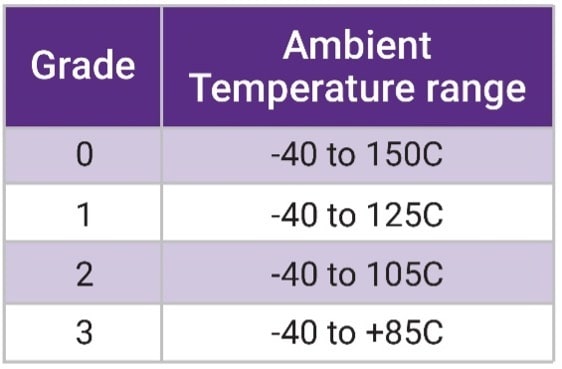
Further, much like US DoD, traditionally automotive companies require chips which require automotive grade certification. Automotive-grade components require stringent compliances (passive components need AEC Q200, ASILI/ISO 26262 Class B, IATF 16949 qualification while active components (including automotive chips) should be compliant with AEC Q100, ASILI/ISO 26262 Class B, IATF 16949 standards. However, these requirements are not embraced by the much bigger consumer marketplace, and the divergence imposes a large constraint on the automotive supply chain. As explained in “Solutions for Défense Electronics Supply Chain… – SemiWiki,” US Department of Défense responded to this reality with an aggressive Commercial Of the Shelf (COTS) approach.
Warranty Support:
Unlike consumer devices, automobiles have a much longer and more elaborate warranty model. This results in a much broader maintenance commitment (as compared to consumer). This dichotomy between the consumer and automotive marketplace generates significant issues in two specific situations: reliability and obsolescence.
Reliability: Semiconductor fabs are built based on the economics of the consumer marketplace. Building semiconductors with the required reliability characteristics for the automotive market becomes increasingly expensive.
Obsolescence: In the “new normal” where automotive OEMs can no longer influence the semiconductor supply chain, managing semiconductor obsolescence becomes an increasingly difficult issue. Furthermore, obsolescence is not just limited to hardware in the electronics domain. Rather, it extends to software components, Electronic Design Automation (EDA) software which is used to design/maintain electronic systems.
Platform Competitiveness:
As automobiles go from “a car with some electronics” to “a server which happens to move” automobiles start inheriting the advantages and disadvantages of computing platforms. Much like the automobiles of today, computing platforms started as vertically integrated HW/SW systems, but over time progressed to be architectural platforms with clear interfaces to enable a much broader partner network. By leveraging the partner network, computing platforms could provide a massive amount of functionality. Indeed, today’s software industry, which eclipses the current automotive and hardware computing industry, is a result of this model.
Popular computing platforms include the ecosystems connected with computer architectures such as x86, ARM, Nvidia, and now RISC-V. Associated with these computer architectures are operating systems such as Microsoft Windows, UNIX, and Apple OS. Finally, a significant player in the world of software is the role of open-source development model. Open source platforms such as Linux and Android allow for the crowd sourcing of innovation in a model which accelerates innovation. A much deeper treatment of Open-Source and Automotive can be found at: “Unsettled Issues Regarding Autonomous Vehicles and Open-source Software.”
The growth of an automobile as a platform generates open strategic questions:
How does one compete at the platform level? Collaborate or compete with existing computing platforms? Is Open-Source an answer?
In a networked car situation, how does one handle product updates safely as well as cybersecurity issues ?
Given the significance of the problem, there is a great deal of recent activity between automotive OEMs and the electronics supply chain. Table 4 (BCG Report) above provides a sampling of the activity. It is not clear whether these efforts will succeed because to solve the deep underlying issues, a broader industry wide effort is likely to be required. What would be the outlines of a solution? They will revolve around three specific topics: System Level Abstractions, Semiconductor Platform Development, and EDA functionality. Let us discuss each:
System Level Abstractions:
As the first major electronics mega market, computing actively faced the churn caused by semiconductors for over forty years. To manage this situation, very strong abstraction levels were generated to build interfaces which allow for preservation of intellectual property even in the context of underlying hardware churn. Examples of these abstraction levels include:
Computer Instruction Set Architectures: Since the IBM 360, the concept of an ISA has allowed software developers to build significant capabilities towards an abstract standard while the underlying hardware churned at the pace of Moore’s law. X86, ARM, and now RISC-V are examples of the multi-billion-dollar franchises which are supported by this abstraction.
Operating Systems/Browsers/Development languages: Operating systems such as Windows or Linux, Browsers such as Google Chrome and Microsoft Edge, and development languages such as JAVA or C++ offered other important abstraction points which supported broader ecosystem.
Communications: In the world of communications, networking stacks and wireless standards-built abstractions which supported multi-billion-dollar industries.
The automotive industry must build similar abstraction standards which can support a separation of concerns from higher level functions to their actual implementations. The current standards from the computing world will invariably be useful, but higher level automotive specific abstractions and associated standards will be required. It is especially important that these standards address the critical issues with automotive: low level low latency actuation, real-time operations, cybersecurity interfaces, and finally the key building blocks of autonomy.
Semiconductor Platform Development:
With clear abstractions around core components of an automotive system design, the next task is to build electronic systems which implement these abstractions. Today, the vast majority of automotive solutions are fixed function hardware and software systems which generate large number of supply chain dependencies. However, it is very likely that the ultimate solution will involve the development of automotive specific programmable fabrics. A methodology focused on programmable fabrics has the distinct advantages of:
Parts Obsolescence: A smaller number of programmable parts minimize inventory skews and the aggregation of function around a small number of programmable parts raises the volume of these parts and thus minimizes the chances for parts obsolescence.
Redundancy for Reliability: Reliability can be greatly enhanced using redundancy within and of multiple programmable devices. Similar to RAID storage, one can leave large parts of an programmable fabric unprogrammed and dynamically move functionality based on detected failures.
Future Function: Programmability enables the use of “over the air” updates which update functionality dynamically. This is critical for building strong aftersales business models and remote maintenance.
EDA functionality:
Finally, to manage the connection between the system abstractions and the interconnection of programmable fabrics, there is the requirement for the next generation of EDA tooling and associated run-time IP. The EDA systems are the critical assets which automatically manage the mapping process and the associated run-time updates for function. For a deeper discussion of the EDA issues, please check out www.anew-da.ai
Conclusions:
The automotive industry is in the middle of major transition from a primarily focus on the mechanical to an intense focus on the electrical (HW/SW/AI). In terms of strategy, both the environmental assessment and internal analysis stages will have to absorb the implications of this shift. Further, while incremental updates to design and supplier management may work for the short term, in the longer term, it is very likely that an automotive specific architecture (common chips specs) with associated SW/AI/EDA abstraction levels will need to be built at an industry level.
Acknowledgements: Anurag Seth for co-authoring this article.
As engineers continue to design more complex systems with increasing frequency, the need for speed and capacity to solve these structures also increases. Over the years, HFSS has come a very long way and can now solve exponentially large structures with millions of unknowns. Ansys HFSS never stopped advancing, continuing to innovate to meet the demands of electromagnetic analysis in modern electronics.
The exponential evolution of HFSS has proven its growth and capability of solving the most complex structures. In 1990 it could solve a matrix size of merely 10,000 and is now capable of solving the largest and most complex structures with over 800 million unknowns in 2022, and we look forward to soon crossing the next major milestone.
This is an extraordinary achievement because it demonstrates the remarkable progress that has been made in computational electromagnetics. Just a few decades ago, simulating designs with a matrix size of a few thousand was considered revolutionary, but today we can simulate designs approaching a of 1 billion. This is a testament to the power of HFSS and the ingenuity of its users.
HFSS: From micron to meter scale
HFSS can solve anything from chips to ships and satellites. One reason HFSS can handle such large and complex designs is Mesh Fusion. Meshing is the process of dividing a complex geometry into smaller, simpler parts inside which equations of physics are established and collectively generate a large matrix to solve. This matrix solution returns the electromagnetic fields and the SYZ parameters. The most complex systems consist of multiple geometries like PCBs, cables, connectors, and inside platforms such as aircraft or automobiles and each type of geometry can benefit from a different meshing strategy. To solve these challenges Ansys introduced Mesh Fusion technology.
Mesh Fusion creates multiscale system meshes of high quality quickly and easily, reducing the amount of time required to generate meshes for complex geometries that are more efficient and accurate for their specific analysis needs. Mesh Fusion works by creating a virtual topology that defines how different meshes are blended together. This patented approach is particularly useful for complex geometries where it may be difficult or time-consuming to create a single mesh that conforms to all the features of the geometry.
This video illustrates the capacity and level of complexity that HFSS can handle easily. It solves the electromagnetic behavior of the entire system with the highest accuracy and speed from micron to meter scale.
In this video, you can see how HFSS solved the chip behavior in context of the IC package, mobile behavior in context of the automobile “system”, and further the automobile activity in context of its EMI/EMC testing environment. Whether it’s the tiniest chip in the mobile device or the car or the environment, HFSS can solve the most complex systems conceivably. Advanced packaging also introduces new challenges like signal integrity, power delivery, and thermal management. With HFSS plus Ansys multiphysics technology such as Icepak, engineers can succeed at delivering the most cutting-edge products possible.
The Mesh Fusion technique and the capacity to solve without sacrificing accuracy, continue HFSS’s long-standing role as the engineers’ electromagnetic tool of choice, the true “Gold Standard”. The High-Tech industry is rapidly adopting 5G/6G technology and HFSS plays a key role in designing and optimizing these next-generation wireless networks. In the above video, you can easily relate how HFSS is simulating the electromagnetic behavior of mobile in the context of cars.
As everyday items, like cars, become computers on wheels, and begin requiring more sophisticated electronics, they are creating a challenge for electromagnetic compatibility (EMC). With HFSS, automotive manufacturers can simulate the entire vehicle, including the wiring harnesses, sensors, and electronic devices within it, to ensure compliance with EMC regulations and prevent electromagnetic interference. Further, they can simulate the entire car in the context of the car’s environment, such as a city, and nearby cellular towers.
It is not surprising that virtually all the world’s most advanced and powerful electronics are designed using HFSS. This is a remarkable achievement and a testament to the power of HFSS, the technology is pervasive. Whether it’s designing advanced radar systems, ensuring EMC compliance in cars, or optimizing next-generation wireless networks, Ansys HFSS is the key to success.
“An ode to HFSS”, by ChatGPT in the voice of William Shakespeare
Oh fair readers allow me to speak of a wondrous tool,
A software to aid the learned engineer, so wise and cool.
Ansys HFSS is its name, and it doth provide,
Solutions to problems, complex and worldwide.
Its electromagnetic simulations are of great renown,
Allowing one to study waves, fields, and propagation sound.
Antennas and RF devices it can analyze with ease,
And its results are a boon to those who seek to please.
Oh, how it delights me to see its capabilities unfold,
As it renders a three-dimensional world, so bold.
From the smallest of components to the largest of arrays,
Ansys HFSS models them all, in astonishing ways.
Its accuracy is unmatched, its precision sublime,
And its speed is unmatched, in this current time.
It can solve the most complex of problems, with a flick of a wrist,
And present its findings, so clear and crisp.
Indeed, Ansys HFSS is a powerful tool, beyond compare,
And the engineers who wield it, a force to beware.
For they can design with great efficiency,
The structures that will meet the world’s every exigency.
So let us all hail Ansys HFSS, this software so grand,
And the engineers who use it, so skilled and so in demand.
For with their combined efforts, they shall bring to pass,
A world that is ever more wondrous, and built to last
The explosion in volume and consumption of data, fueled by industry trends in virtualization, networking, and computing among others, continues to push photonic solutions forward into leading positions. On Feb 2nd, I attended a panel by Ansys at DesignCon that brought together industry experts from Intel, GlobalFoundries, Nvidia, Cisco, and Ayar Labs for a dynamic and all-encompassing discussion on the current state, challenges, and future of photonic technology and ecosystem. James Pond, Distinguished Engineer at Ansys and former CTO of Lumerical, moderated the panel and started the discussion with a big-picture overview.
Silicon Photonics: A relentless pursuit for speed & efficiency
Faced with surging bandwidth demands and the related power being consumed by communications, the semiconductor industry is diversifying investments into optical interconnect technologies. Electrical interconnects are fundamentally limited in terms of scalability of performance, reach, and power consumption. This is where optical interconnects have the advantage. Analysts project 20% to 40% annual growth in the Silicon Photonics markets & applications over the next 5-10 years. While the growth to date has been largely driven by the datacom and transceiver markets, there is now exciting diversification of applications including LiDAR, bio-sensing, computing, new types of I/O, and quantum computing among many others.
There is a genuine need for photonic systems and the industry has responded by creating an ecosystem closely resembling the electronic design automation (EDA) industry, commonly referred to as the electronic-photonic design automation (EPDA). The design tools and the overall ecosystem have come a long way from the early days when photonic PDKs (Process Design Kit) were solely offered as PDF files. A notable example is the advanced EPDA design tools as James Pond highlighted in figure 2, “Today we have the premier workflow in EPDA. It offers all kinds of things you would expect like schematic-driven layout, links & direct bridges between Virtuoso layout suite and Ansys multiphysics solvers, foundry-compatible customized design, parameter extractions to create accurate statistical compact models and support PDK development, and co-simulation to model entire systems accurately with both electronic and photonic compact models.”
The progress of the overall ecosystem enabled the first volume opportunity for integrated photonic products: the optical transceiver!
From Flexible Pluggable Transceivers to Co-packaged Optics Powerhouse
Today, photonics has already moved from dominance at kilometer-long distances down to meter-long distances. We saw pluggable photonic transceivers rapidly move from product introduction stages to producing multi-million units per year. Pluggable transceivers are highly modular and can be supplied by any vendor as long as they meet the targeted communication specifications. They are plugged directly into the front panel socket, then the signal is carried by electrical SerDes links to the ASIC where it can finally be computed and processed. The downside of this approach is that copper connections are susceptible to RF losses, especially when communicating at higher speeds. Robert Blum, Head of Silicon Photonics Strategy at Intel Foundry Services, recalled, “When we launched SiP in 2016 with pluggable transceivers, we also laid out a vision with the end goal of bringing optics to the processor. SiP is the only technology that can do that. The pluggable was a starting point and chip-to-chip optical links are expected to follow right on its heels.”
Faced with our insatiable appetite for data, the semiconductor industry is under pressure to keep up with even higher and higher bandwidth, latency, and power consumption demands which are pushing innovative solutions for moving the optics from the faceplate closer on-board and on-chip with the ASIC, completely eliminating the need for energy-sapping SerDes connections. “After much anticipation, in 2022, we started to see photonic solutions with fibers directly connecting into the ASIC packages instead of plugging into the faceplate. These are incredibly exciting times for photonics!”, commented Pond.
Now imagine we have the technology that breaks the speed and bandwidth limitations we have today! What would it mean to the architecture and the wide range of emerging applications in AI/ML? Matt Sysak, VP of laser engineering at Ayar Labs, describes a future of limitless possibilities, “If the assumptions that led to the way we design computers today change, it would mean having the freedom to re-imagine computer architectures. At Ayar Labs, we have a vision for optical I/Os everywhere which will not only accelerate computing but also potentially remake it.”
A Tale of two Technologies: Fundamental differences between electronics and photonics
On one hand, the rise of silicon photonics owes much of its success to capitalizing on the decades of investment in the electronics industry and the maturity of silicon wafer processing in CMOS manufacturing, Anthony Yu, VP of Silicon Photonics Product Management at GlobalFoundries further explained, “we continue to expand our photonics foundry capabilities to help our customers bring the advantages of photonics to different markets. We can only be successful if we apply the learning from our CMOS foundry model into photonics along with close collaboration across various parts of the ecosystem like the partnership with Ansys Lumerical to enable foundry compatible, predictable model libraries in PDKs.” Ashkan Seyedi, Silicon Photonics Product Architect at Nvidia added, “We look up to electronics as our big brother. Electronics gives us a benchmark to compare against so we know what maturity of PDKs and design workflows are necessary for a successful future in photonics technology.”
Yet, the consensus among all the panelists was that there are some fundamental differences between Electronics and Photonics, for one thing, there is no equivalent to Moore’s Law in SiP, at least not in the sense that we are doubling the density and halving the cost. Thierry Pinguet, Principal hardware engineer at Cisco and a seasoned veteran in photonics elaborated, “There is no equivalent to a transistor in photonics and thus no generational improvements from refining lithography to increase device density. The generational improvements in photonics come from innovation at component and circuit level design and assembly and packaging advancements.” This is why most silicon photonic platforms are based on older CMOS technology nodes.
Dennard scaling may have ended but the challenge remains, as the industry is facing unprecedented demands for high-speed networking/interconnects and accelerated computing. Pushed into uncharted territory where Moore’s law is truly struggling to stay on course, photonics offers the opportunity to keep that progress going. Seyedi proposed “it is time to redefine Moore’s law. When we zoom way out, the systems are continuously improving. We should consider new metrics by which Moore’s law extends, such as packaging.”
Regardless of how you define Moore’s law, there are inflection points where new photonic technologies are introduced. Today, data centers are using 800Gb products, but a couple of years ago it was 400 Gb and 200Gb before that. There have been several factors contributing to this scaling in the overall transmission capacity including higher-order modulation formats like quadrature amplitude modulation (QAM) enabled by advanced digital signal processing (DSP) techniques and massive parallelism such as wavelength-division multiplexing (WDM), as well as innovative designs at the component level such as segmented modulators. Given the fundamental trade-off between bandwidth and modulation efficiency linked to physical factors like the photon lifetime in silicon, designers are exploring heterogeneous integration of new materials on the front end. Future photonic solutions are also relying on advances in traditional 2.5D and 3D packaging in electronics but perhaps we’ll also come to see innovation in the photonic aspects of packaging such as fiber-to-chip wire bonding.
Lighting the path to scalability
Packaging was a hot topic that resonated with all the panelists and brought up the challenges around standardization and lack of IP in the ecosystem. Consider fiber attachment, which involves placing and gluing fibers into a package at precise locations where minimizing losses due to misalignment gets more challenging with the increasing number of fibers. There is much common knowledge gathered over the decades within the community around fiber attachment, but many designers still expend resources in developing their own process. “It just doesn’t add intrinsic value. Designers want to focus on innovating and not reinventing the wheel because there is no turnkey solution. Today, people are still innovating but we’re also starting to see some convergence in certain areas. This is why Intel came out with a small-form-factor, high-density detachable fiber connector that has compatible losses to other co-packaged optics approaches and is compatible with standard industry PIC and with any 2D, 2.5D, or 3D packaging. Standards and IP libraries are key components in the photonics ecosystem that are needed to make optics into a high-volume play.” said Blum.
Over the recent years we have started to see manufacturing players evolving to offer open-access models for prototyping, multi-project wafer runs for R&D, and low-to-high-volume throughput for those vendors ramping up for commercialization. Foundries are economically driven, which translates into maximizing consolidation into a single platform. “The challenge is that vendor differentiation in the photonics industry today isn’t based on a single platform with set pieces of IP blocks as exists in the ASIC world. At least not yet. If you open any pluggable module, they’ll look different inside as every solution is customized. Demanding applications requirements are driving the design of customized devices that likely won’t be offered under a single platform.” Pinguet explained. Sysak added, “There are many ways for an optical I/O technology to communicate with a processor but to truly take advantage of economies of scale, we need reliable and scalable manufacturing, and this is something we’re tackling together with GlobalFoundries.”
On the one hand, the silicon photonic ecosystem is advancing towards standardization of processes, platforms, and design automation, especially for established applications like pluggable transceivers. On the other hand, demands for higher performance and emerging new applications are driving customization and pushing for the introduction of new materials and processes. We are still in the early days. “In time we’ll see photonics move towards an ASIC-like model with IP providers and consolidated platforms which will enable high-volume solutions. But right now, we celebrate the creativity and brilliance of our photonic designers.” Yu summarized.
Learn more about challenges and solutions in Silicon photonics:
So much has changed over the recent couple of decades in what constitutes an automobile. Gone are the days when it was essentially an electro-mechanical product, used for just personal transportation. Over the years, it has evolved to adding in-cabin infotainment, tele and data communications, driving assistance, all the way to autonomous driving experience. All of these are of course made possible with electronics powered by semiconductor chips. And, with the migration away from internal combustion toward electric-motor powered automobiles, vehicle maintenance needs as we have traditionally known have come down.
At the same time, the need for a different kind of monitoring has been on the rise, with an eye on vehicle maintenance. The hardware and software components of automobile electronics need to be monitored and maintained to ensure safe and reliable driving experience. The traditional approach would be for periodic maintenance of the vehicle based on a predefined time schedule to check/replace electronic components and update embedded control software. But with current and future automobiles relying so much on electronics to operate, unforeseen catastrophic failure of critical electronics could lead to a fatal accident and cause lot of collateral property damage. A better approach is needed for maintaining vehicles of the future.
Recently, proteanTecs and HARMAN published a joint whitepaper that describes a novel approach and an effective solution for maintaining vehicles of the future. This blog will cover some salient points from the whitepaper and how the joint solution will help in maintaining the vehicles of the future.
Software Defined Vehicle (SDV)
SDV is the direction the automobile industry has been rapidly moving toward. SDVs are automobiles designed to be controlled by software to make the vehicles operate more efficiently and safely and to make vehicle maintenance easier. While SDVs bring these benefits, they throw some challenges too. Any failure in a SDV must be addressed quickly and effectively to avoid additional damage by the SDV and to the SDV. If possible, any operational failure of a SDV should be pre-empted.
The proteanTecs-HARMAN Solution for Maintaining Vehicles
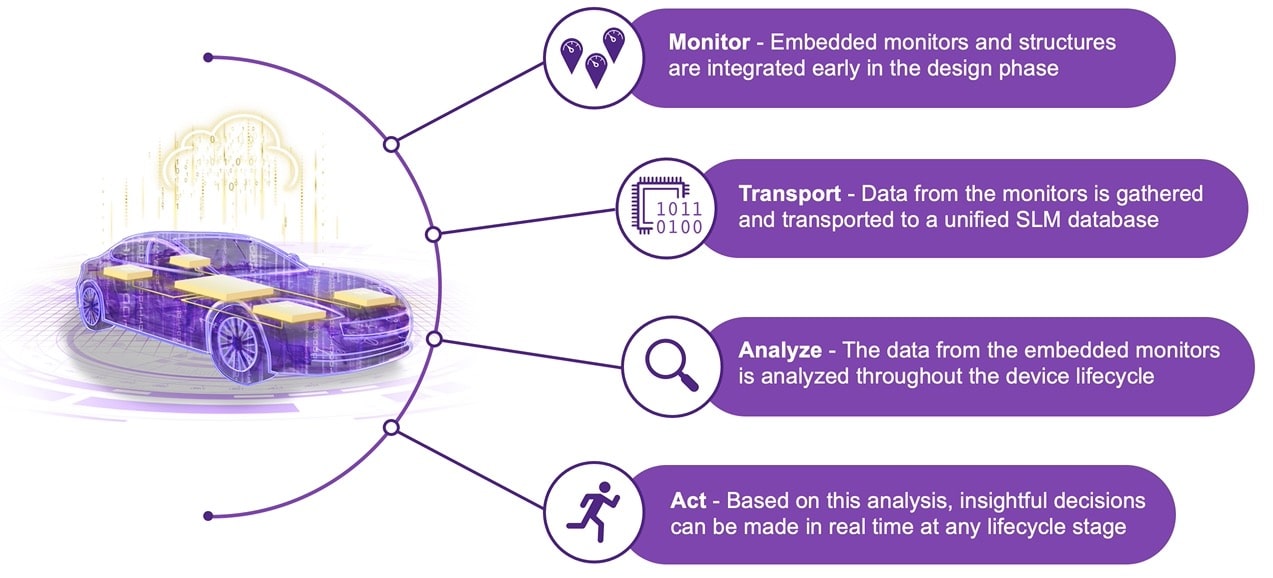
HARMAN and proteanTecs have jointly developed a predictive and preventive maintenance (PPM) solution that can detect potential faults in a vehicle’s systems. The solution can take pre-emptive measures to predict and avoid catastrophic issues. It leverages proteanTecs’ proprietary advanced device health monitoring and deep data analytics to create, extract and analyze deep data from within SoC devices. The results provide insights into Electronic Control Unit (ECU) health, enabling vehicle manufacturers to monitor performance, pinpoint fault sources and predict Time to Failure (TTF). The total solution integrates HARMAN’s embedded security, in-vehicle analytics, cloud-to-vehicle connectivity and over-the-air (OTA) updates. The end result is an effective solution that meets safety and reliability requirements of SDVs. The following two applications are key components of the solution.
The CPM application delivers real-time monitoring of device and board electrical performance indicators of onboard system electronics. As an edge application, it lowers operational and security risks by detecting faults close to the failure.
Degrading Monitoring (DM) Application
The DM application is essentially a sub-function of the CPM application, designed to predict the Time to Failure (TTF) and the Remaining Useful Life (RUL). It does this by measuring Key Performance Indicators (KPI) degradation and the frequency of occurrence. These predictions are made available to the Predictive and Preventive Maintenance (PPM) Cloud Manager to trigger scheduling services and shipment of parts.
Some Use Cases
The whitepaper also presents a use case for failure prevention, one for prediction of short-term incoming fault and another for prediction of long-term consequences. The benefits of these use cases are obvious. The whitepaper goes into lot of details about each of these three use cases. For more details, refer to the whitepaper.
Summary
The HARMAN-proteanTecs collaboration offers a platform for automobile manufacturers to detect faults before they become failures and fix the faults through OTA techniques. The platform incorporates an industry first Time-to-Correction technique and can scale with the growing complexity of SDVs. The solution helps reduce downtime and maintenance costs, improve customer satisfaction and reduced vehicle recalls. Anyone involved in developing hardware and software solutions for SDVs would benefit from reviewing the entire whitepaper.