You are currently viewing SemiWiki as a guest which gives you limited access to the site. To view blog comments and experience other SemiWiki features you must be a registered member. Registration is fast, simple, and absolutely free so please,
join our community today!
WP_Term Object
(
    [term_id] => 19172
    [name] => Chiplet
    [slug] => chiplet
    [term_group] => 0
    [term_taxonomy_id] => 19172
    [taxonomy] => category
    [description] =>
    [parent] => 0
    [count] => 245
    [filter] => raw
    [cat_ID] => 19172
    [category_count] => 245
    [category_description] =>
    [cat_name] => Chiplet
    [category_nicename] => chiplet
    [category_parent] => 0
    [is_post] =>
)
For decades, chipmakers improved computing performance largely by putting more capable circuitry on a piece of silicon. That remains important, but AI is exposing its limits. Large models demand enormous amounts of data movement, sustained power and effective cooling. A fast processor cannot deliver its full benefit if memory… Read More
Next-gen AI accelerators, high-performance processors, and complex computing architectures depend heavily on advanced packaging. Bringing multiple dies, chiplets, high-bandwidth memory, and advanced interconnects together into a single 2.5D or 3D package yields massive performance gains. However, this design evolution… Read More
Vivek Raghuraman is co-founder and CEO of Mixx Technologies. At Intel, he led the first integrated silicon photonics transceiver to commercial release. At Broadcom, Raghuraman took two commercial generations of co-packaged optics through hyperscaler qualification in Meta’s environment. In 2023, together with Rebecca … Read More
Dr. Sunghyun Park earned his B.S. from KAIST and his Ph.D. from MIT’s CSAIL (Computer Science and Artificial Intelligence Laboratory). He built his career across Intel, Samsung Research, and SpaceX as a semiconductor design engineer, before serving as Vice President at Morgan Stanley in New York — a rare combination of… Read More
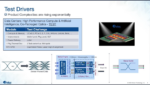
At the 2026 OIP Ecosystem Forum, the industry narrative shifted from incremental scaling to what TSMC defines as the “Intelligence Revolution.” Akin to the 18th-century Industrial Revolution which transitioned human physical labor to mechanical power, the current era is augmenting human ingenuity through … Read More
Source: Jonathon Evans and Polychronis Xekalakis, “NVIDIA Vera CPU,” Hot Chips 2026. Performance figures are NVIDIA claims, and several results were based on preproduction or unofficial testing.
NVIDIA’s Vera CPU is a server processor designed specifically for agentic AI, where language models repeatedly observe, reason,… Read More
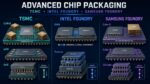
Advanced semiconductor packaging has become essential to improving computing performance as conventional transistor scaling grows more difficult and expensive. Instead of manufacturing an entire processor as one large monolithic die, chipmakers can divide it into smaller chiplets and combine logic, memory, input/output… Read More
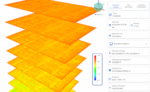
Signoff-quality design tools are mandatory for signoff, though not so good for early design exploration. Signoff demands high accuracy in design description and high precision in analysis. The first requirement can’t be met early in design where architecture decisions are still in flux, and the second depends on very detailed… Read More
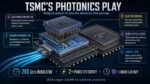
TSMC’s photonics strategy is centered on integrating optical input-output with advanced logic, rather than selling conventional optical transceivers as standalone products. The company is developing a silicon-photonics foundry platform and a packaging architecture called TSMC-COUPE, or Compact Universal Photonic … Read More
Intel is considering a return to memory technology decades after abandoning mainstream DRAM and, more recently, selling its NAND business. Chief executive Lip-Bu Tan has argued that memory should no longer be viewed simply as a low-margin commodity. Artificial intelligence is turning bandwidth, latency and data movement … Read More












Intel Foundry: AI performance now depends on the whole system