You are currently viewing SemiWiki as a guest which gives you limited access to the site. To view blog comments and experience other SemiWiki features you must be a registered member. Registration is fast, simple, and absolutely free so please,
join our community today!
WP_Term Object
(
[term_id] => 89
[name] => FinFET
[slug] => finfet
[term_group] => 0
[term_taxonomy_id] => 89
[taxonomy] => category
[description] =>
[parent] => 0
[count] => 234
[filter] => raw
[cat_ID] => 89
[category_count] => 234
[category_description] =>
[cat_name] => FinFET
[category_nicename] => finfet
[category_parent] => 0
[is_post] =>
)
Every generation of semiconductor innovation has relied on one fundamental principle: before a technology can be manufactured at scale, it must first be understood. That understanding comes through characterization.
For decades, characterization enabled process learning. It helped engineers understand transistor behavior,… Read More

As vehicles become increasingly software-defined, automotive semiconductor suppliers face growing pressure to deliver higher compute performance while maintaining strict requirements for power efficiency, reliability, and long-term product support. Advanced driver assistance systems (ADAS), electrification, … Read More
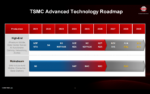
At its 2026 Technology Symposium, TSMC delivered a clear message: the AI era has entered a new phase. The primary constraint is no longer model capability, but the systems required to run those models at scale. Addressing this shift will demand significant advances in semiconductor technology, spanning compute, memory, interconnects,… Read More
In the modern world, the semiconductor industry stands at the heart of technological innovation. From smartphones and laptops to advanced medical devices and artificial intelligence systems, nearly every piece of contemporary electronics depends on increasingly sophisticated microchips. Among the leading companies … Read More
The global semiconductor industry sits at the foundation of modern technology, powering everything from smartphones and cloud data centers to artificial intelligence, automobiles, and national defense systems. At the center of advanced chip manufacturing are three major players: TSMC, Samsung Foundry, and Intel Foundry… Read More
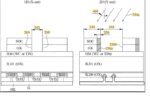
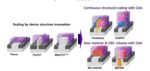
The transition from FinFET to Gate-All-Around (GAA) transistor technology represents a pivotal moment in the evolution of logic devices, driven by both physical scaling limits and the rapidly growing computational demands of artificial intelligence. As semiconductor technology approaches the sub-3 nm regime, traditional… Read More
When Morris Chang left Texas Instruments in 1983 to found TSMC, he was not merely starting a new company—he was proposing a new industrial logic. Chang recognized that semiconductor manufacturing had become so capital-intensive that it could no longer survive as just one function inside a vertically integrated company.… Read More
In the early 2000s, Moore’s Law—the observation that the number of transistors on a chip doubles roughly every two years—was facing an existential crisis. As semiconductor nodes shrank below 90nm, planar transistors suffered from debilitating issues: leakage currents soared, power efficiency plummeted, and scaling became… Read More
A recent commentary from four former Intel board members argue that Intel should be split into two separate companies with separate CEOs and separate board of directors. Charlene Barshefsky, Reed Hundt, James Plummer, and David Yoffie wrote that Intel shareholders should insist on a split which would create a new, independent,… Read More
Alchip Technologies Ltd., a global leader in high-performance computing (HPC) and artificial intelligence (AI) ASIC design and production services, continues its trajectory of rapid growth and technical leadership by pushing the boundaries of advanced-node silicon, expanding its global design capabilities, and building… Read More
Synopsys Wins the AI Silicon Brain Drain