Samsung might be the most unusual company on earth because it is difficult to decide what kind of company it actually is. To most consumers, Samsung means smartphones, televisions, refrigerators. Yet the name also appears on apartment towers, cargo ships, hospital equipment, insurance policies, construction projects, and… Read More
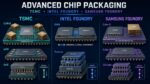
Comparing Advanced Packaging from TSMC, Intel Foundry, and Samsung Foundry
Advanced semiconductor packaging has become essential to improving computing performance as conventional transistor scaling grows more difficult and expensive. Instead of manufacturing an entire processor as one large monolithic die, chipmakers can divide it into smaller chiplets and combine logic, memory, input/output… Read More
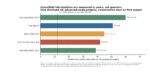
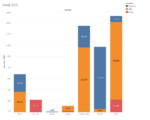
The Twelve-Month Rule Does Not Describe a New Fab
By Nikhil Shah
Capital spending is often treated as if it becomes semiconductor capacity about twelve months later. That can be a useful rule for equipment installed in an existing fab. It is a poor description of a new fab built from the ground up.
I tested the distinction using five advanced-node projects in the United States where… Read More
ASML High-NA EUV is Not Ready for High-Volume Production
Contrary to the popular press, ASML High-NA EUV is not ready for logic production yet—and it may never be, at least not in the form originally envisioned. If you remember how long it took conventional EUV to become production-worthy—arguably 5–10 years—this should not come as a surprise. More importantly, this is no longer just… Read More
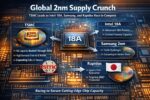
Global 2nm Supply Crunch: TSMC Leads as Intel 18A, Samsung, and Rapidus Race to Compete
The semiconductor industry is in the midst of a structural supply challenge that’s tightly coupled to exploding demand for advanced chips, especially those used in AI, HPC, and next-generation mobile and consumer devices. At the center of this vortex is the 2nm class of manufacturing technology, representing one of the most … Read More
TSMC vs Intel Foundry vs Samsung Foundry 2026
The global semiconductor industry sits at the foundation of modern technology, powering everything from smartphones and cloud data centers to artificial intelligence, automobiles, and national defense systems. At the center of advanced chip manufacturing are three major players: TSMC, Samsung Foundry, and Intel Foundry… Read More
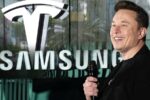
Musk’s new job as Samsung Fab Manager – Can he disrupt chip making? Intel outside
– Musk chip lifeline to Samsung comes with interesting strings attached
– Musk chose Samsung over Intel-What does that say about Intel?
– Musk will hold sway over Samsung much as Apple/NVDA over TSMC
– Will Musk do a “DOGE” on chip tool makers? How much influence?
Tesla/Samsung $16.5B deal
… Read MoreWhat if China doesn’t want TSMC’s factories but wants to take them out?
Insights into the Semiconductor Industry and the Semiconductor Supply Chain
I am not an expert in geopolitical issues, but lately, my research has begun to worry me. As I was preparing to be interviewed for Chinese media, I was in my “Chinese Zone”, adapting to what is palatable to a Chinese audience. Maybe my mode provoked the thought:… Read More
The Case for U.S. CHIPS Act 2
Despite murky goals and moving targets, the recent CHIPS Act sets the stage for long term government incentives.
Authored by Jo Levy and Kaden Chaung
On April 25, 2024, the U.S. Department of Commerce announced the fourth, and most likely final, grant under the current U.S. CHIPS Act for leading-edge semiconductor manufacturing.… Read More
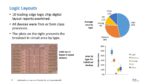
ISS 2024 – Logic 2034 – Technology, Economics, and Sustainability
For the 2024 SEMI International Strategy Symposium I was challenged by members of the organizing committee to look at where logic will be in ten years from a technology, economics, and sustainability perspective. The following is a discussion of my presentation.
To understand logic, I believe it is useful to understand what makes… Read More


ASML and TSMC’s 12-Inch Photomask Initiative: Technical Significance