You are currently viewing SemiWiki as a guest which gives you limited access to the site. To view blog comments and experience other SemiWiki features you must be a registered member. Registration is fast, simple, and absolutely free so please,
join our community today!
Time for Chip Diplomacyby Terry Daly on 05-29-2020 at 10:00 amCategories: China
An industry caught in the crosshairs of geopolitics needs global emeritus leadership
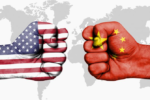
The semiconductor industry is at the epicenter of great power politics. An ascendant China is on a quest for a unified global system with China as the leading power. The United States seeks to maintain its position as leader of the liberal democratic… Read More
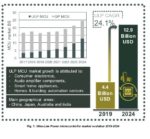
When it comes to extremely power sensitive applications such as IoT and edge devices, there is literally an arsenal of power saving techniques that could be used. The tricky part is figuring out which ones to use and how to use them for maximum benefit. This is coupled with the need to not hamper device performance or functionality.… Read More
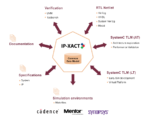
A couple of months ago I introduced PLDA, a new member of the SemiWiki community, with a post about PLDA’s switch IP and its support for PCIe and NVMe solid state disks. Working in the area of high-performance data interconnects requires support for a growing list of standards, standards that continually evolve. The trick is to stay… Read More
Last week Mentor hosted a virtual event on designing an AI accelerator with HLS, integrating it together with an Arm Corstone SSE-200 platform and characterizing/optimizing for performance and power. Though in some ways a recap of earlier presentations, there were some added insights in this session, particularly in characterizing… Read More
The life of a SoC designer is an unenviable one. Not only does he have to work in a landscape where competition is intense but he also has to collaborate effectively with globally dispersed teams to ensure the design meets the project timeline. Then there are also the risks, more so in the current pandemic! There is the constant fear… Read More
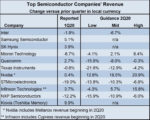
The worldwide economic outlook is chaotic due to the ongoing COVID-19 pandemic. The outlook for the semiconductor market is also very uncertain. 1Q 2020 revenue versus 4Q 2019 was mixed for major semiconductor companies, ranging from a 19% decline for STMicroelectronics to 9.9% growth from Kioxia (previously Toshiba Semiconductor).
…
Read More
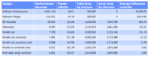
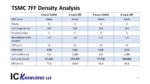
I have written a lot of articles looking at leading edge processes and comparing the process density. One comment I often get are that the process density numbers I present do not correlate with the actual transistor density on released products. A lot of people want to draw conclusions an Intel’s processes versus TSMC’s processes… Read More
There’s a lot of debate about how and when we are going to emerge from the worldwide economic downturn triggered by the pandemic. Everyone agrees we will emerge. This isn’t humanity’s first pandemic, nor will it be our last. But do we come out quickly or slowly? And what does the economy look like on the other side, particularly for … Read More
Achronix came to SemiWiki in 2017 and we added a chapter on the history of Achronix in our update version of “Fabless: The Transformation of the Semiconductor Industry”. So yes we know quite a bit about Achronix and the FPGA business so it was a pleasure to do a CEO Q&A with Robert Blake. First lets take a look at his … Read More
In this third article about China’s role in the global semiconductor industry I analyse the current state of affairs of the Chinese semiconductor industry in different segments. In the previous articles, I looked at the possible effects of a US-China decoupling in the semiconductor industry and the impact of the Big … Read More










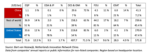
TSMC CoWoS versus Intel EMIB Semiconductor Packaging