Dan is joined by Chris Morrison, Chris has 15 years’ experience in delivering innovative analog, digital, power management and audio solutions for International electronics companies, and developing strong relationships with key partners across the semiconductor industry. Currently he is the Director of Product Marketing… Read More
At the recent Synopsys Users Group Meeting (SNUG) I had the honor of leading a panel of experts on the topic of chiplets. One of those panelists was the very personable Dr. Henry Sheng, Group Director of R&D in the EDA Group at Synopsys. Henry currently leads engineering for 3DIC, advanced technology and visualization.
Are we
…
Read More
Memories have always played a critical role, both in pushing the envelope on the semiconductor process development front and supporting the varied requirements of different applications and use-cases. The list of the various types of memories in use today runs long. At a gross level, we can classify memories into volatile or … Read More
There were quite a few announcements at the TSMC Technical Symposium last week but the most important, in my opinion, were based on TSMC N3 tape-outs. Not only is N3 the leading 3nm process it is the only one in mass production which is why all of the top tier semiconductor companies are using it. TSMC N3 will be the most successful node… Read More
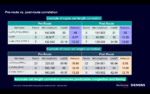
I’ve been following Solido as a start-up EDA vendor since 2005, then they were acquired by Siemens in 2017. At the recent User2User event there was a presentation by Kwonchil Kang, of Samsung Electronics on the topic, ML-enabled Statistical Circuit Verification Methodology using Solido. For high reliability circuits… Read More
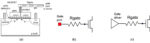
MOSFET gate resistance is a very important parameter, determining many characteristics of MOSFETs and CMOS circuits, such as:
• Switching speed
• RC delay
• Fmax – maximum frequency of oscillations
• Gate (thermal) noise
• Series resistance and quality factor in MOS capacitors and varactors
• Switching speed and uniformity… Read More
Performance, Power and Area (PPA) metrics are the driving force in the semiconductor market and impact all electronic products that are developed. PPA tradeoff decisions are not engineering decisions, but rather business decisions made by product companies as they decide to enter target end markets. As such, the sooner a company… Read More
Anirudh is an engaging speaker with a passion for technology. Acknowledging the sign of the times, he sees significant value-add in AI but reminded us that it is a still supporting actor in system design and other applications where star roles will continue to be played by computational software that’s founded in hard science, … Read More
The flexibility of RISC-V processor IP allows much freedom to meet specific requirements – but it also opens the potential for many bugs created during the design process. Advanced processor features are especially prone to errors, increasing the difficulty and time needed for thorough verification. Born out of necessity, … Read More
Dan discusses the recent Q4 2022 ESDA report with Wally Rhines, Executive Sponsor of the SEMI Electronic Design Market Data report. Overall, the report portrays strong growth and positive results. Dan explores some anomalies in the data and possible reasons with Wally.
Dan also discusses some very interesting events at the upcoming… Read More











Why America’s Semiconductor Manufacturing Capacity Matters