You are currently viewing SemiWiki as a guest which gives you limited access to the site. To view blog comments and experience other SemiWiki features you must be a registered member. Registration is fast, simple, and absolutely free so please,
join our community today!
That was said by the novelist Samuel Butler, but it is not a bad description of why you should spend the Sunday at DAC in one of the workshops that are taking place that day.
One workshop is on Design Automation for Beyond CMOS Technologies. Before getting to design automation, it is good to start with which technologies are potentially… Read More
Previously, I examined chip design in the late 1970s and early 1980s. It was a nostalgic ride – thanks to all those who shared their stories. I enjoyed reading all of them. I drew two basic conclusions in the prior post:
[LIST=1]
Chip design problems are the same, more or less, over time. The numbers just get bigger
Raising abstraction…
Read More
Every SoC project that I know of wants to finish on time, under budget, and maximize profits per device. When I first started out doing DRAM design I learned that we could maximize profit by doing shrinks of existing designs, move from ceramic to plastic packages, and reduce the amount of time spent on a tester. Today, the economic … Read More
How should we assess the risk of harmful metastability in a clock domain crossing (CDC) when the semiconductor process has significant parameter variability? One possibility is to determine the MTBF of a synchronizer at the worst-case corner of the CDC. But that approach has some conflicting complications:
…
Read More
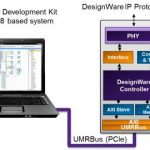
Hybrid IP Prototyping Kit from Synopsys!
Synopsys has launched IP Accelerated initiative last year. The goal was clearly to accelerate Time-To-Market by providing a complete set of “tools” to augment design productivity:
- IP Prototyping Kit with reference designs work out-of-the-box
- IP software development kits enable early
…
Read More
Blogs have limited wordcount so insert your own generic opening paragraph here about the importance of low power in IC design. Mention IoT and cloud datacenters for extra credit.
It is well-known that the biggest reductions in power come from changes at the architectural level. Tools and process can do some things and since they… Read More
It’s less than four weeks to go at DAC 2015 and the program is final now. So I started investigating new technologies, trends, methodologies, and tools that will be unveiled and discussed in this DAC. In the hindsight of the semiconductor industry over the last year, I see 14nm technologies in the realization stage and 10nm beckoning… Read More
There used to be this thing called the “computer lab”, with glowing rows of terminals connected to a mainframe or minicomputer. Computers required a lot of care and feeding, with massive cooling and power requirements. Microprocessors and personal computers appeared in the 1970s, with much smaller and less expensive machines… Read More
Micrel Inc., one of the oldest chipmakers in Silicon Valley, has been acquired by Chandler, Arizona–based Microchip Technology Inc. for $839 million. A pure-play analog chip house will go to one of the leading microcontroller suppliers after regulatory approval amid the consolidation wave that has engulfed the semiconductor… Read More
In the first part of this article, I talked about some of the key business aspects along with some technical aspects like system performance, functionality, and IP integration that drive the architecture of an SoC for its best optimization and realization in an economic sense. In this part, let’s dive into some more aspects that… Read More









Why ASML Is Racing to Build 110 EUV Machines