You are currently viewing SemiWiki as a guest which gives you limited access to the site. To view blog comments and experience other SemiWiki features you must be a registered member. Registration is fast, simple, and absolutely free so please,
join our community today!
FPGAs have always been a great way to add performance to a system. They are capable of parallel processing and have the added bonus of reprogramability. Achronix has helped boost their utility by offering on-chip embedded FPGA fabric for integration into SoCs. This has had the effect of boosting data rates through these systems… Read More
One of the reasons I founded SemiWiki nine years ago was the lack of EDA, IP and Foundry content in the media. The problem is that unless you work in the industry it is very difficult to write about it in competent technical detail. Most media outlets only know what vendors tell them which is how the semiconductor industry worked before… Read More
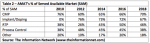
Lam Research (NASDAQ:LRCX) will announce its quarterly earnings on October 23, 2019, and Applied Materials (NASDAQ:AMAT) the following month on November 14, 2019. Both companies make equipment used to manufacture semiconductor devices. While private and institutional investors often own both individual stocks, this article… Read More
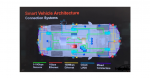
Automotive makers and their suppliers are jacking up the processing power being introduced to cars along with higher speed wireless external connections. These high speed systems promise to collect, process, interpret and transmit sensor data for the purpose of enabling advanced collision avoidance and, ultimately, automated
…
Read More
The International Electron Devices Meeting is a premier event to learn about the latest in semiconductor process technology. Held every year in early December is San Francisco this years conference will be held from Decembers 7th through December 11th. You can learn more about the conference at their web site here.
This is a must… Read More
The server market has been undergoing changes in the last few years. The traditional go-to for server processors had been x86 based chips from Intel or AMD. However, if you go on Amazon AWS looking for EC2 instances, you will see the “A1” instance type, which is an ARM based instance. This is not what you might think at first. The A1 instance… Read More
I mentioned some time ago (a DVCon or two ago) that Accellera had started working on a standard to quantify IP security. At the time I talked about some of the challenges in the task but nevertheless applauded the effort. You’ve got to start somewhere and some way to quantify this is better than none, as long as it doesn’t deliver misleading… Read More
In the automotive space you can’t even get out of the starting gate without Functional Safety (FS). All electronic system that go into cars must have ISO 26262 certification. However, this is not something you slap on after the fact. From the ground up the requirements for ISO 26262 must be considered and the proper processes must… Read More
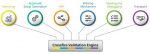
IPs have an attack surface that indicates how they can be compromised in real world scenarios. Some portions of the attack surfaces are well known, others are discovered during analysis, testing or out in the field. SoCs that use large collections of IPs need a systematic and reliable way to determine the various security vulnerabilities… Read More
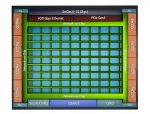
For decades development work on Artificial Intelligence (AI) and Machine Learning (ML) was done on traditional CPUs and memory configurations. Now that we are in the “hockey stick” upturn in deployment of AI and ML, the search is on for the most efficient types of processing architectures. The result is a wave of development for… Read More











Claude as an EDA Tool Wiki