




The world has come through a long way from the 1[SUP]st[/SUP] UNIVAC computer in 1952, IBM mainframes and minicomputers in secured computer rooms to laptops, tablets, mobile phones, and so on in our hands. Imagine the compute power of a minicomputer then and the compute power of your smartphone or tablet today. And do you know the… Read More
 TSMC’s 2026 OIP Forum to Spotlight the Technologies Shaping the Next Era of ChipsIt’s that time of year again. Time certainly…Read More
 Webinar - Avestra Explains How to Achieve Assertion Driven Silicon SuccessStudies have shown that nearly 20% of the…Read More
 PDF Solutions CONNECT 2026: Where Semiconductor Data Meets AIThe semiconductor industry is entering a period in…Read More
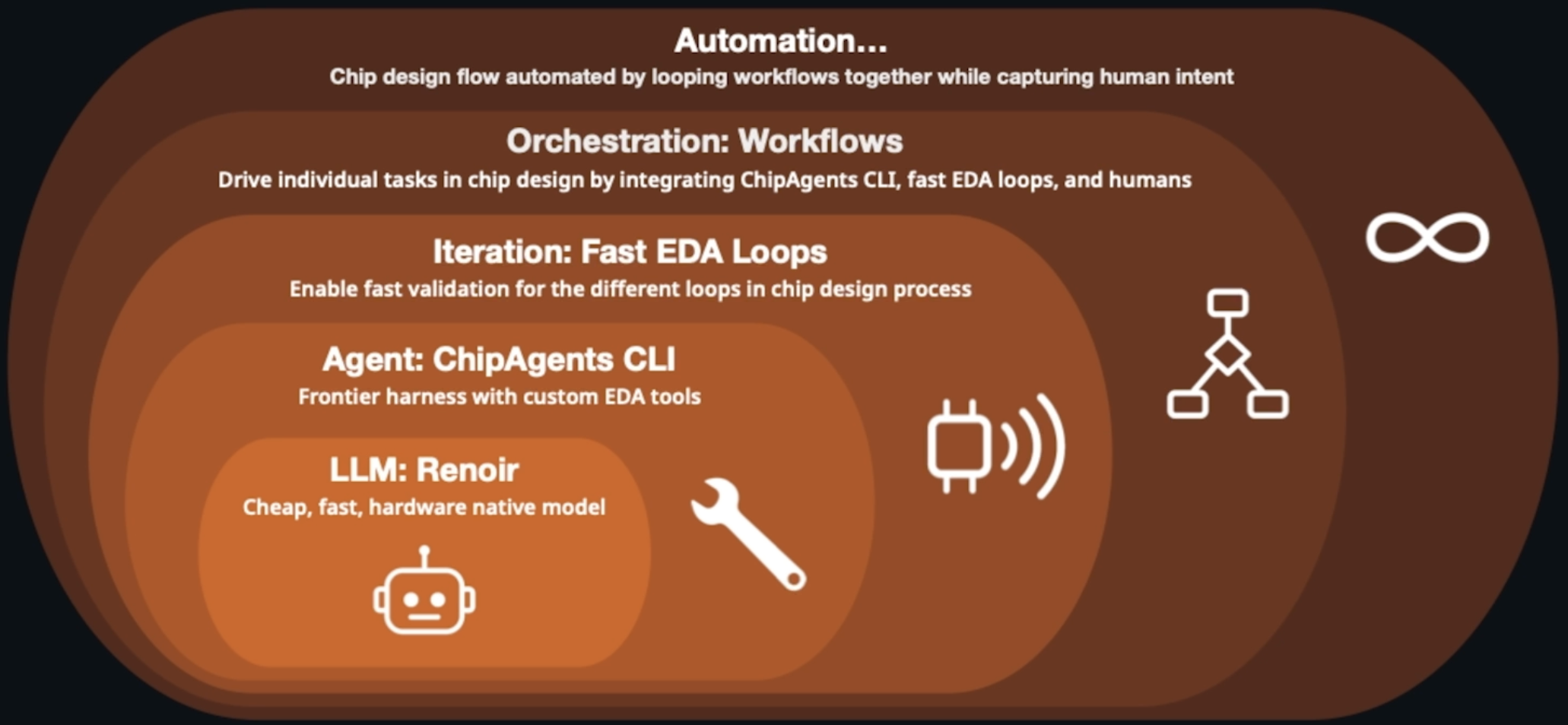 Webinar – ChipAgents Shows You How to Break the Timing Closure Bottleneck with AIWe all know timing closure is one of…Read More
 Jalapeño Hot Chip, Cool Power Bill: OpenAI Turns Up the Heat on AI InferenceOpenAI’s Jalapeño is a custom accelerator designed specifically…Read More
Why Your IP Release Methodology Can Make or Break Reuse Success

When the term IP first came into popular usage for IC design, it was primarily conceived as blocks of design content that were bought occasionally from external sources. A customer might use one or two in a design, and expect one delivery with perhaps some minor updates before tapeout. Over the last 18 years, this notion has changed… Read More
Simulating Full-System EMI for a Car in Just 28 Minutes
While there’s a lot of cool technology in modern semiconductors, it’s important to raise our sights periodically to understand how well these chips will work in the systems for which they are designed. One area driving a lot of semiconductor growth is automobile electronics. We’ve had drive-train control forever it seems, but… Read More
ARM Keil Ecosystem Integrates Atmel SAM ESV7
Even the best System-on-Chip is useless without software, as well as the best designed S/W needs H/W to flourish. The “old” embedded world has exploded into many emergent markets like IoT, wearable, and automotive is no more restricted to motor control or airbags as innovative products, from entertainment to ADAS are being developed.… Read More
Three New Things from ITC this year
The NFL has its annual Super Bowl contest each year, EDA vendors attend DAC, then the test folks attend ITCwhich was in Anaheim a few weeks ago. I’ve marketed ATGP, BIST and DFT tools before so I like to keep updated on what’s happening at conferences like ITC. Robert Ruiz from Synopsys spoke with me by phone to provide … Read More
Why FPGA synthesis with Synplify is now faster
The headline of the latest Synopsys press release drops quite a tease: the newest release of Synplify delivers up to 3x faster runtime performance in FPGA synthesis. In our briefing for this post, we uncovered the surprising reason why – and it’s not found in their press release.… Read More
FinFET Reliability Analysis with Device Self-Heating
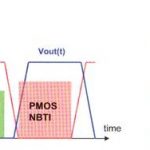
At the recent TSMC OIP symposium, a collaborative presentation by Synopsys and Xilinx highlighted the importance of incorporating the local FinFET device self-heating temperature increase on the acceleration of device reliability mechanisms.… Read More
How Virtualization Makes Network Processor Verification Efficient

When Ethernet was introduced in 1983 it ran at 10Mbps and mostly relied on hubs and coaxial cable. Twelve years later a faster speed was introduced, running at 100Mbps. Since then we have seen an acceleration of new data rate introductions. According top the Ethernet Alliance, Ethernet could have 12 speeds before 2020, with 6 of … Read More
Interconnect Watch: 3 Chip Design Merits for Network Applications
The countdown to the end of Moore’s Law is coinciding with the rising complexity in system-on-chip (SoC) designs. And that’s not a mere coincidence. The leverage that has long been coming from shrinking process nodes in terms of cost, performance and power benefits is now increasingly being accomplished through… Read More
The best possible merger in the Semiconductor Capital Equipment Business history!
A new powerhouse to dominate over AMAT
Combination of best of Breeds
KLAC shareholders get $32 cash plus stock
The wedding invitation…….
Lam Research Corporation (NASDAQ: LRCX) (“Lam”) and KLA-Tencor Corporation (NASDAQ: KLAC) (“KLA-Tencor”) today announced that they have entered… Read More
DAC 2026: The Trouble with John Cooley’s Troublemaker Panel