You are currently viewing SemiWiki as a guest which gives you limited access to the site. To view blog comments and experience other SemiWiki features you must be a registered member. Registration is fast, simple, and absolutely free so please,
join our community today!
SoC designers can now capture their design ideas with high-level languages like C and SystemC, then synthesize those abstractions down into RTL code or gates, however in the end the physical IC is implemented using cell libraries made up of transistors. Circuit designers use simulation tools like SPICE on these transistor-level… Read More
Neural nets are a hot topic these days and encourage us to think of solutions to complex tasks like image recognition in terms of how the human brain handles that task. But our model today for this neuromorphic computing is several steps removed from how neurons actually work. We’re still using conventional digital computation … Read More
What happens when you get a panel of four executives together with an industry-leading journalist to discuss tradeoffs in IoT designs? After the obligatory introductions, Ed Sperling took this group into questions on power, performance, and integration.… Read More
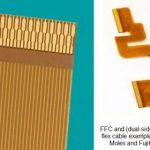
The three F’s of electronic product development are: form, fit, and function. Although the F/F/F assessment typically refers to the selection of the right component, it most definitely also refers to the selection of the proper cabling between assemblies. The requirements for cables are varied, and demanding: ability… Read More
I’ve owned and used many generations of cell phones, starting back in the 1980’s with the Motorola DynaTAC phone and the biggest usability factor has always been the battery life, just how many hours of standby time will this phone provide and how many minutes of actual talk time before the battery needs to be recharged… Read More
Deal likely getting worse as time & remedies go by…
Just a couple of short weeks ago on the earnings conference call, Lam management was adamant about the KLAM deal getting done and done by the Oct 20th deadline. Martin Anstice, the CEO , went to great lengths to tell us that the deal was under control, was going to happen, … Read More
On Wednesday of SEMICON West I got to sit down with Gary Patton, CTO of GlobalFoundries and get an update on what has been going on with them.
Gary started the interview by pointing out that it has now been a year since the GlobalFoundries purchase of many of IBM’s semiconductor assets and they have hit every commitment they made.… Read More
The Chevrolet Volt was a technological marvel from its very launch. A so-called plug-in extended range electric vehicle that could be operated entirely on battery power as long as it was only driven short distances or for hundreds of miles on gasoline. But something happened on the way to the market that suggests deeper troubles… Read More
In 2015 Qualcomm stunned the fabless semiconductor world with an unprecedented layoff. When I first heard about it the number was 5% but it kept growing and finally hit 15%. The big misstep here was, that after being the SoC leader starting in 2007 with the Snapdragon series of chips that powered the Smartphone revolution, QCOM did… Read More
The 2016 edition of the Flash Memory Summit produced more than the usual amount of excitement. Samsung’s response to the Intel/Micron 3D XPoint challenge arrived in new slideware, indicating the war for next-generation SSDs is just starting. Who has the advantage?
We’d all like to think this is about creating a breakthrough technology,… Read More










The Silicon Shield Has Never Been Stronger!