You are currently viewing SemiWiki as a guest which gives you limited access to the site. To view blog comments and experience other SemiWiki features you must be a registered member. Registration is fast, simple, and absolutely free so please,
join our community today!
In early April, Gabriele Saucier kicked off Design & Reuse’s IPSoC Silicon Valley 2021 Conference. IPSoC conference as the name suggests is dedicated to semiconductor intellectual property (IP) and IP-based electronic systems. There were a number of excellent presentations at the conference. The presentations had been… Read More
SoC integration offers huge benefits through reduced chip count in finished systems, higher performance, improved reliability, etc. A single die can contain billions of transistors, with multiple processors and countless subsystems all working together. The result of this has been rapid growth of semiconductor content … Read More
A vexing chip design issue is how to achieve (or improve) performance and power dissipation targets, allowing for a wide range of manufacturing process variation (P) and dynamic operation voltage and temperature fluctuations (VT). One design method is to analyze the operation across a set of PVT corners, and ensure sufficient… Read More
This wasn’t as much of a big bang announcement as others I have seen. More a polishing of earlier-announced reveals, positioning updates, together with some new concepts. First, you probably remember the Cortex-X announcement from about a year ago, allowing users to customize their own instructions into the standard instruction… Read More
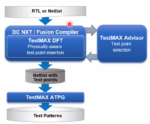
In business we all have heard the maxim, “Time is Money.” I learned this lesson early on in my semiconductor career when doing DRAM design, discovering that the packaging costs and time on the tester were actually higher than the fabrication costs. System companies like IBM were early adopters of Design For Test (DFT)… Read More
5G phones are now the top tier devices from many manufactures, and 5G deployment is accelerating in many regions. While 4G/LTE has served us well, 5G is necessary to support next-generation telecommunication needs. It will be used heavily by consumers and industry because it supports many new use cases. There is an excellent white… Read More
In early April, Gabriele Saucier kicked off Design & Reuse’s IPSoC Silicon Valley 2021 Conference. IPSoC conference as the name suggests is dedicated to semiconductor intellectual property (IP) and IP-based electronic systems. There were a number of excellent presentations at the conference. The presentations had been… Read More
Recently we published the article Semiconductor Startups – Are they back? which went SemiWiki viral with 30k+ views. It’s certainly a sign of the times with M&A activity still running at a brisk rate. During the day I help emerging companies with business development including raising money and sell-side acquisitions… Read More
Your modern car is a computer on wheels—potentially hundreds of computers on a set of wheels. Heck, even the wheels are infested with computers—what do you think prompts that little light on your dashboard to come on if your tire pressure is low? And computers don’t just run your infotainment system, backup camera, dashboard warning
…
Read More
Dark Data Explainedby Ahmed Banafa on 04-18-2021 at 8:00 amCategories: General
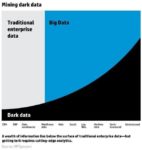
Dark data defines as the information assets organizations collect, process and store during regular business activities, but generally fail to use for other purposes (for example, analytics, business relationships and direct monetizing). Similar to dark matter in physics, dark data often comprises most organizations’… Read More













Jensen Huang and the Cost of Unchecked Influence