Although electronic systems design as a discipline has been around ever since electronics systems came into existence (and that was many decades ago), the design complexities involved and the demands and constraints placed on the systems have multiplied significantly since then. Recent research by LifeCycle Insights shows… Read More
The move from single-chip design to system-in-package design has created many challenges. The rise of 2.5D and 3D technology has set the stage for this. Beyond the modeling requirements and the need for ecosystem collaboration to get those models, there is a significant challenge in understanding the data. The only way to truly… Read More
Gamestop isn’t the only source of wild stock market gyrations. In fact, one might argue that the crazy valuations gravy train got its start at a humble little car company called Tesla Motors. Tesla’s stock has more than doubled in value from $400, six months ago, to more than $850 today.
Competing, so-called legacy, auto makers… Read More
-KLAC- Solid QTR & Guide but flat 2021 outlook
-Display down & more memory mix
-KLAC has very solid Dec Qtr & guide but 2021 looks flattish
-Mix shift to memory doesn’t help- Display weakness
-Despite flat still looking at double digit growth
-EUV driven business may see some slowing from digestion
As always, … Read More
Dan and Mike are joined by John East, a silicon valley industry veteran who takes you on a tour of the very foundation of Silicon Valley and venture capital. John explores the beginnings of these key parts of the world as we know it today and explains who the Traitorous Eight are and what role they played.
Biography
John East retired… Read More
Pim Tuyls, CEO of Intrinsic ID, founded the company in 2008 as a spinout from Philips Research. It was at Philips, where he was Principal Scientist and managed the cryptography cluster, that he initiated the original work on Physical Unclonable Functions (PUFs) that forms the basis of the Intrinsic ID core technology. With more… Read More
It is long past the time when general purpose processors could meet the needs of sensor fusion. Sensor fusion performs operations to process and integrate raw sensor data so that downstream processing is simplified and is performed at a higher level. When done properly it offers several other significant benefits such as lower… Read More
Compute environments have advanced significantly over the past several years. Microprocessors have gotten faster by including more cores, available RAM has increased significantly, and the cloud has made massive distributed computing more easily and cheaply available.
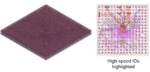
HFSS has evolved to take advantage of these new capabilities,… Read More
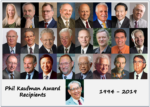
Anyone even remotely associated the EDA industry will know about the Phil Kaufman award. Every industry has its ultimate recognition – the Academy Awards and the Grammys are familiar ones in pop culture. The Nobel Prize gets a bit geekier and the Morris Chang award from the GSA is geekier still. If you’re an EDA geek, the Phil Kaufman… Read More














Why ASML Is Racing to Build 110 EUV Machines