You are currently viewing SemiWiki as a guest which gives you limited access to the site. To view blog comments and experience other SemiWiki features you must be a registered member. Registration is fast, simple, and absolutely free so please,
join our community today!
            WP_Term Object
(
    [term_id] => 14
    [name] => Synopsys
    [slug] => synopsys
    [term_group] => 0
    [term_taxonomy_id] => 14
    [taxonomy] => category
    [description] =>
    [parent] => 157
    [count] => 802
    [filter] => raw
    [cat_ID] => 14
    [category_count] => 802
    [category_description] =>
    [cat_name] => Synopsys
    [category_nicename] => synopsys
    [category_parent] => 157
    [is_post] =>
)

WP_Term Object
(
    [term_id] => 14
    [name] => Synopsys
    [slug] => synopsys
    [term_group] => 0
    [term_taxonomy_id] => 14
    [taxonomy] => category
    [description] =>
    [parent] => 157
    [count] => 802
    [filter] => raw
    [cat_ID] => 14
    [category_count] => 802
    [category_description] =>
    [cat_name] => Synopsys
    [category_nicename] => synopsys
    [category_parent] => 157
    [is_post] =>
)
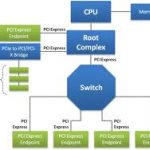
PCI Express 3.0 specification is 1000 pages long. Most of us, and most of the designers integrating PCIe gen-3 into their latest ASIC, FPGA or system will probably never read it completely, or even open it. In fact, they don’t need to read it completely, but they should care about one point, whether they buy an ASSP or a PCIe design IP:… Read More
I met Mike Sanie around DVCon time and planned to write a blog about the one year anniversary of Synopsys Discovery VIP which was announced during Aart’s keynote at DVCon in 2012. Eric covered it for SemiWiki here. But Synopsys had other stuff they wanted me to blog about and so it is a couple of months late. The 14th month anniversary… Read More
… is now 8 years old, and the money paid for this 10 engineers start-up was considered, at that time, as a “bingo” for Cascade’s funders: “In October 2004, the Company completed the acquisition of Cascade Semiconductor Solutions, Inc. (Cascade) for total upfront consideration of $15.8 million and contingent consideration of … Read More
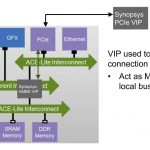
So, you dropped that piece of complex IP you just licensed into an SoC design, and now it is time to fire up the simulator. How do you verify that it actually works in your design? If you didn’t get verification IP (VIP) with the functional IP, it might be a really long day.
Compliance checking something like a PCIe interface block is a … Read More
We have frequently said in Semiwiki how crucial is it for the SC industry to benefit from high quality PHY IP… even if, from a pure business point of view (MBA minded), PHY IP business does not look so attractive. In fact, to be able to design on-the-edge SerDes and PLL (the two key pieces), you need to build and maintain a highly skilled… Read More
The HSPICE circuit simulator has been around for decades and is widely used by IC designers worldwide, so I watched the HSPICE SIG by video today and summarize what happened. Engineers from Micron, Altera and AMD presented on how they are using HSPICE to model TSVs, IBiS-AMI models and SERDES, respectively.… Read More
You are going to be developing software for an SoC that contains an ARM Cortex-A57 64-bit CPU. Or perhaps it is an SoC containing ARM’s hybrid big.LITTLE multi-core architecture that combines one or more low power cores with some high power, high performance cores to get the best of both worlds: high throughput when it is needed… Read More
We’ve been talking about the different technologies for FPGA-based SoC prototyping a lot here in SemiWiki. On the surface, the recent stories all start off pretty much the same: big box, Xilinx Virtex-7, wanna go fast and see more of what’s going on in the design. This is not another one of those stories. I recently sat down with Mick… Read More
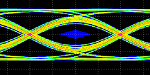
PCI Express 3.0 increased the supported data rate to 8 Gbps, which effectively doubles the data rate supported by PCI Express 2.0. While the data rate was increased, no improvement was made to the channels. As such, an 8 Gbps channel in PCIe 3.0 experiences significantly more loss than one implemented in PCIe 2.0. To compensate for… Read More
SuperSpeed USB has been clearly ranked in the Interface protocols winner list, see this previous post. It could be interesting to dig into this IP market segment, determine in which applications USB 3.0 has been successfully deployed and who are the IP vendors serving this market, enabling SuperSpeed USB to take off.
SuperSpeed… Read More