





Cloud-based EDA has been around for awhile now, so at #DAC2026 I met with Vikram Bhatia, Executive Director of Synopsys Cloud to see what’s new with their offering. His background includes stints at Sun, IBM, Microsoft, HP, Oracle and NetApp. The Synopsys Cloud FlexEDA lets designs teams run their EDA solutions inside of a web browser, on-premise, in a customer managed Virtual Private Cloud (VPC), or a Synopsys managed VPC.
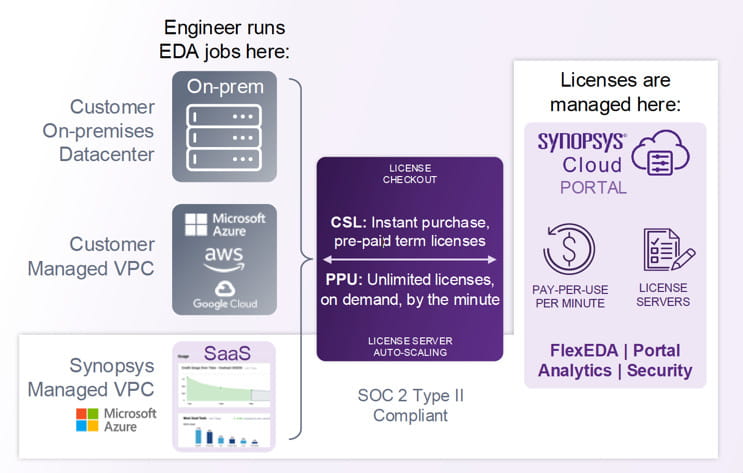
The promise of this cloud-based approach is much faster job run times and higher productivity at the same cost. For startup companies, the biggest challenge can be the time that it takes to get to a prototype product, so this cloud setup is quite empowering. Startups don’t have the IT and CAD talent to build up their own infrastructure from scratch, which FlexEDA addresses by saving 2-3 months worth of effort, with little learning curve required.
FlexEDA provides a pay-per-use license model that has features like per-minute EDA tool pricing and access to unlimited licenses as-needed to fit your schedule. As the chip design grows in complexity and more regression runs are required with new changes, teams can scale up quickly with more compute by using more licenses in the cloud.
For example, a project can decide if they want to use 1,000 licenses to run for one hour to complete a task, or 100 licenses for 10 hours. Foundries offer shuttle fabrication services on a regular basis, so you can get your designs into the next shuttle on time by scaling up the license usage. With this new license flexibility many startups can reach their tapeout goals in under one year, instead of stretching out to two years or more.
Synopsys takes a cloud agnostic tack by supporting the major cloud vendors out there: Microsoft Azure, AWS, Google Cloud. This Software As A Service (SaaS) from Synopsys includes EDA solutions, IP, scheduler, and project manager, all used from any web browser for an easier learning curve. Another way to access the Synopsys EDA tools is through a Cloud Subscription License (CSL), where you have a fixed-number, term-based license access by planning ahead of time.
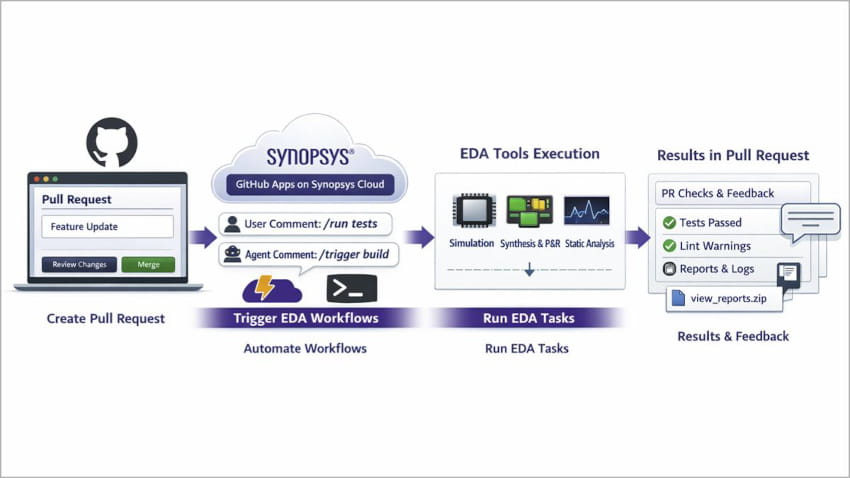
Cloud-based EDA workflows can also use CI/CD for hardware design, enabling agile collaboration. Code changes happen in GitHub from a pull request, then Synopsys Cloud GitHub apps get triggered, the GitHub apps then run EDA solutions, and the results appear inside of the GitHub as checks, comments or artifacts.
Also at DAC this year there was an exhibitor presentation with Synopsys, TetraMem and ANAFLASH on the topic, “How Silicon Startups are Addressing the AI Memory Gap.” Both design companies used FlexEDA in their design process to get to market faster.
Summary
There are over 100 startups using Synopsys Cloud, so it’s been a fast growing trend that is well proven. Synopsys has made it much easier to use on-prem, hybrid and cloud approaches to enable your team to be more productive.
Related Blogs
- Synopsys FlexEDA: Revolutionizing Chip Design with Cloud and Pay-Per-Use
- Synopsys Announces Expanding AI Capabilities and EDA AI Leadership
- Synopsys at Design Automation Conference 2026
- Synopsys Announces FlexEDA for the Cloud!




Comments
There are no comments yet.
You must register or log in to view/post comments.