You are currently viewing SemiWiki as a guest which gives you limited access to the site. To view blog comments and experience other SemiWiki features you must be a registered member. Registration is fast, simple, and absolutely free so please,
join our community today!
In the realm of digital systems, clocks play a crucial role in synchronizing various components and ensuring smooth flow of logic propagation. However, the accuracy of clocks can be significantly affected by power supply induced jitter. Jitter refers to the deviation in the timing of clock signals with PDN noise compared to ideal… Read More
In the age of rapid technological innovation, hyperscale datacenters are evolving at a breakneck pace. With the continued advancements in CPUs, GPUs, accelerators, and switches, faster data transfers are now paramount. At the forefront of this advancement is PCI Express (PCIe®), which has become the de-facto standard of interconnect… Read More
TSMC originally brought the pure-play foundry business to the United States in 1996 through a joint venture with customers Altera, Analog Devices, ISSI, and private investors (no government money). Altera is now part of Intel but ADI is still a top TSMC customer and enthusiastic supporter. I have seen the ADI CEO Vincent Roche … Read More
Dr. Tung-chieh Chen has been serving as the CEO of Maxeda Technology since 2015. In 2021, at DAC, the largest EDA conference, Dr. Chen was honored with the Under-40 Innovators Award in recognition of his exceptional achievements and contributions to EDA development. He is the infrastructure designer of NTUplace, a circuit placer… Read More
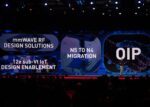
This is the 15th anniversary of the TSMC Open Innovation Platform (OIP). The OIP Ecosystem Forum will kick off on September 27th in Santa Clara, California and continue around the world for the next two months in person and on-line in North America, Europe, China, Japan, Taiwan, and Israel. These are THE most attended semiconductor… Read More
Koen Verhaege, CEO of Sofics (“Solutions for ICs”), has developed his career first as an engineer, later as a business leader and entrepreneur, working on IP development and valorisation. Koen’s technical accomplishments, publications and patents are in the field of on-chip ESD protection design.
Today, Koen… Read More
This webinar will introduce Time-Sensitive Networking (TSN) and unveil how TSN can provide value in aviation, aerospace and defence.
TSN is a new set of standard extensions based on the IEEE 802.1 and IEEE 802.3 Ethernet standards. It is designed to provide deterministic guarantees on Quality of Service (QoS) metrics and reliability… Read More
During my research I found an interview with Don Brooks from February 2000. It was very interesting and confirmed some of the things I knew about Don and brought up a few things I did not know. It’s an hour but it is a video of Don telling his story and is definitely worth a look. One of the things that was not mentioned however is the… Read More
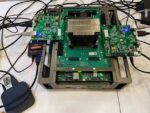
ViShare Technology, a fabless semiconductor company focusing on video codec, developed a chip for 8K60 video streaming with the help of S2C FPGA-based prototyping solution. This solution enables ViShare to accelerate its verification process and time-to-market by 6 months.
Since its establishment in 2012, ViShare has been… Read More
Don Brooks is well known to many long time semiconductor insiders, like myself, but most SemiWiki readers have probably never heard of him. Don is a semiconductor legend and here is his story. This will be in two parts since he had a big impact on the semiconductor industry and TSMC. From 1991 to 1997 Don served as President of TSMC and… Read More















SEMICON West’s Autonomous Fab Vision Needs a Decision-Escalation Design