





Not long ago I was asked the question “How do we get to 20 billion IoT devices?” (Actually, I’ve been asked this question multiple times over the past 10+ years.) Great question! How, exactly, do we get to 20 billion (or 30 billion, or a trillion) IoT devices? We’re certainly not going to get there with wearable devices and other… Read More
 DAC 2027 Opens Call for Contributions as AI Reshapes Chip DesignThe Design Automation Conference is the premier semiconductor…Read More
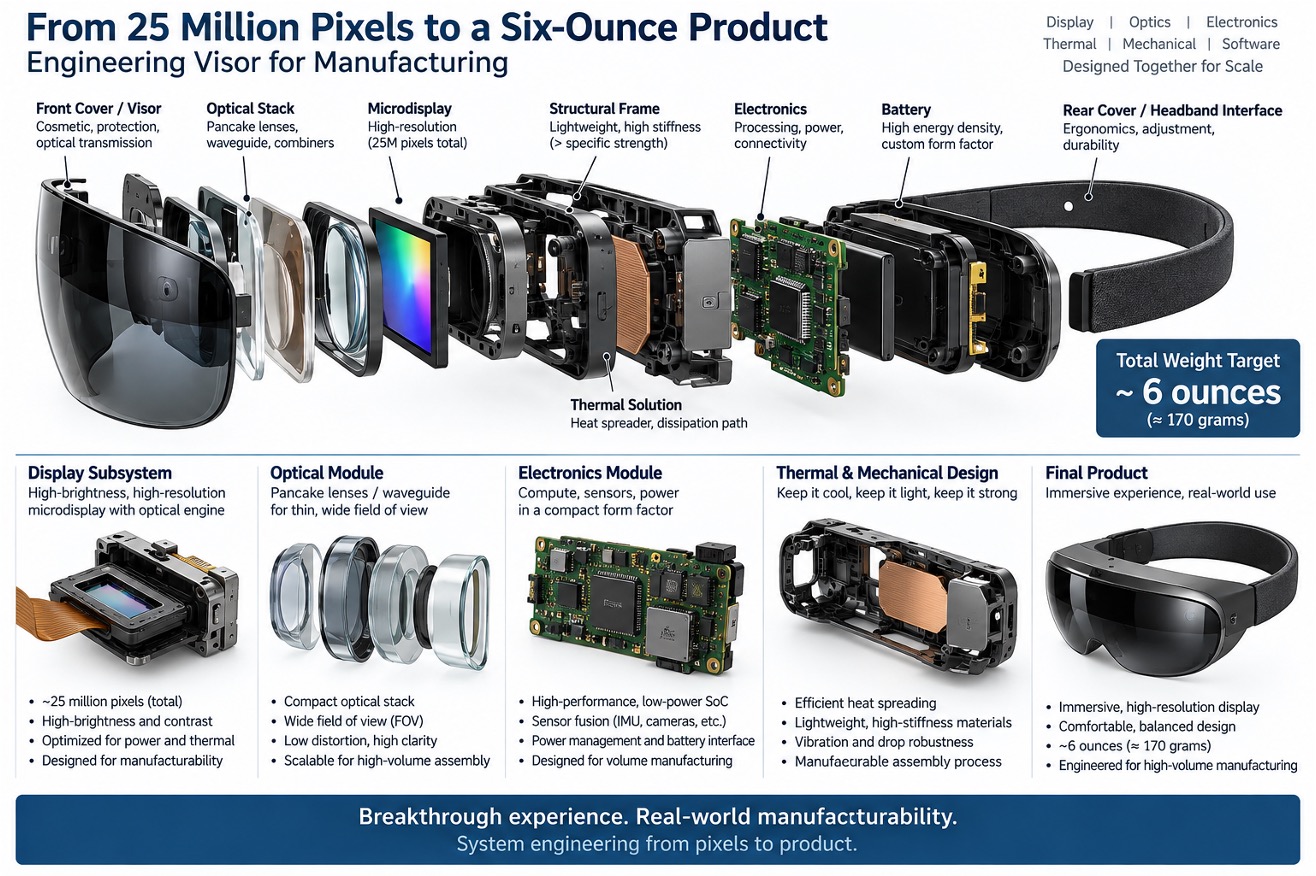 From 25 Million Pixels to a Six-Ounce Product: Engineering Visor for ManufacturingBy Dr. Moh Kolbehdari Putting roughly 25 million…Read More
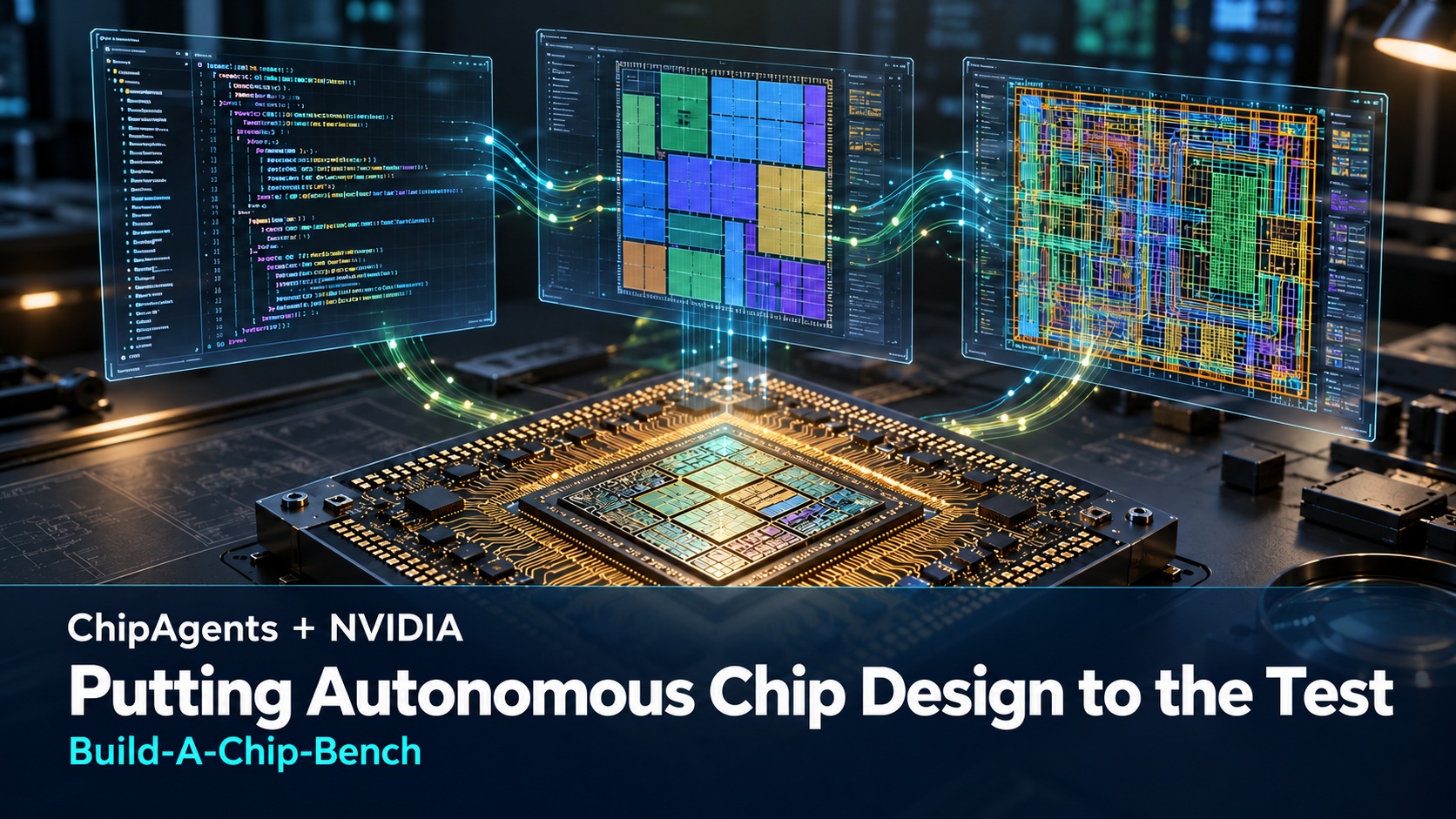 ChipAgents and NVIDIA Put Autonomous Chip Design to the TestChipAgents has introduced Build-A-Chip-Bench, a benchmark developed with…Read More
 TSMC 2026 OIP Ecosystem Forum SummaryTSMC’s 2026 Open Innovation Platform Forum presented artificial…Read More
IP-SoC 2016: IP Innovation, Foundries, IoT and Security
The next IP-SoC conference will be held in Grenoble, France, on December 6-7, 2016 after Shanghai in September and Bangalore, India, in April. This will be the 20[SUP]th[/SUP] edition of this unique IP centric event, as well as the celebration of Design And Reuse 20[SUP]th[/SUP] anniversary. Creating in 1997 a company fully dedicated… Read More
One chip and the MCU variant challenge disappears
Merchant microcontrollers are usually made available in a wide range of variants based on one architecture with different peripheral payloads and packaging options. A couple of companies, notably Cypress with their PSoC families and Silicon Labs with the EFM8 Laser Bee… Read More
Industry 4.0 and Manufacturing Processes
Industry 4.0 or, as it is also known the fourth industrial revolution is the trend that is currently coming into play of automating the manufacturing processes and the use of IoT and other technologies to make industrial processes more readily accomplished. It is working hand in hand with things like the internet of things, cloud… Read More
Optimizing Prototype Debug

In the spectrum of functional verification platforms – software-based simulation, emulation and FPGA-based prototyping – it is generally agreed that while speed shoots up by orders of magnitude (going left to right) ease of debug drops as performance rises and setup time increases rapidly, from close to nothing for simulation… Read More
Final SemiWiki Book Signing at REUSE 2016!
It has been a hectic year for the semiconductor industry so now is a good time to reflect on how we got to where we are today in hopes of better understanding where we are going tomorrow.
Given the importance of semiconductor IP (the $32B ARM acquisition by SoftBank for example) I would strongly suggest attending the REUSE 2016 event… Read More
System-level Design for IoT and Automotive
Several years ago a former EDA co-worker went to work for MathWorks, so I started paying a lot more attention to this privately held company that is well known for the MATLAB language and analysis environment. Engineers at MathWorks have created a graphical environment called Simulink for both simulation and model-based design… Read More
#IoT Big Data is worthless!
I have been writing about big data for over three years now. In all that I wrote and many articles that I read, there is an underlying assumption that people naturally accept the huge economic value associated with big data. It turns out that this is a bad assumption. They don’t!
There are many people that see big data as worthless… Read More
Managing the IoT
Now that ARM has introduced its end-to-end IoT, including the mbed Cloud SaaS to handle the cloud end of the IoT, you might wonder what service providers are going to offer on top of this solution. DevicePilot showcased one such solution at ARM TechCon, to manage connected products. These guys especially deserve to be featured because… Read More
CEVA Webinar: Vision Based Autonomous Driving
CEVA Webinar “Challenges of Vision Based Autonomous Driving & Facilitation of An Embedded Neural Network Platform” will be held on November 16[SUP]th[/SUP] and will address one of the hottest topics today in our industry, probably the hottest in the automotive industry as all the players are working hard on autonomous vehicles.… Read More
The silent killer of analog reliability: Why SPICE misses floating net