Dan and Mike are joined by Graham Curren, founder and CEO of ASIC specialist Sondrel. Graham discusses the challenges of designing ASICs at the leading edge from a technology, design team and customer perspective. He explores where the real challenges are in building these types of chips and how Sondrel meets those challenges.… Read More
The founder of Mirabilis Design, Mr. Shankar has over two decades of experience in management and marketing of system level design tools. Prior to establishing Mirabilis Design, he held the reins as Vice President, Business Development at MemCall, a fabless semiconductor company and SpinCircuit, a joint venture of industry… Read More
We all know that artificial intelligence (AI) and machine learning (ML) are fundamentally changing the world. From the smart devices that gather data to the hyperscale data centers that analyze it, the impact of AI/ML can be felt almost everywhere. It is also well-known that hardware accelerators have opened the door to real-time… Read More
If you are involved in designing systems that process data, you’re going to want to attend this webinar. Practically speaking, this should include a large percentage of the SemiWiki readership. Since data is the new oil there are a lot of applications drawn to data and information processing. Before we explore this webinar, let’s… Read More
While there is a lot of excitement around the semiconductor shortage narrative and the fabs all being full, both 200mm and 300mm, there is one big plot hole and that is the FinFET era.
Intel ushered in the FinFET era only to lose FinFET dominance to the foundries shortly thereafter. In 2009 Intel brought out a 22nm FinFET wafer at the… Read More
Silicon Catalyst is a unique startup incubator / accelerator that focuses exclusively on accelerating solutions in silicon (including chips, IP, MEMS & sensors). The organization has an extensive support infrastructure that includes preferred access to IP, design tools, business infrastructure and fab/assembly. … Read More
Three-year old CacheQ, founded by two former Xilinx executives and a clever group of engineers, produces a distributed heterogenous compute development environment targeting software developers with limited knowledge of hardware architecture.
The promise of compiler tools for heterogeneous compute systems intrigued… Read More
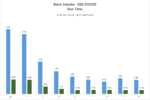
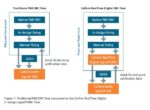
Over the years DRC tools have done an admirable job of keeping pace with the huge growth of IC design size. Yet, DRC runs for sign off on the full design using foundry rule decks take many hours to complete. These long run times are acceptable for final sign off, but there are many situations where DRC results are needed quickly when small… Read More
-A repeat of the auto industry bailout of self inflicted issues?
-Not just money but systemic change is needed
-Perhaps chips need an Elon led revolution like autos & space
-Govt $ need focus not thrown into existing spend avalanche.
Are chips a replay of the auto industry bailout a decade ago? Deja Vu all over again.
The… Read More
Dan is joined by Krishna Settaluri, Co founder and CEO of Blue Cheetah. Krishna received his Ph.D. in electrical engineering from UC Berkeley and masters and bachelors from MIT specializing in design automation of high-speed silicon photonic links using analog generator technology. Krishna has worked at Apple, Google, Caltech… Read More













Terafab’s Single Roof: Why Packaging, Not Lithography, Decides High Volume