





The opening of the TSMC 2026 earning call series brought no surprises. CC Wei has done more than 30 such calls since taking the CEO position in 2018 and he never fails to disappoint. Once again, CC Wei reported numbers above guidance driven by strong demand and flawless execution. This illustrates the benefit of TSMC’s close collaborations and deeply trusted relationships with partners and customers. The TSMC forecast is the most trusted forecast the semiconductor industry will ever see, absolutely.
I do remember the one-time CC Wei did disappoint on an earnings call and that was during COVID which was a painful supply chain lesson for all. CC Wei turned that COVID supply chain experience into a “Why supply chain trust and resilience is so important” master class that goes to the heart of the TSMC mission statement and that is Trust.
“Our mission is to be the trusted technology and capacity provider of the global logic IC industry for years to come.”
As expected, TSMC N5 and N3 accounted for the majority of 2026 revenue meaning that margins are also well above 60% and look to stay that way in the not-so-distant future. TSMC N3 is also fast approaching the 5-year depreciation mark so TSMC corporate margins will only go up from here.
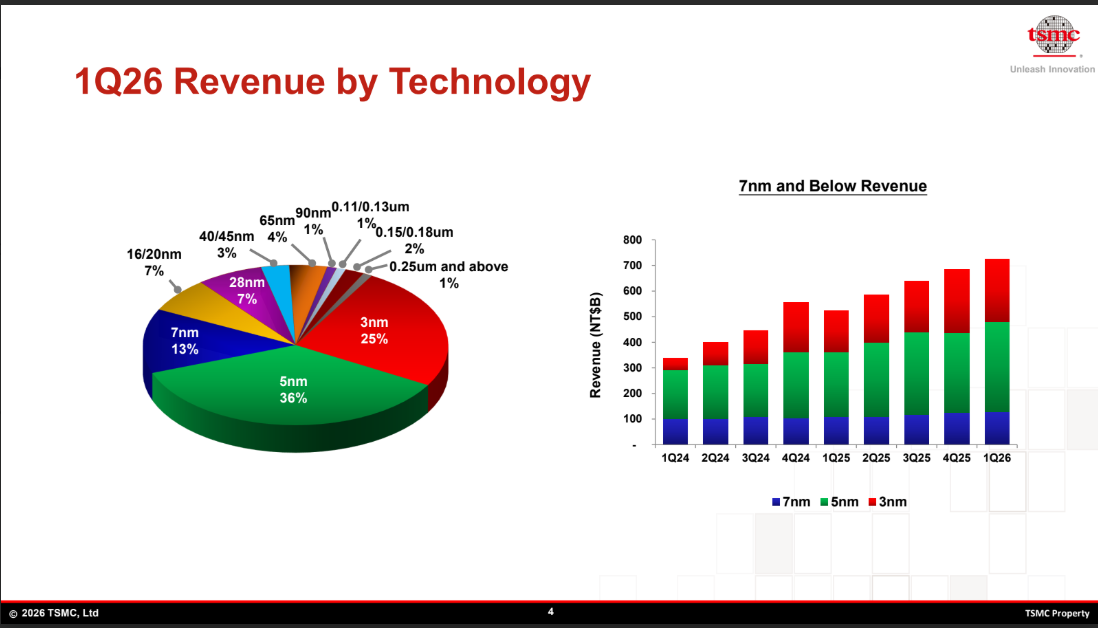
As we discussed before, TSMC N3 is the final node in the record setting FinFET family of process technologies and it has ZERO competition in the merchant foundry business. I remember tracking design wins when N3 was first launched and realizing that TSMC N3 would be the most dominant process node I would ever see in my 40+ year semiconductor career and that is certainly the case as it stands today.
CC Wei: In Taiwan, we are adding a new 3-nanometer fab to our GIGAFAB cluster in Tainan Science Park. Volume production is scheduled for the
first half of 2027. In Arizona, our second fab will also utilize 3-nanometer technologies. Construction is already complete and volume
production will begin in the second half of 2027. In Japan, we now plan to utilize 3-nanometer technology in our second fab and volume
production is scheduled in 2028.
CC Wei also discussed moving more N5 capacity to N3. Samsung has reportedly fixed their yield problems at 5/4nm so it makes complete sense for TSMC to focus on the higher margin N3 process technologies. Besides, it is easier to move a TSMC N5 design to TSMC N3 than to Samsung 4nm and much easier than moving a design to Samsung 3/2nm (GAA) so CC Wei’s strategy is clear and sound.
CC Wei: Next, let me talk about our N2 capacity expansion plan. Our practice is to prioritize the land in Taiwan to support the fast ramp of our newest
node due to the need for tight integration with R&D operations. Today, our new node, N2, has already entered high-volume manufacturing
in the fourth quarter of 2025 with good yield. N2 is ramping successfully in multiple phases at both Hsinchu and Kaohsiung site, supported
by strong demand from both smartphone and HPC/AI applications.
In regards to TSMC N2, TSMC’s N3 dominance not only sets up customers for a smooth transition to the N2 process family, it brings forward the strongest ecosystem of partners the semiconductor industry has ever seen, which is a very big deal. There is little doubt that TSMC will dominate the 2nm process node. I’m just wondering how big the NOT TSMC market will be at 2nm? It was next to zero at 3nm due to the lack of competition. I hope 2nm will be different with Intel Foundry 18AP and Samsung Foundry SF2 offering viable alternatives to TSMC N2, and maybe even Rapidus 2nm.
The call was closed out with a TSMC A14 Status. Will TSMC A14 again dominate the foundry business? Or better yet; How big will the NOT TSMC market be at 14 Angstrom? It is too soon to tell but my guess would be that the NOT TSMC market will continue to grow due to supply chain concerns.
CC Wei: Finally, let me talk about our A14 status. Featuring our second-generation nanosheet transistor structure, A14 will deliver another full-node
stride from N2, with performance and power benefit to address the insatiable need for high performance and energy efficient computing. Compared with N2, A14 will provide 10% to 15% speed improvement at the same power for 25% to 30% power improvement at the same
speed and close to 20% chip density gain.
Our A14 technology development is on track and progressing well. We are observing a high level of customer interest and engagement from both smartphone and HPC applications. Volume production is scheduled for 2028. Our A14 technology and its derivatives will further extend our technology leadership position and enable TSMC to capture the growth opportunities well into the future.
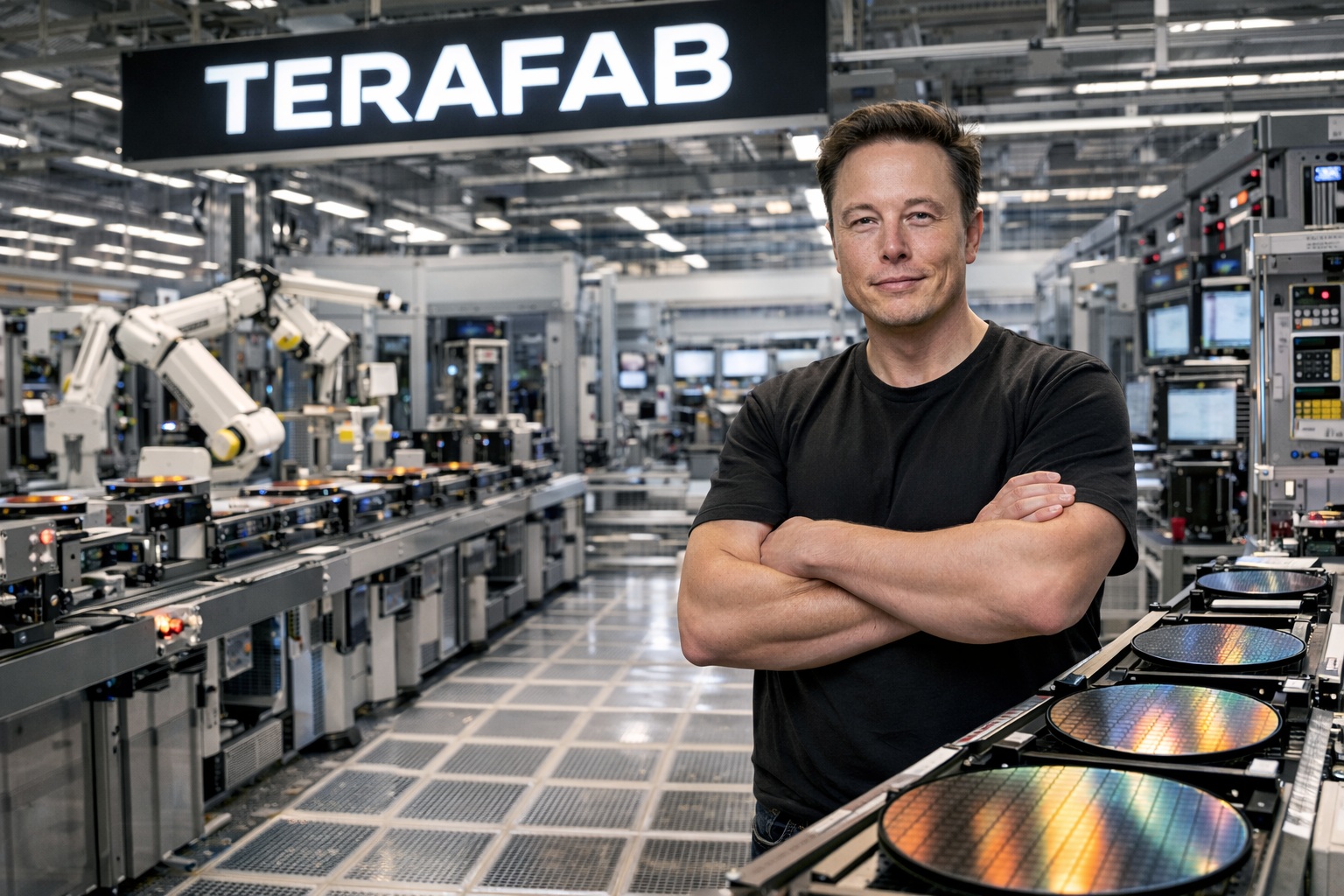
Of course there were references to Elon Musk and Terafab during the Q&A. CC Wei offered Elon Musk some very sound advice:
CC Wei: Again, let me say that it takes two to three years to build a new fab. No shortcuts. And it takes another one to two years to ramp it up. Again,
that’s a fundamental of foundry industry. And whether we try to win them back (Intel and Tesla), actually, they are still our customers and we are very confident in our technology position. And we work very hard to capture every piece of business possible.
Did you get that Elon? No short cuts in semiconductor manufacturing.
In regards to CapEX, TSMC raised CapEX from $40-41B in 2025 to $52-56B in 2026 which is huge! CC Wei mentioned that TSMC would probably be at the high end of that when asked during the Q&A. In my opinion TSMC will definitely be at the high end of that and maybe even higher. It all depends on how well the NOT TSMC market is developing
Also Read:
TSMC Technology Symposium 2026: Advancing the Future of Semiconductor Innovation
Global 2nm Supply Crunch: TSMC Leads as Intel 18A, Samsung, and Rapidus Race to Compete
TSMC Process Simplification for Advanced Nodes
Share this post via:



Comments
One Reply to “TSMC to Elon Musk: There are no Shortcuts in Building Fabs!”
You must register or log in to view/post comments.