




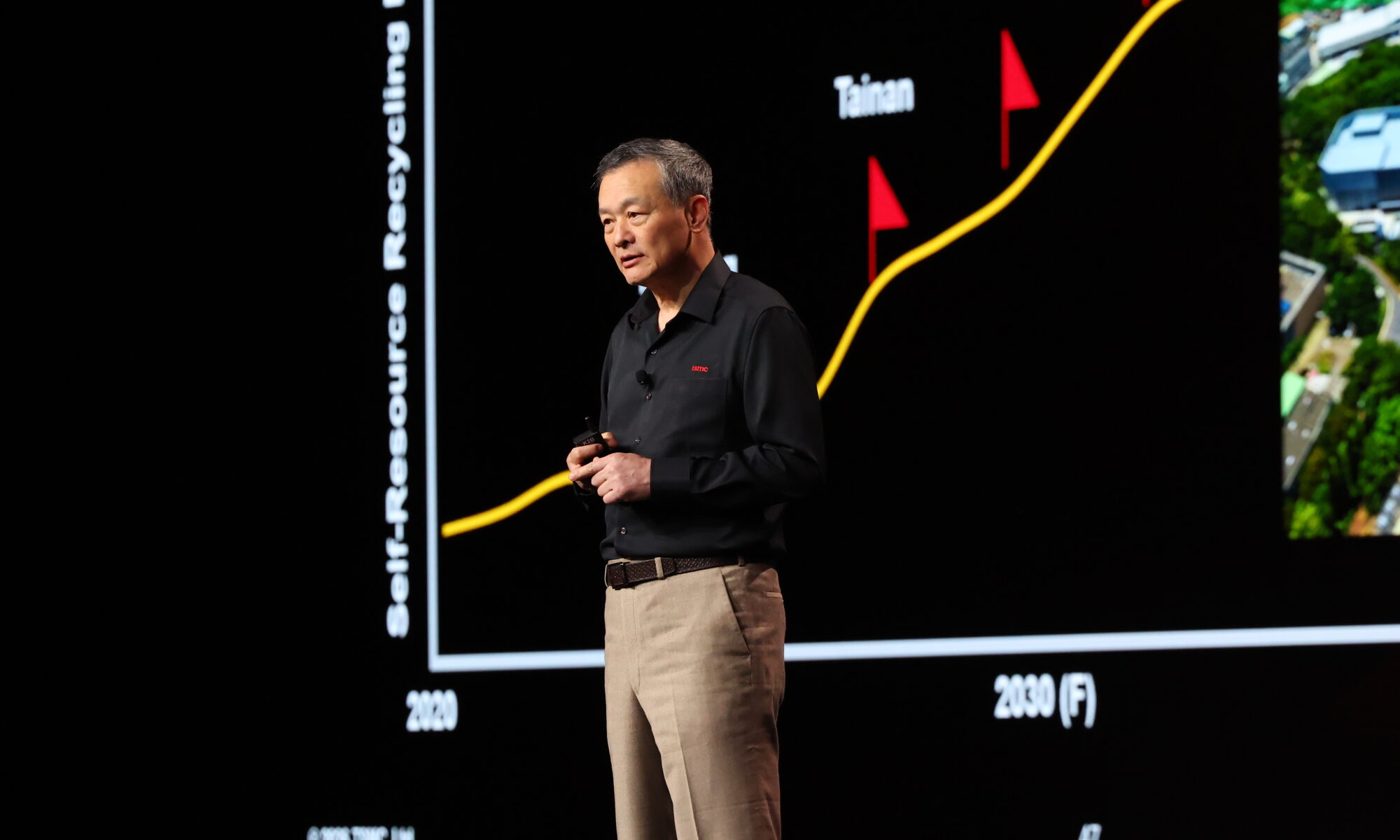

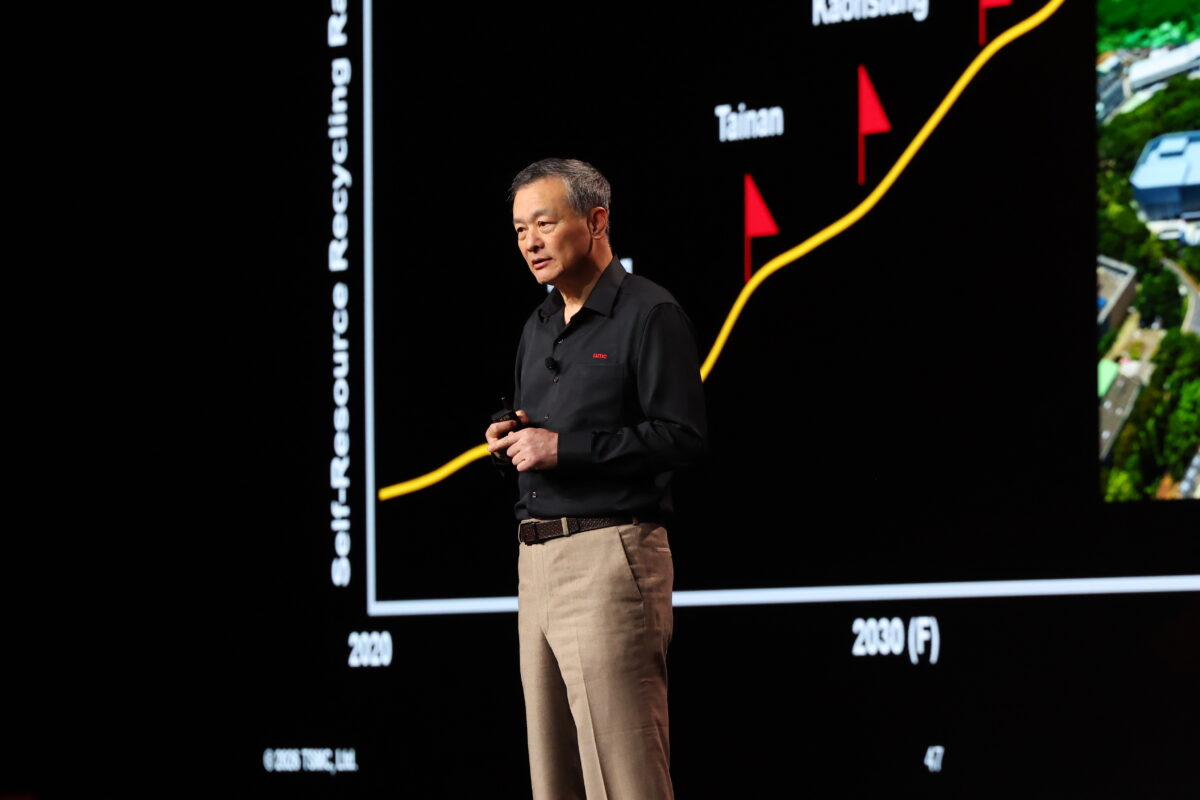
Before assuming his current position, Dr. Hou held several key leadership roles. He served as Vice President of Design and Technology Platform from 2011 to 2018, and later as Vice President of Technology Development starting in August 2018. Earlier in his career, from 1997 to 2007, he established TSMC’s technology design kit and reference flow development organizations, laying the foundation for its design enablement infrastructure.
Over the past decade, Dr. Hou has been instrumental in building TSMC Open Innovation Platform (OIP), which has grown into one of the most comprehensive design ecosystems in the global semiconductor industry. His work in reference flows and design-for-manufacturing (DFM) has significantly lowered barriers to IC design and improved accessibility for customers.
In recognition of his contributions, Dr. Hou received the National Manager Excellence Award in 2010. He also led TSMC’s OIP project team to win the National Industry Innovation Award in 2011, presented by the Ministry of Economic Affairs in Taiwan.
Prior to joining TSMC, Dr. Hou worked at the Industrial Technology Research Institute (ITRI/CCL) as a section manager focused on design environments. He also served as an associate professor at I-Shou University (formerly Kaohsiung Polytechnic Institute).
Dr. Hou holds 44 U.S. patents and serves on the board of directors of Global Unichip Corp.. He earned his bachelor’s degree in control engineering from National Chiao Tung University and a Ph.D. in electrical and computer engineering from Syracuse University.
Cliff’s presentation outlined the significant progress and achievements made by TSMC over the past year in semiconductor manufacturing, focusing on technology advancement, capacity expansion, advanced packaging, global footprint, and sustainability initiatives.
In 2025 TSMC made strong strides in both cutting-edge technology and production capacity. The company’s most advanced node, TSMC N2, has already entered volume production. Despite its increased complexity compared to previous generations, TSMC has achieved an improved yield learning curve, demonstrating its manufacturing excellence. The next iteration, featuring backside power delivery remains on track and is progressing according to schedule.
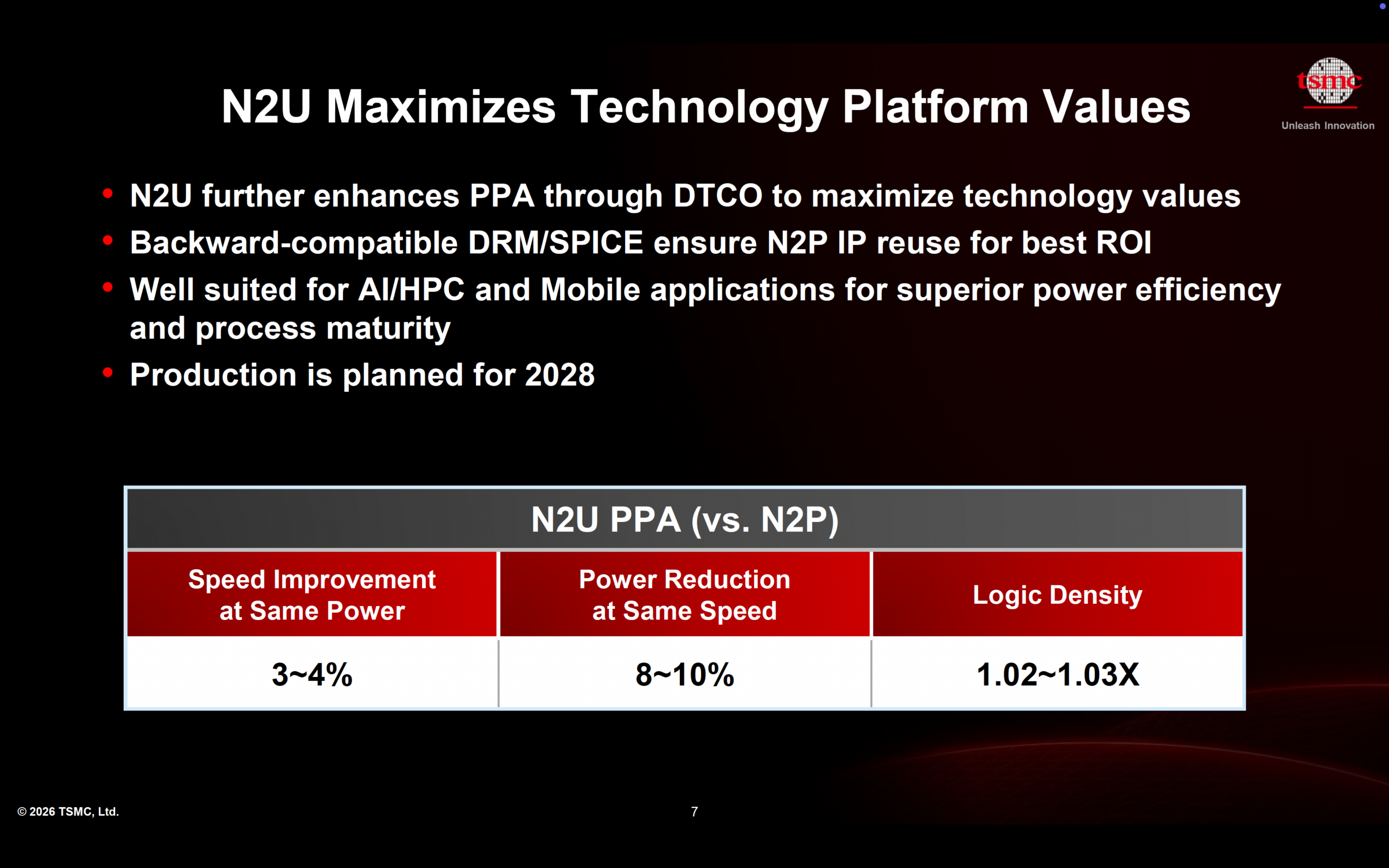
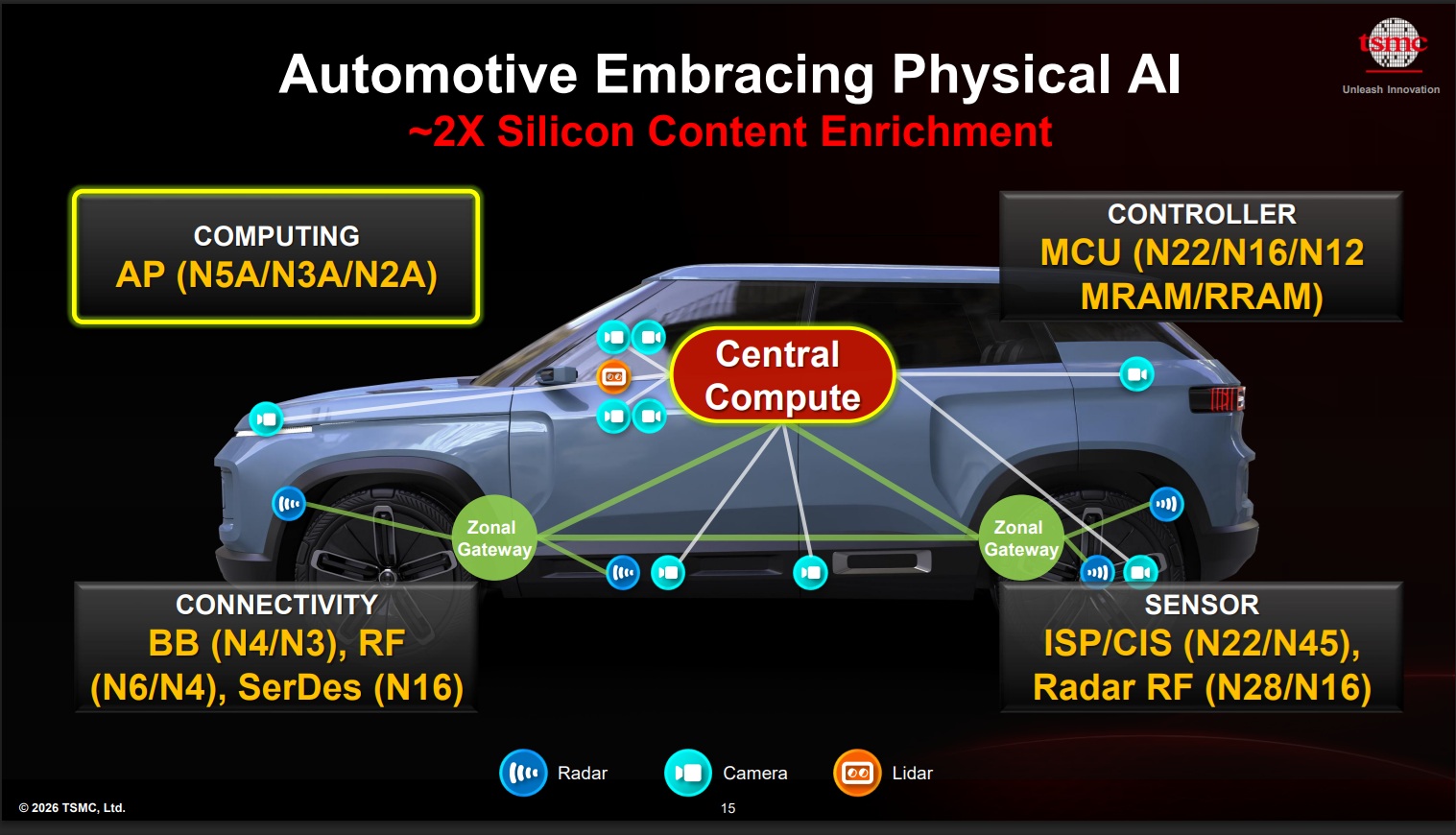
TSMC has also made advancements in automotive technology, with its N3A node now production-ready and capable of meeting stringent quality requirements. Across all advanced nodes, including 3nm, 5nm, and 7nm, the company continues to refine performance and reliability to support a wide range of applications. Additionally, TSMC is aggressively expanding its advanced packaging technologies to meet growing demand for HPC and AI applications.
A major highlight is the rapid expansion of 2nm production capacity. TSMC is ramping up five phases of 2nm fabs within a single year—an unprecedented pace. As a result, first-year output for 2nm is projected to be 45% higher than that of the previous 3nm generation. Looking ahead, the company plans to further increase 2nm capacity by approximately 70% between 2026 and 2028. Meanwhile, combined capacity for 3nm and 5nm technologies is expected to grow steadily by about 25% over several years.
To address the time constraints associated with building new fabs, TSMC is leveraging artificial intelligence and digital transformation to optimize existing facilities. AI-driven systems improve scheduling, equipment efficiency, and process optimization, enabling higher throughput and reduced production cycle times. Generative AI is also used to fine-tune process parameters, while data analytics helps minimize downtime and maximize tool utilization. These innovations allow TSMC to extract greater productivity from existing capacity while new fabs are under construction.
Demand for AI and HPC applications is a key driver of growth. From 2022 to 2026, the number of wafers shipped for AI accelerators is expected to increase elevenfold. Notably, large-die chips (over 500 mm²) are also seeing strong growth, with shipments increasing sixfold. TSMC’s accumulated experience across multiple generations has enabled consistent improvements in yield and defect density, even for these complex designs.
Beyond leading-edge technologies, TSMC continues to invest in mature nodes, including specialty processes such as radio frequency, high-voltage, analog, embedded memory, and image sensors. The company aims to remain the leading provider in this segment while expanding capacity in a measured and strategic manner.
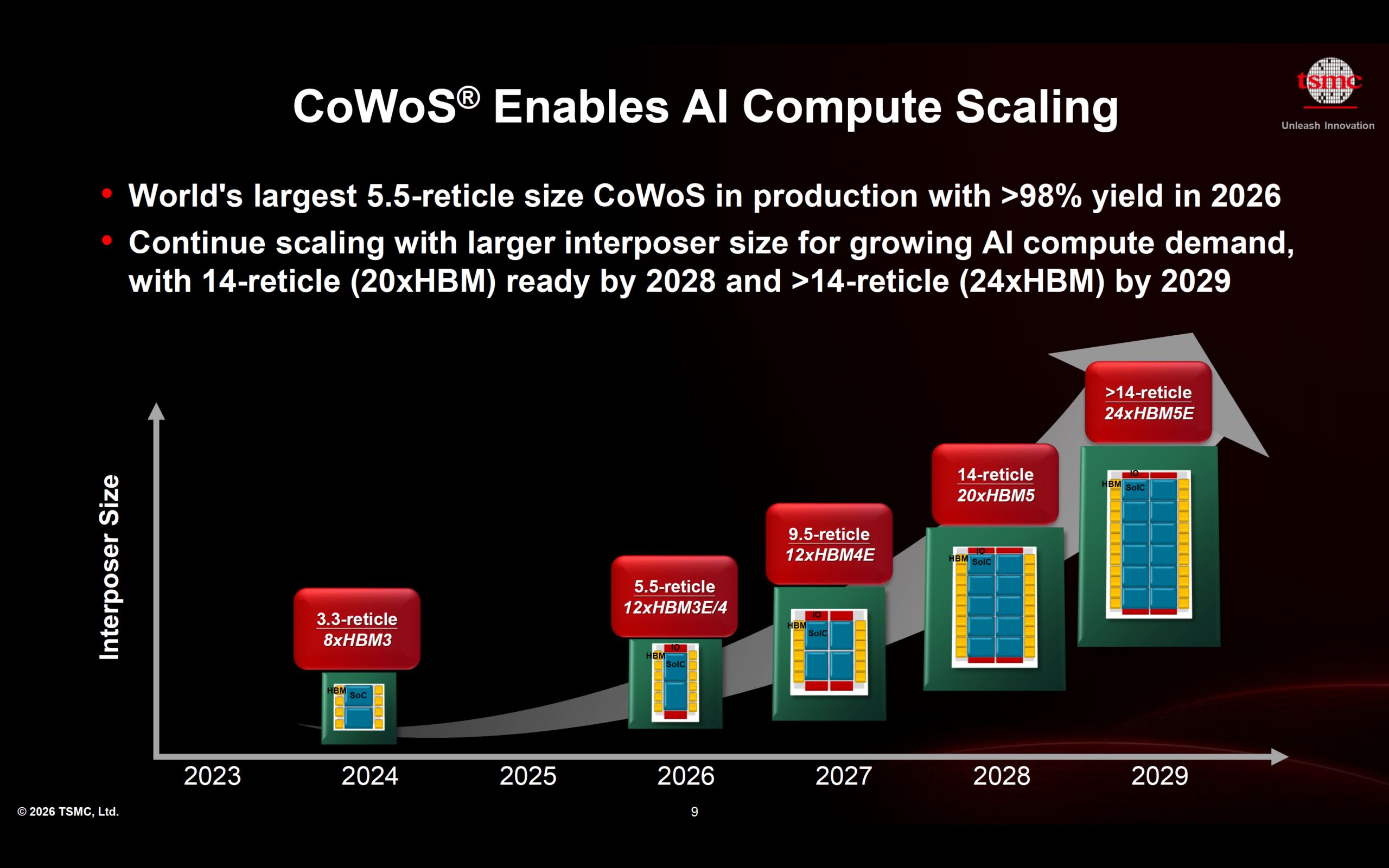
In advanced packaging, TSMC is pushing the boundaries of 3D integration technologies, such as CoWoS and SoIC. These technologies are critical for enabling chiplet-based architectures and high-bandwidth memory integration. The company has reduced the time required to transition from development to high-volume manufacturing—by 30% for CoWoS and 75% for SoIC—helping customers bring products to market faster. Collaboration with ecosystem partners, including material suppliers and testing providers, has further improved yield and manufacturing efficiency. Packaging capacity is also expanding aggressively, with significant growth projected through 2027.
TSMC’s global expansion strategy is another key focus. The company is doubling its pace of fab construction, with nine new or converted phases planned annually in 2025 and 2026—twice the historical average. This expansion extends beyond Taiwan to include major investments in the United States, Japan, and Germany.
In Arizona, TSMC’s first fab is already in production, with additional phases under construction targeting advanced nodes such as 3nm and 2nm. The company is also planning advanced packaging facilities and acquiring additional land to support long-term growth. In Japan, the Kumamoto fab has entered production and is expanding capacity, while a second fab is being developed with a revised focus on 3nm technology. In Germany, a new fab in Dresden is under construction, targeting automotive and industrial applications. Across these regions, TSMC has demonstrated the ability to replicate high yields comparable to its Taiwan operations.
Sustainability and green manufacturing are central to TSMC’s long-term vision. The company aims to achieve net-zero carbon emissions by 2050 and has already reduced emissions by 3.8 million tons in 2025 alone. Resource recycling is another priority, with goals of 70% internal recycling and up to 98% total recycling by 2030. Water stewardship initiatives target 100% water positivity by the 2040s, with significant progress already made through reclaimed water usage and conservation efforts.
Bottom line: TSMC is aggressively advancing semiconductor technology while scaling capacity to meet surging demand, particularly in AI and HPC. Through innovation in manufacturing, packaging, and AI-driven optimization, combined with global expansion and sustainability commitments, the company is positioning itself to remain a leader in the semiconductor industry for years to come.
Also Read:
TSMC Technology Symposium 2026 Overview
TSMC to Elon Musk: There are no Shortcuts in Building Fabs!
TSMC Technology Symposium 2026: Advancing the Future of Semiconductor Innovation




Comments
There are no comments yet.
You must register or log in to view/post comments.