





The transition to advanced process nodes is reshaping high-speed interface IP requirements for mobile, automotive, AR/VR, and AI edge devices. As SoC designers migrate to cutting-edge foundry technologies, the demand for highly optimized MIPI PHY solutions continues to grow. A key development in this space is the availability of C-PHY/D-PHY combo IP implemented on the TSMC N2P process, enabling higher bandwidth, lower power, and improved area efficiency for next-generation applications.
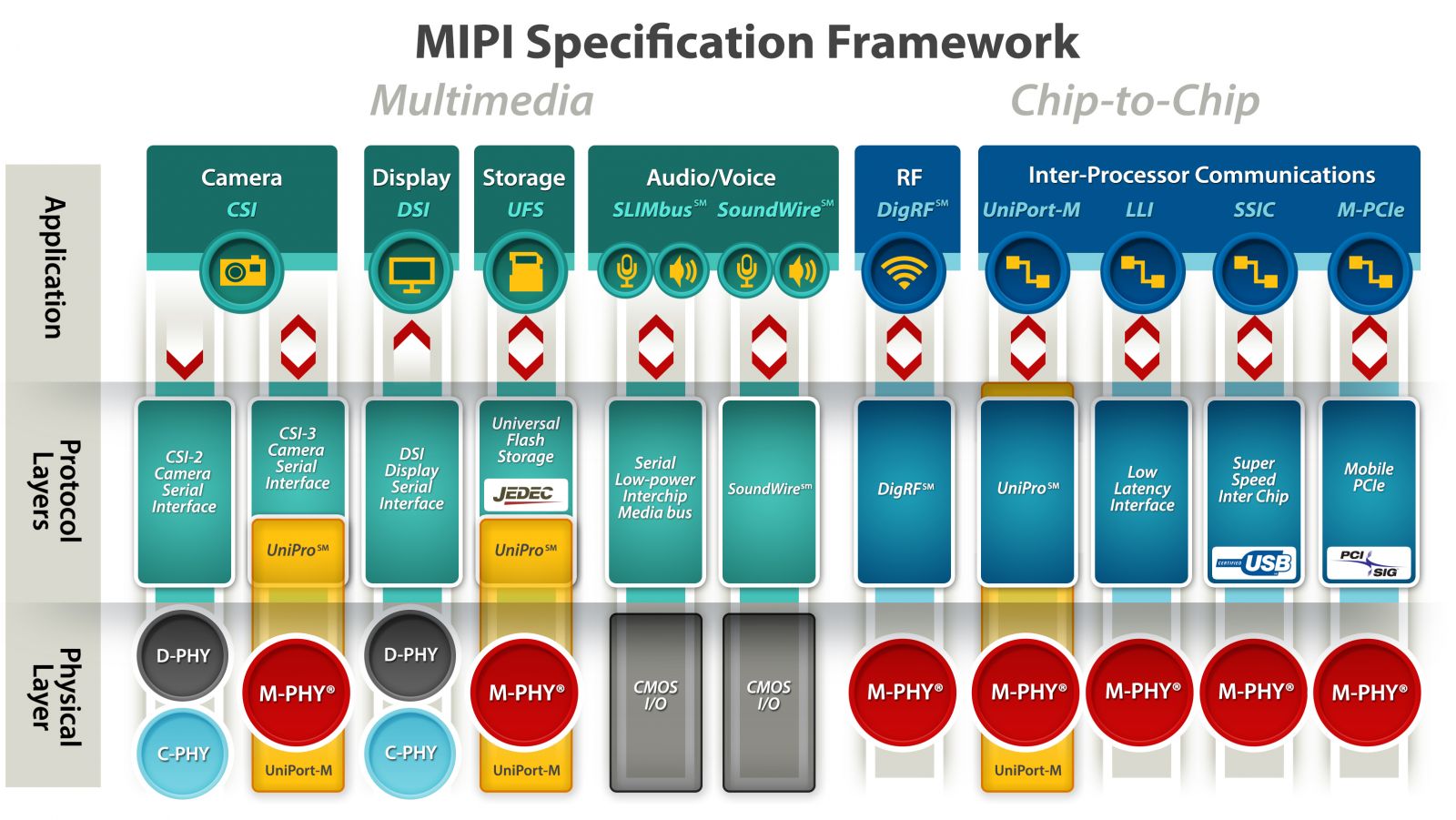
MIPI interfaces have become the de facto standard for connecting cameras, displays, and sensors in mobile and embedded systems. While D-PHY has long dominated the ecosystem, the increasing data requirements of advanced image sensors and ultra-high-resolution displays are accelerating adoption of MIPI C-PHY. The latest combo PHY solutions provide support for both standards within a unified implementation, giving SoC developers maximum flexibility while reducing integration complexity.
The Mixel combo IP is the industry’s first to support MIPI D-PHY v3.6 with Embedded Clock Mode (ECM), marking an important milestone in MIPI interface evolution. ECM eliminates the dedicated clock lane traditionally required in D-PHY architectures by embedding clock information within the data stream itself. This innovation reduces pin count, simplifies routing, and improves channel efficiency while maintaining backward compatibility with existing MIPI ecosystems.
For advanced nodes such as TSMC N2P, these architectural improvements are particularly significant. The N2P process provides enhanced performance-per-watt characteristics compared to prior generations, making it well suited for power-sensitive applications that still require extremely high throughput. Combining N2P with a next-generation combo PHY allows designers to fully leverage the node’s capabilities while minimizing system-level overhead.
The integration of C-PHY and D-PHY functionality into a single IP block also enables seamless interoperability across multiple use cases. Camera subsystems, for example, may require D-PHY compatibility for legacy sensors while simultaneously supporting high-bandwidth C-PHY links for next-generation image processing pipelines. A combo implementation reduces die area compared to separate PHY solutions and simplifies validation across different product configurations.
MIPI C-PHY delivers substantially higher throughput efficiency than conventional D-PHY implementations by utilizing three-wire trios and embedded clocking techniques. This enables higher effective bandwidth without proportionally increasing pin count or operating frequency. As image sensor resolutions continue to scale beyond 100 megapixels and display refresh rates move toward 240Hz and beyond, these efficiency gains become increasingly valuable.
Meanwhile, D-PHY v3.6 introduces Embedded Clock Mode specifically to address scaling challenges associated with traditional source-synchronous clock architectures. By embedding the clock within the transmitted data stream, ECM reduces EMI concerns and improves signal integrity in dense package environments. This is especially beneficial in advanced packaging technologies such as chiplets and fan-out integration, where routing congestion and signal coupling are major design considerations.
The implementation of combo PHY IP on TSMC N2P also requires extensive analog and mixed-signal optimization. Advanced process nodes introduce new variability and tighter voltage margins, making robust PHY design more challenging. High-speed I/O circuits must maintain signal integrity across process, voltage, and temperature corners while meeting increasingly stringent power budgets.
To address these requirements, modern combo PHY architectures incorporate adaptive equalization, low-jitter PLLs, advanced calibration techniques, and sophisticated power management schemes. These features ensure reliable operation at multi-gigabit data rates while minimizing active and standby power consumption. For battery-powered devices, these optimizations directly translate into improved user experience and extended operating life.
Another important advantage of N2P-based PHY implementations is support for AI-enabled edge systems. Emerging applications such as autonomous robotics, intelligent surveillance, and spatial computing require massive sensor bandwidth combined with low latency and high energy efficiency. MIPI interfaces are increasingly central to these workloads because they provide standardized, scalable connectivity between sensors and compute engines.
Automotive applications are also driving demand for advanced PHY solutions. Next-generation vehicles integrate multiple high-resolution cameras, driver monitoring systems, and immersive displays, all of which require robust high-speed interfaces. Combo PHY implementations supporting both C-PHY and D-PHY enable automotive SoCs to accommodate a broad range of sensor and display configurations while maintaining compliance with evolving industry standards.
Bottom line: As semiconductor scaling continues, interface IP is becoming a critical differentiator for SoC platforms. The availability of C-PHY/D-PHY combo IP on TSMC N2P demonstrates how interface technologies are evolving alongside process innovation to meet escalating bandwidth and efficiency demands. With support for MIPI D-PHY v3.6 Embedded Clock Mode, Mixel’s implementation represents a significant advancement in next-generation connectivity infrastructure for mobile, automotive, AI, and consumer electronics applications.
Also Read:
Exploring the Latest Innovations in MIPI D-PHY and MIPI C-PHY
Mixel at the 2025 Design Automation Conference #62DAC
Share this post via:



Comments
There are no comments yet.
You must register or log in to view/post comments.