

Phillip Stanley-Marbell is the founder and CEO of Signaloid. Up until September 2025, he was a full Professor (Chair of Physical Computation) in the Electrical Engineering Division of the Department of Engineering at the University of Cambridge, where he led the Physical Computation Laboratory. He completed his PhD at Carnegie… Read More
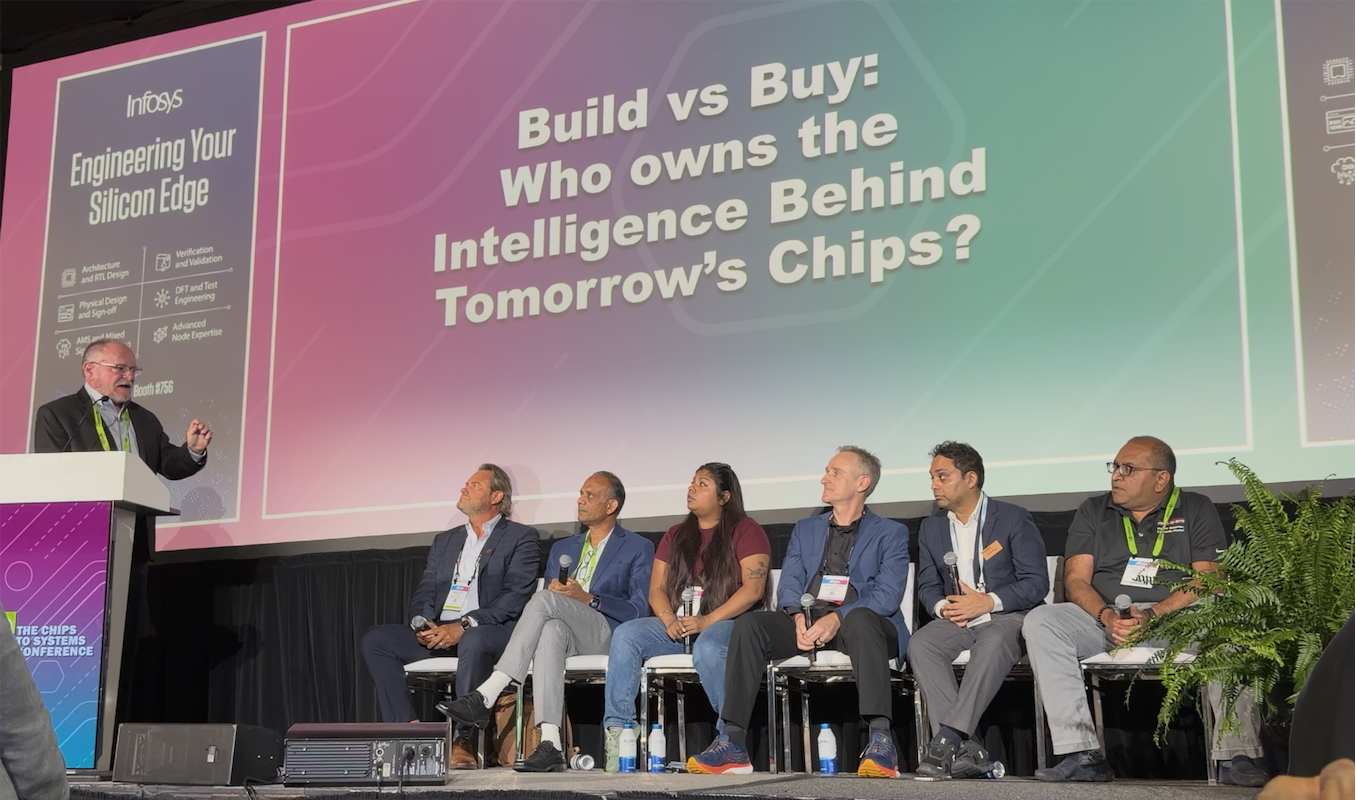
DAC 2026: A Discussion of Who Owns the Intelligence Behind Tomorrow’s Chips and How to Make it BetterThe industry is moving from simple documentation chatbots…Read More
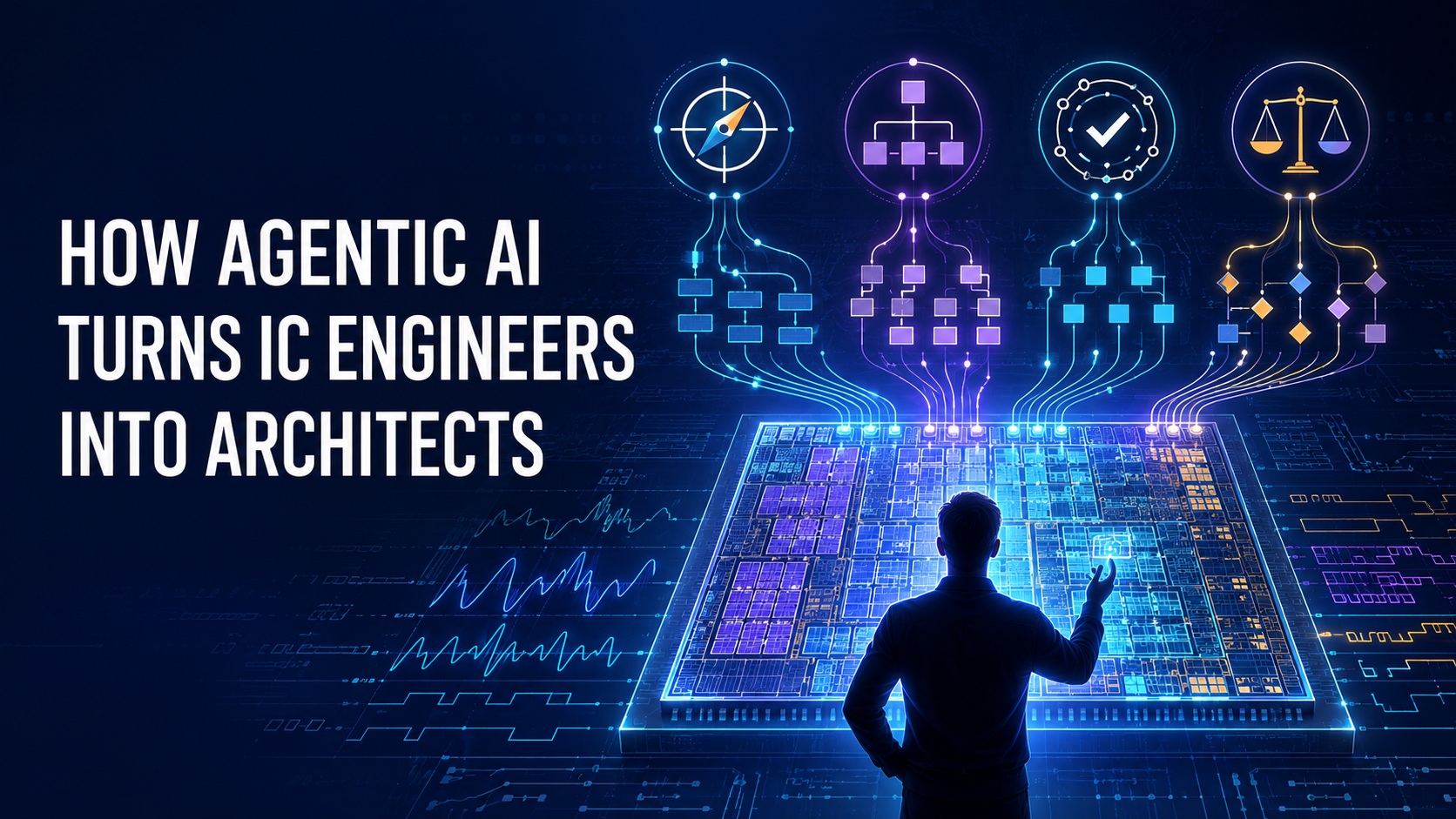
How Agentic AI Turns IC Engineers into ArchitectsThere is an interesting article by Kexun ZHang…Read More
Follow the Money – Agentrys Raises $24.5 Million to Build Agentic Design AutomationAgentrys recently launched a new category of design…Read More
Intel’s 14A Is Winning the Race Against DefectsIntel’s next-generation 14A manufacturing process is showing unusually…Read MoreCEO Interview with Stephen Strausser of VON ARDENNE North America, Inc.
Stephen Strausser was recently appointed CEO of VON ARDENNE North America, Inc. where he will lead the company’s regional strategy, operations, customer engagement and growth initiatives across the US, Canada, Mexico and South America.
Stephen has a powerful blend of business acumen, operations, service/support and engineering… Read More
Podcast EP363: The Impact of an AI Factory on Production Deployment with NeuReality’s Moshe Tanach
Daniel is joined by Moshe Tanach, co-founder and CEO of NeuReality. Prior to founding the company, he held senior engineering leadership roles at Marvell and Intel, where he led complex wireless and networking products from architecture through mass production. He also served as AVP of R&D at DesignArt Networks (later acquired… Read More
Will Agentic AI Help the Open-Source EDA Market?
Agentic artificial intelligence is likely to give the open-source electronic design automation market a meaningful boost. Its biggest contribution will not be the immediate replacement of established commercial platforms from Cadence, Synopsys, or Siemens. Instead, agentic AI can make open-source tools easier to use, … Read More
TSMC’s Overseas Fabs Are Paying Off
TSMC’s overseas fabrication strategy is beginning to deliver its intended return: not immediate cost parity with Taiwan, but manufacturable geographic redundancy, closer integration with major customers and access to subsidized capacity in strategically important markets. Arizona and Kumamoto are already producing … Read More
Crescent Island: Turning Memory Capacity into Agentic AI Throughput
Intel’s Crescent Island is a discrete data-center GPU designed for agentic AI inference, where performance is constrained by more than matrix arithmetic. Multi-step agents impose latency through repeated model calls and tool interactions, consume large memory capacity for weights and long-context key-value caches, and… Read More
AI-designed Chip Points Toward a Faster Future for Custom Silicon
Architect Labs says it has created Redwood, an AI accelerator designed and verified almost entirely by artificial intelligence in less than two weeks. If independently validated and successfully translated from a programmable prototype into manufactured silicon, the project could represent a major change in how computer… Read More
Huawei Can’t Shrink Its Chips, So It’s Folding Them
On May 25, Huawei semiconductor chief He Tingbo unveiled LogicFolding, an architecture intended to advance chip performance without relying on ever-smaller transistors. Presented alongside Huawei’s “Tau Scaling Law,” the approach prioritizes signal speed over transistor dimensions. It is a genuine engineering response… Read More
The End of “Good Enough” Timing Analysis
Why Advanced-Node Clock Networks Need More Than Timing Closure
Timing closure has been one of the semiconductor industry’s most reliable measures of design readiness for decades. Static timing analysis (STA) is a critical enabler for this process. It allows analysis of enormous designs across millions of paths, multiple… Read More
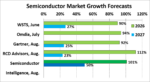
Explosive Semiconductor Growth in 2026
The global semiconductor market in the second quarter of 2026 was $368 billion, according to WSTS. 2Q 2026 set records for growth: up 35% from 1Q 2026 and up a phenomenal 104% from 2Q 2025. The previous record growth was set in 1Q 2026: up 25% from the prior quarter and up 79% from a year earlier.
Growth continues to be driven by AI. Memory… Read More


Five Billion Pulses Later: What DUV Optics Testing Reveals About Semiconductor Tool Uptime