



Embedded systems programs rarely fail because of a lack of execution capability. They fail because critical engineering documentation drifts out of alignment over time and distance. Simply put, the team is correctly following the wrong instructions. This includes requirements, architecture, implementation, verification,… Read More
How early symmetry validation eliminates costly late-stage respinsBy Mauli Shah, Product Engineer, Siemens Analog and…Read More
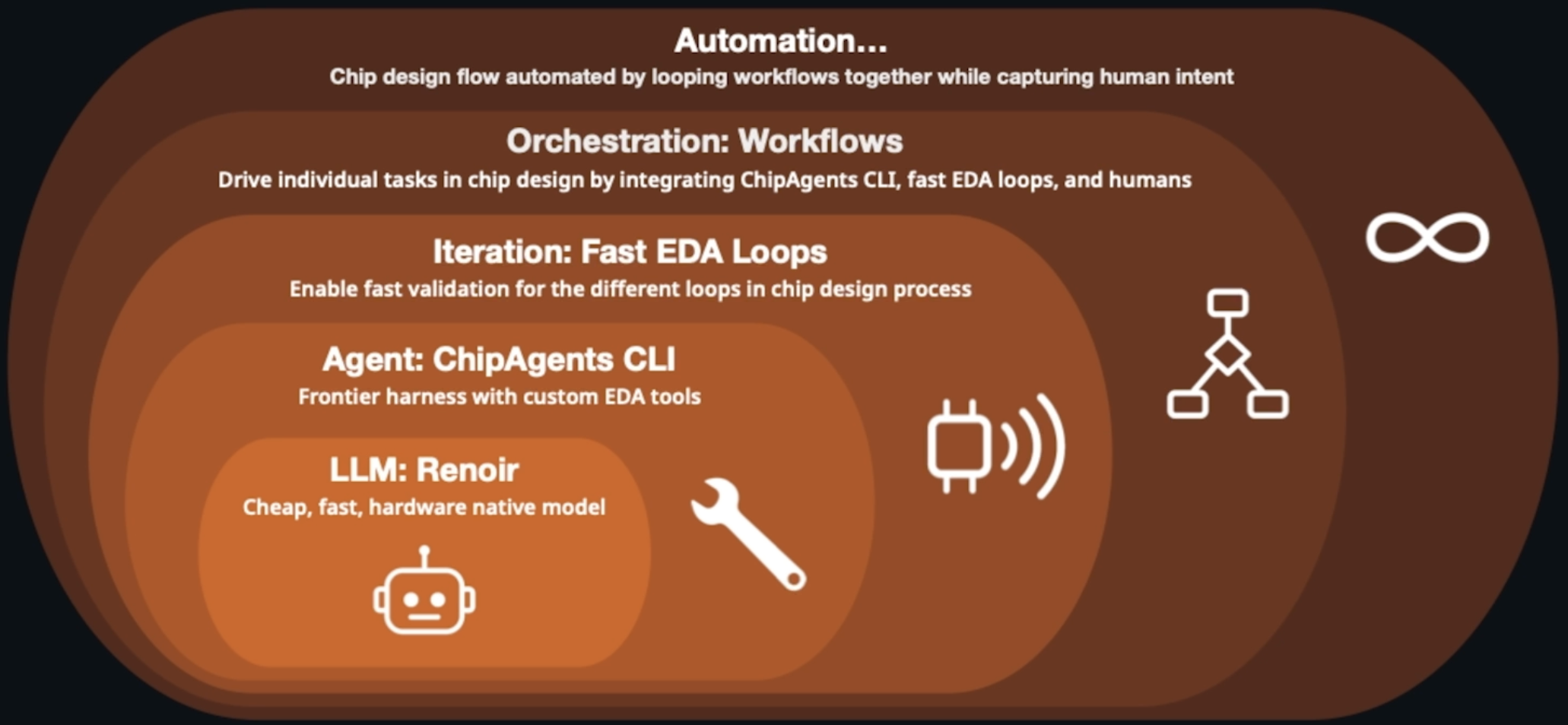
Rethinking Formal Verification in the AI EraBy Kanav Arora, ML Researcher at ChipAgents Most…Read More
CEO Interview with Ann Wu and Akash Levy of SilimateAnn Wu is Co-founder & CEO of Silimate.…Read More
From Process Learning to Production Control: Characterization for the Era of Heterogeneous SystemsEvery generation of semiconductor innovation has relied on…Read More
Five Myths about the Current Memory BoomThe current semiconductor memory boom is mainly an…Read MoreTechnical Paper: FPGA Prototyping That Creates Useful PreSilicon Evidence
As semiconductor designs continue to grow in complexity, FPGA prototyping has become an essential component of modern pre-silicon validation strategies. While FPGA capacity and gate-count equivalence often dominate discussions around prototyping platforms, the true value of an FPGA prototype lies elsewhere: its ability… Read More
Accelerating AI with RISC-V ISA
Author: Trevor Cooper
Lessons from Hands-On DGEMM Benchmarking
Using cycle-accurate simulation to explore how RISC-V vector extensions accelerate one of computing’s most important workloads
1. Why Vector Performance Matters
While GPUs dominate large-scale model training, CPUs execute a vast amount of matrix math in inference… Read More
What’s New at the 2026 DAC Exhibits
The most common question that I get each year at DAC is, “So, what’s new?” When I reviewed the exhibitor list I was pleasantly surprised to see how many EDA, IP and AI companies were attending that I didn’t know about. Here’s just a quick preview of what to expect in Long Beach from July 27-29. I’ll… Read More
Optimizing Photonic Integrated Circuit Production with yieldHUB Analytics
As Photonic Integrated Circuits (PIC) continue to gain momentum across datacom, telecom, AI infrastructure, sensing, and quantum computing applications, the need for advanced manufacturing analytics has become increasingly critical. To address the challenges associated with scaling PIC production while maintaining… Read More
Disaggregating AI Compute to Break the Tokens Barrier
Among several topics dominating news streams these days, giant datacenters are a leading theme. They point to an AI-centric future while raising real concerns about sustainability and scalability. Certainly land, power and water demand are very present concerns for most of us, witness growing pushback against building new… Read More
Customized Foundation IP Enables the Next Generation of Automotive Compute
As vehicles become increasingly software-defined, automotive semiconductor suppliers face growing pressure to deliver higher compute performance while maintaining strict requirements for power efficiency, reliability, and long-term product support. Advanced driver assistance systems (ADAS), electrification, … Read More
Rambus Delivers Complete DDR5 Client Chipset for High-Speed CUDIMM and CSODIMM Memory Modules
The rapid emergence of AI-enabled personal computers is driving unprecedented demand for higher memory bandwidth, improved signal integrity and greater system reliability. To address these requirements, Rambus has introduced a complete client memory interface chipset for Clocked Unbuffered Dual In-Line Memory Modules… Read More
From Evidence to Authority: Bounded Gate Authority for Governed Semiconductor Realization
Advanced semiconductor systems are no longer limited by a single engineering domain. They are constrained by the convergence of many interdependent vectors: silicon nodes, advanced packaging architectures, substrate materials, platform PCBs, power-delivery networks, thermal behavior, manufacturing variation, firmware… Read More
Synopsys and Samsung Foundry Extend AI-Driven Design Collaboration for Advanced 2nm and Multi-Die Systems
At SAFE Forum 2026, Synopsys announced significant advancements in its collaboration with Samsung Foundry, expanding AI-powered design, verification, test, and IP solutions for Samsung’s most advanced process technologies. The announcement underscores the growing importance of electronic design automation (EDA), … Read More


ASML High-NA EUV is Not Ready for High-Volume Production