





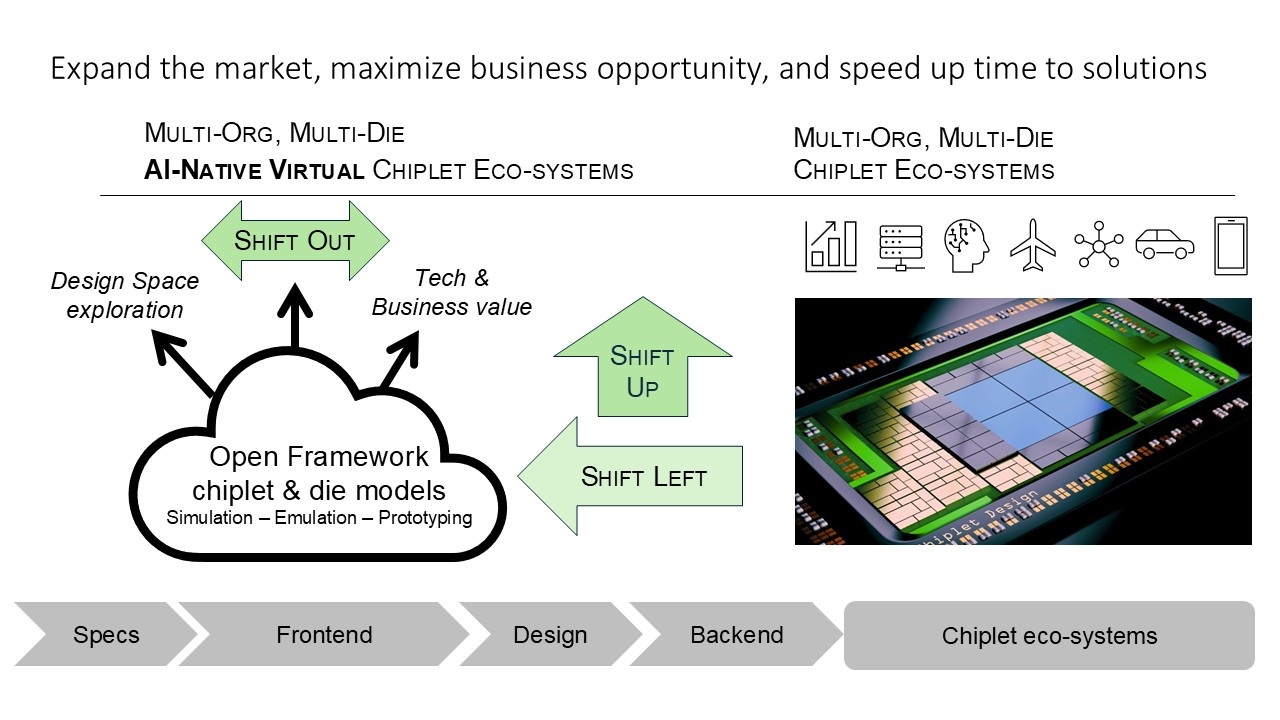
As semiconductor designs continue to grow in complexity, FPGA prototyping has become an essential component of modern pre-silicon validation strategies. While FPGA capacity and gate-count equivalence often dominate discussions around prototyping platforms, the true value of an FPGA prototype lies elsewhere: its ability to generate useful pre-silicon evidence that reduces tapeout risk and accelerates software and system validation.
A successful FPGA prototype is not simply one that compiles and fits into available FPGA resources. Rather, it is a running, observable, software-connected platform capable of answering critical engineering questions before silicon arrives. Can firmware boot? Can software drivers interact with hardware correctly? Can critical interfaces move realistic traffic? Can failures be observed and root-caused quickly? These questions determine whether a prototype contributes meaningful project value.
One of the primary challenges facing SoC development teams is the misconception that ASIC RTL can be directly migrated into FPGA implementation flows. In reality, ASIC RTL frequently contains structures that are poorly suited for FPGA architectures, including SRAM macros, custom register files, gated clocks, clock multiplexers, scan infrastructure, and technology-specific wrappers. These constructs can create synthesis instability, routing congestion, timing closure difficulties, and reduced operating frequency when left unmodified.
Consequently, FPGA readiness must be addressed early in the development cycle. Memory architectures require careful analysis to ensure that ASIC memory behavior maps appropriately onto FPGA resources such as BRAM, URAM, distributed RAM, or external memory models. Similarly, ASIC clock-gating methodologies must often be transformed into FPGA-friendly clock-enable structures and constrained clocking schemes. Early preparation of RTL significantly improves implementation predictability and reduces downstream engineering effort.
For large SoCs, multi-FPGA partitioning is often unavoidable. However, partitioning should not be viewed as a rescue mechanism for designs that exceed single-device capacity. Instead, it must be considered an architectural activity that balances software requirements, debug visibility, I/O connectivity, and performance goals. Poor partitioning decisions can introduce excessive inter-FPGA latency, bandwidth limitations, timing challenges, and increased debug complexity.
Another critical metric often overlooked in prototyping programs is Time-To-Waveform (TTW). Traditional measurements focus on compile time or achieved clock frequency. TTW, however, measures the time required to move from an RTL modification or debug hypothesis to observable system behavior. In large SoC projects, schedule delays rarely stem from a single failed compile. Instead, they arise from repeated cycles of implementation, bring-up, waveform capture, root-cause analysis, and recompile. Reducing TTW enables engineering teams to identify issues faster, validate fixes more efficiently, and maintain development momentum.
Debug visibility plays an equally important role. A prototype that executes software but lacks adequate observability may offer little practical value. Effective debug strategies require planning before implementation begins. Teams must determine which buses, interfaces, state machines, clock domains, and software-visible registers remain observable throughout the bring-up process. Preserving visibility minimizes disruptive recompiles and accelerates root-cause analysis.
Beyond hardware execution, modern FPGA prototypes must function as complete system platforms. Firmware teams require access to registers and memory subsystems. Driver developers need transaction-level interfaces and traffic generation capabilities. Validation engineers require realistic I/O environments. Host-to-DUT connectivity, reusable interface IP, memory models, and standardized runtime control mechanisms transform prototypes from isolated hardware platforms into productive software-development environments.
The Full Technical Paper is Available Here.
Bottom line: The most effective FPGA prototyping strategy focuses on evidence generation rather than capacity metrics. By combining prepared RTL, disciplined implementation flows, robust debug visibility, host connectivity, reusable infrastructure, and system-level validation capabilities, engineering teams can create prototypes that answer project-critical questions early enough to influence outcomes. In an era of increasingly complex SoCs and chiplet-based architectures, useful pre-silicon evidence—not FPGA capacity alone—has become the defining measure of prototyping success.
Also Read:
The “New Shift-Left”: Why FPGA Prototyping is the Ultimate RISC-V IP Sandbox
2026 Outlook with Ying J Chen of S2C
Accelerating Advanced FPGA-Based SoC Prototyping With S2C
Share this post via:



Comments
There are no comments yet.
You must register or log in to view/post comments.