You are currently viewing SemiWiki as a guest which gives you limited access to the site. To view blog comments and experience other SemiWiki features you must be a registered member. Registration is fast, simple, and absolutely free so please,
join our community today!
WP_Term Object
(
    [term_id] => 157
    [name] => EDA
    [slug] => eda
    [term_group] => 0
    [term_taxonomy_id] => 157
    [taxonomy] => category
    [description] => Electronic Design Automation
    [parent] => 0
    [count] => 4610
    [filter] => raw
    [cat_ID] => 157
    [category_count] => 4610
    [category_description] => Electronic Design Automation
    [cat_name] => EDA
    [category_nicename] => eda
    [category_parent] => 0
    [is_post] =>
)
As a long-time member of the EDA community, I really believe in user groups. EDA tools are complicated beasts, with many options and different ways to use them, and they are constantly evolving. Users interact with their local field applications engineers (FAEs) and sometimes corporate AEs (product specialists) as well on a regular… Read More
In the race to get people out of the driver’s seat, the developers of autonomous vehicles (AV) and advanced driving assistance systems (ADAS) have gone off road and into the virtual world.
Using simulation to design, train and validate the brains behind self-driving cars — the neural networks of sensors and systems that perceive… Read More
HCL Technologies is a large, well-established multi-national company with an annual revenue of around $10B and worldwide employee count of well over 150K. They provide valuable solutions to about 20 different industries and related market segments. Over the years, I have had first hand insights to their semiconductor design… Read More
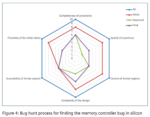
You verified your product design against every scenario your team could imagine. Simulated, emulated, with constrained random to push coverage as high as possible. Maybe you even added virtualized testing against realistic external traffic. You tape out, wait with fingers crossed for first silicon to come back. Plug it into… Read More
Many years ago, digital and analog design flows diverged, with digital design benefiting from increasing levels of automation and more importantly separation between the front-end design process and the back-end design process. While digital design still requires linkages between the front and back end, they are well defined… Read More
Pressing demands on compute speeds, storage capacity and rapid access to data are not new to the semiconductor industry. A desire for access to on-demand computing resources have always been there. During pre-cloud-computing era, companies provisioned on-demand compute capacity by procuring high performance computing … Read More
The other day, I was having one of my regular chats with Cristian Amitroaie, CEO and co-founder of AMIQ EDA. One of our subjects was a topic that we discussed last year, the wide range of languages and formats that chip design and verification engineers use these days. AMIQ EDA has put a lot of effort into adding support for many of these… Read More
Dan goes on a scenic tour of verification with Adnan Hamid, founder and CEO of Breker Verification Systems. We discuss the rather unusual way Adnan got into semiconductors and SoC verification. Adnan then breaks down the verification task into its fundamental parts to reveal what the three pillars of verification are and why … Read More
Is there a way to reduce cycle time in mapping large SoCs to an FPGA-based emulator? Paul Cunningham (GM, Verification at Cadence), Jim Hogan (RIP) and I continue our series on research ideas. As always, feedback welcome.
The Innovation
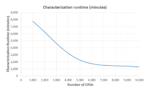
This month’s pick is Improving FPGA-Based Logic Emulation Systems through Machine Learning… Read More
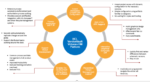
Product Lifecycle Management (PLM) for electronic systems has moved from a passive ‘fire and forget’ approach to one that is intimately involved not only during design, but also throughout the entire life of every unit delivered to the field. Siemens EDA has a white paper titled “Tessent Silicon Lifecycle Solutions” that talks… Read More










Hyper-NA EUV: The Next Frontier in Chipmaking Could Arrive in 2036