You are currently viewing SemiWiki as a guest which gives you limited access to the site. To view blog comments and experience other SemiWiki features you must be a registered member. Registration is fast, simple, and absolutely free so please,
join our community today!
WP_Term Object
(
    [term_id] => 157
    [name] => EDA
    [slug] => eda
    [term_group] => 0
    [term_taxonomy_id] => 157
    [taxonomy] => category
    [description] => Electronic Design Automation
    [parent] => 0
    [count] => 4610
    [filter] => raw
    [cat_ID] => 157
    [category_count] => 4610
    [category_description] => Electronic Design Automation
    [cat_name] => EDA
    [category_nicename] => eda
    [category_parent] => 0
    [is_post] =>
)
This is a topic worth coverage for those of us who aim to know more about safety. There are devils in the details on how ISO 26262 quantifies fault metrics, where I consider my understanding probably similar to other non-experts: light. All in all, a nice summary of the topic.
Permanent and transient faults 101
The authors kick off … Read More
In the good old days the clock signal looked like a square wave , and had a voltage swing of 5 volts, however with 7nm technology the clock signals can now look more like a sawtooth signal and may not actually reach the full Vdd value of 0.65V inside the core of a chip. I’ll cover some of the semiconductor market trends, and then challenges… Read More
My IC design career started out with manually sizing transistors to improve performance, while minimizing layout area and power consumption. Fortunately we don’t have to do manual transistor sizing anymore, thanks to EDA tools that are quicker and more accurate than manual methods. MunEDA is an EDA vendor that has developed… Read More
New EDA product launches are always an exciting time, and I could hear the energy and optimism from the voice of Manoj Chacko at Synopsys in our Zoom call about Synopsys PrimeClosure. During the physical implementation phase for IC designs there’s a big challenge to reach timing closure, and with advanced nodes the number… Read More
Can we order regression tests for continuous integration (CI) flows, minimizing time between code commits and feedback on failures? Paul Cunningham (Senior VP/GM, Verification at Cadence), Raúl Camposano (Silicon Catalyst, entrepreneur, former Synopsys CTO and now Silvaco CTO) and I continue our series on research ideas.… Read More
In December 2021, just weeks before Verizon and AT&T were set to enable their new radio access networks in the 5G mid-band spectrum (also known as C-Band), the Federal Aviation Administration (FAA) released a Special Airworthiness Information Bulletin (SAIB) and a statement notifying operators of potential 5G interference… Read More
As we all know, growing complexity of IC designs and the resulting numbers of EDA tools and design steps lead to very intricate workflows which require compute cycles that outstrip current compute capacity of most IC enterprises. The obvious question is how to efficiently leverage near infinite compute capacity in the … Read More
I just did a Google search for “3D IC”, and was stunned to see it return a whopping 476,000 results. This topic is trending, because more companies are using advanced IC packaging to meet their requirements, and yet the engineers doing the 3D IC design have new challenges to overcome. One of those challenges is creating… Read More
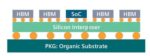
Over the last few years, the design of application-specific ICs as well as high-performance CPUs and other complex ICs has hit a proverbial wall. This wall is built from several issues: first, chip sizes have grown so large that they can fill the entire mask reticle and that could limit future growth. Second, the large chip size impacts… Read More
Synchronous circuits dominate the electronic world because clocking eases the design of circuits compared to asynchronous circuits. At the same time, clocking also introduces its share of challenges to overcome. No wonder, a tremendous amount of time and effort have been spent over the years on developing and implementing … Read More











The silent killer of analog reliability: Why SPICE misses floating net