You are currently viewing SemiWiki as a guest which gives you limited access to the site. To view blog comments and experience other SemiWiki features you must be a registered member. Registration is fast, simple, and absolutely free so please,
join our community today!
WP_Term Object
(
    [term_id] => 157
    [name] => EDA
    [slug] => eda
    [term_group] => 0
    [term_taxonomy_id] => 157
    [taxonomy] => category
    [description] => Electronic Design Automation
    [parent] => 0
    [count] => 4610
    [filter] => raw
    [cat_ID] => 157
    [category_count] => 4610
    [category_description] => Electronic Design Automation
    [cat_name] => EDA
    [category_nicename] => eda
    [category_parent] => 0
    [is_post] =>
)
Without data, there is no computing field to talk about, no technology world to awe at and not much of a semiconductor industry to work in. There is no argument that data is the foundational piece for everything, has been to date and will continue to be. While processing an application’s input data is essential to serve the intended… Read More
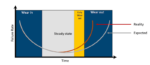
Semiconductor chips are all tested prior to shipment in order to weed out early failures, however there are some more subtle reliability effects that only appear in the longer term, like clock aging. There’s even a classic chart that shows the “bathtub curve” of failure rates over time:
If reality and expectations… Read More
Semiconductors sit at the heart of the electronics revolution, and the scaling enabled by Moore’s law has had a transformational impact on electronics as well as society. Traditionally, the relationship between semiconductor companies and their customers has been a function of the volume driven by the customer. In very … Read More
This article is an abstract of Paul Clewes’ webinar you can find here.
Differential amplifiers apply gain not to one input signal but to the difference between two input signals. This means that a differential amplifier naturally eliminates noise or interference that is present in both input signals. Differential amplification… Read More
After almost three decades in the EDA business, it is beyond my comprehension to understand why chip designers still hand-write RTL for complex register maps – chip designs with hundreds of registers and thousands of register fields. In today’s silicon world where software is the key to chip-based product success, it is the register… Read More
This year is proving to be a momentous one for U.S. semiconductor manufacturing. During a global chip shortage and record inflation, President Biden signed into effect the CHIPS and Science Act – which so far is the greatest boon to U.S. semiconductor manufacturing in history, with $52 billion in subsidies for chip manufacturers… Read More
Dan is joined by Brandon Bautz, Sr. Group Director of Product Management, responsible for the Cadence silicon signoff and verification product lines in the Digital & Signoff Group.
Dan and Brandon explore the substantial challenges faced by design teams needing to perform full-chip signoff at an accelerated pace for advanced… Read More
When it comes to electronic design automation (EDA), there are two aspects to this technologically challenging and highly competitive field. First, there is the task of designing very complex chips for which a full suite of various software tools are needed. Then there is the task of managing extremely complex EDA workflows and… Read More
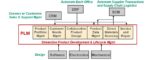
Product LifeCycle Management (PLM) systems have shown incredible value for integrating the enterprise with a single view of the product design, deployment, maintenance, and end-of-life processes. PLM systems have traditionally grown from the mechanical design space, and this still forms their strength.
Meanwhile, due… Read More
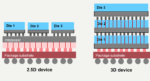
The annual ITC event was held the last week of September, and I kept reading all of the news highlights from the EDA vendors, as the time spent on the tester can be a major cost and the value to catching defective chips from reaching production is so critical. Chiplets, 2.5D and 3D IC design have caught the attention of the test world, … Read More









The silent killer of analog reliability: Why SPICE misses floating net