







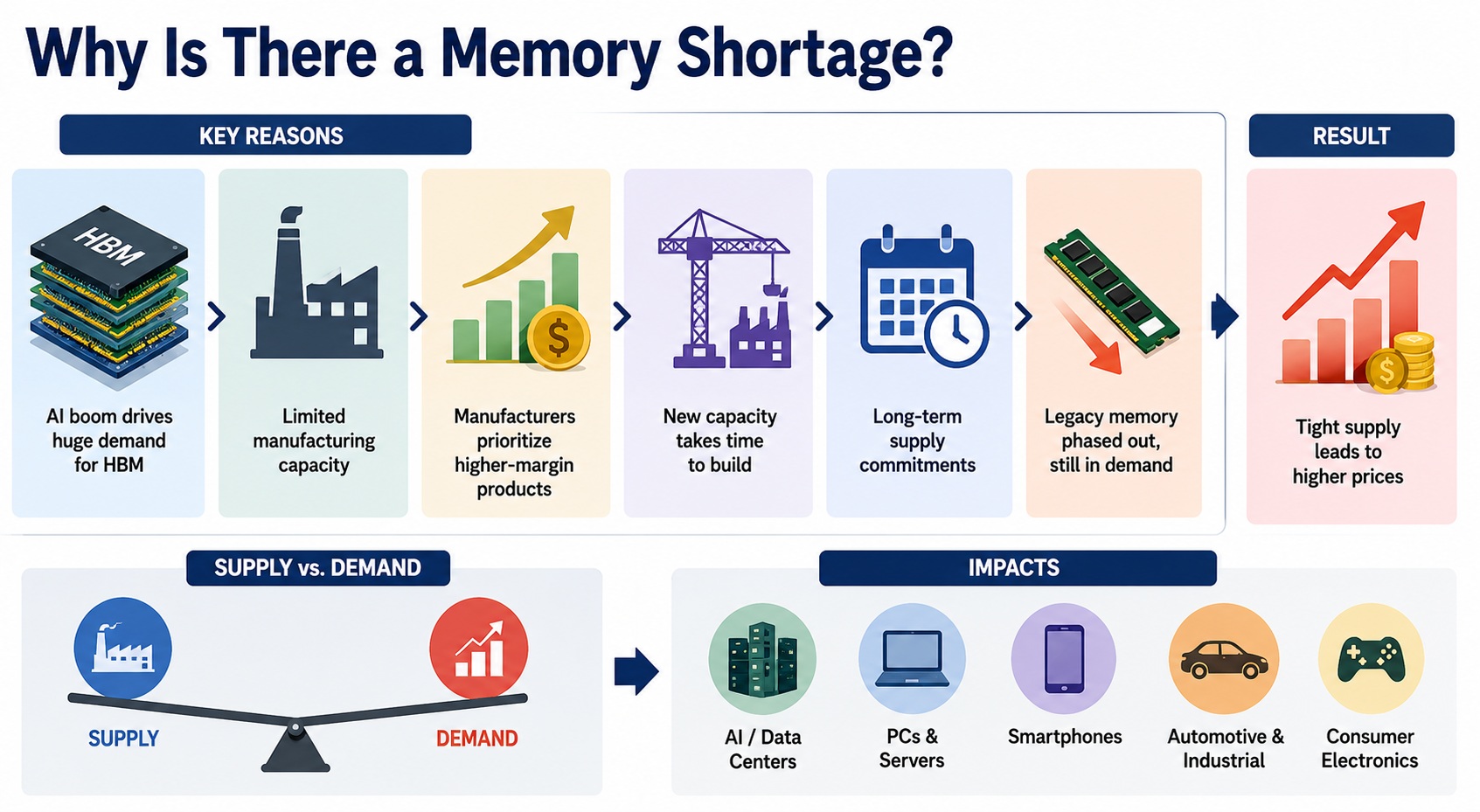
The current semiconductor memory boom is mainly an AI-driven capacity-allocation problem, not simply a lack of factories.
AI accelerators require enormous quantities of high-bandwidth memory, or HBM. HBM is used alongside GPUs and custom AI chips because it can move data much faster than ordinary server memory. As companies build AI data centers, demand for HBM and advanced DDR5 memory has risen faster than manufacturers can expand supply.
Memory revenue has gone up 5x. Profits 10x. Here are some myths and facts:
Is it just HBM causing this?
Not really. HBM is booming but the facts are: HBM is currently the same margin as DDR5. There are >5x more DDR5 Bits in an AI server than BHBM bits. HBM is 20% of DRAM bits. NAND prices have skyrocketed like DRAM. Sandisk stock prices and profits skyrocketed as well. More AI servers, More memory in each (NAND, DDR DRAM, HBM).
Memory bit growth is causing revenue to skyrocket
Memory bits are growing by about the same as past 5 years. 20% YoY. The growth in revenue is due to price changes. Increased demand is leading to customers willing to pay much higher price (3-5X) per bit. Its just price, not a change in bit shipments. Same bits, same technology, more money
The memory leaders are shifting and the order is changing
Not really. After a brief time where Hynix was ramping HBM and other companies fell behind. And a brief time where Samsung failed to deliver. And Micron having a very delayed entry into HBM. Things are back to normal. Overall market shares today are within 2% of 10 years ago. YMTC in NAND and CXMT in DRAM are the new players and they will grow to about 8% of market over the next few years. We need them and their added supply.
This is the same old memory cycle
While memory will always be cyclical due to supply effects and multiple suppliers, this is not like old days. Customers have shown willingness to spend 5x more per bit, sign long term agreements, and both the datacenter customers and the memory suppliers are making tons of money. The old days were famous for making lots of money at 50% margins and then selling below cost 2 years later. This happened in 2023. 4 year cycle. It is not clear how they could allow prices to fall that far, that fast and the demand from multiple areas is too strong. It will correct, but not that bad (hopefully).
Other companies will start making memory, spoiling the party
The response to very high margins should always be to have new entrants in the market. But while there are lots of semiconduction companies, memory is both different and hard. Even if your fabs are capable (memory fabs are different tools sets than logic), the Design Engineering, Product Engineering, Manufacturing skills and tricks take a long time to learn and perfect for everyone from the executives to the junior engineers. If TSMC (best Fab company in the world) started today, I am not sure they could match Micron on bit cost in 8 years.
We are at FMS Aug 3-Aug 7. Contact us to set up a meeting or Zoom call.
Mark Webb, www.mkwventures.com
Also Read:
TSMC CoWoS versus Intel EMIB Semiconductor Packaging
TSMC’s Raises the Bar on CAPEX!
TSMC A16 Backside Power at VLSI 2026
Foundation IP for Intel 18A: Technical Overview and Why It Matters
Share this post via:



Why ASML Is Racing to Build 110 EUV Machines