You are currently viewing SemiWiki as a guest which gives you limited access to the site. To view blog comments and experience other SemiWiki features you must be a registered member. Registration is fast, simple, and absolutely free so please,
join our community today!
Applied Materials President and CEO Gary Dickerson with the EPIC Center founding partners on October 12, 2026, in Sunnyvale, CA. (Tomas Ovalle/AP Content Services for Applied Materials, Inc.)The bottlenecks are becoming interconnected
Artificial intelligence is changing what the semiconductor industry must deliver. … Read More
ASML is exploring how to produce more than 110 extreme ultraviolet lithography machines in 2028, reflecting the extraordinary investment flowing into artificial intelligence infrastructure. The Dutch semiconductor-equipment company expects to manufacture at least 80 EUV systems in 2027 and is considering another production… Read More
Artificial intelligence performance is increasingly constrained by memory rather than arithmetic throughput. Scaling laws show that model quality improves when parameter count, training data, and compute grow together, but this balance fails when processors cannot obtain operands quickly enough. Contemporary accelerators… Read More
Intel is considering a return to memory technology decades after abandoning mainstream DRAM and, more recently, selling its NAND business. Chief executive Lip-Bu Tan has argued that memory should no longer be viewed simply as a low-margin commodity. Artificial intelligence is turning bandwidth, latency and data movement … Read More
By Nikhil Shah
Capital spending is often treated as if it becomes semiconductor capacity about twelve months later. That can be a useful rule for equipment installed in an existing fab. It is a poor description of a new fab built from the ground up.
I tested the distinction using five advanced-node projects in the United States where… Read More
I believe this year’s DAC will be viewed as the time and place where EDA experienced a major shift. That is, the shift from the value of tools and methodology to the value of agentic design flows powered by highly trained agents. The design community will clearly need the tools and methodologies that have occupied DAC for years. But… Read More
In my 45 years experience in the semiconductor industry, 43 of that in EDA and IP, I have never seen such a meteoric rise of an EDA company. I do remember money being raised for EDA in the early days but never have I seen such a customer success in such a short amount of time.
I first met ChipAgents at DVCon Silicon Valley in 2025. It was an … Read More
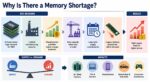
The current semiconductor memory boom is mainly an AI-driven capacity-allocation problem, not simply a lack of factories.
AI accelerators require enormous quantities of high-bandwidth memory, or HBM. HBM is used alongside GPUs and custom AI chips because it can move data much faster than ordinary server memory. As companies… Read More
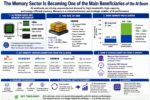
The explosive growth of artificial intelligence is transforming the semiconductor industry, and nowhere is this more evident than in the memory sector. AI training and inference workloads are fundamentally memory-intensive, driving unprecedented demand for advanced DRAM architectures, High Bandwidth Memory (HBM), and… Read More
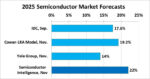
The world semiconductor market was $208 billion in third-quarter 2025, according to WSTS. This marks the first time the market has been above $200 billion. 3Q 2025 was up 15.8% from 2Q 2025, the highest quarter-to-quarter growth since 19.9% in 2Q 2009. 3Q 2025 was up 25.1% from 3Q 2024, the highest growth versus a year earlier since… Read More