You are currently viewing SemiWiki as a guest which gives you limited access to the site. To view blog comments and experience other SemiWiki features you must be a registered member. Registration is fast, simple, and absolutely free so please,
join our community today!
Arm and Mentor Recently announced that the Arm Design Reviews program now offers Mentor help in verification design reviews. I talked to Paul Williams (Sr Consultant and Verification Practice Lead at Mentor Graphics) and Peter Lewin (Dir. Mktg at Arm Partner Enablement Group) to get more insight into Arm Design Services, particularly… Read More
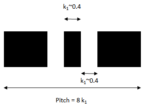
In an earlier article [1], the resolution limit for the space between paired features was described by the Rayleigh criterion of ~0.6 wavelength/numerical aperture, where the numerical aperture (NA) represented the sine of the largest angle for a ray focused from the lens to a point. It is also given by the radius of the lens divided… Read More
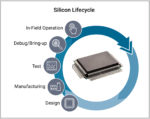
SLM. It’s a TLA (three-letter acronym) that you’ll be hearing more about. It stands for silicon lifecycle management and it has the potential of re-defining the role of EDA in the entire electronics ecosystem. A working definition of SLM is “monitoring, analysis and optimization of semiconductor devices as they are designed,… Read More
I attended one of the Arm partner events in Cambridge many years ago, when they first talked about the coherent hub for managing cache coherence. I was impressed, but the obvious question even then was how any non-Arm IP was going to hook into this hub. They had a solution, of course, the ACE interface, and I left satisfied. As is the … Read More
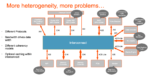
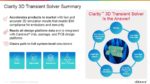
Cadence made waves a while back with its innovative Clarity 3D Solver, a FEM solver for near field EM analysis. Now they are shaking things up with their new far field Clarity 3D Transient Solver. System level EMI and EMC analysis has often exceeded the limits of simulation tools, leading to expensive and time-consuming prototype… Read More
- LCRX puts up a solid QTR and slightly soft guidance
- China Concerns weigh on future but COVID remains driver
- Memory spend could be better & help offset China
Solid September Quarter
Lam reported Non GAAP EPS of $5.67 versus $5.19 street and Revenues of $3.18B which was $70M better than street expectations. Lam obviously does … Read More
Based on the Intel investor call yesterday here are some interesting comments Bob Swan made related to Intel outsourcing manufacturing and 7nm progress. Let’s start with the prepared statement:
Bob Swan: “Over the last couple of years, we have been focused on three critical priorities; improving our execution to strengthen … Read More
You may remember Andreas from his time at Synopsys, where he led the new Software Integrity Business Unit. He joined Tortuga Logic a couple of months ago to lead the company. Given his background in software security, I was eager to get a CEO interview. Andreas is a EE with background at IBM in the PowerPC and EDA. He directed Cadence… Read More
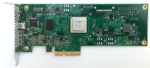
In April, I covered a new AI inference chip from Flex Logix. Called InferX X1, this part had some very promising performance metrics. Rather than the data center, the chip focused on accelerating AI inference at the edge, where power and form factor are key metrics for success. The initial information on the chip was presented at … Read More
Intelligence at the edge is a hot topic these days. Not having to go all the way to the cloud to recognize objects, faces, speech and so on. But I find promoters can be rather fuzzy about what they mean by “the edge”. For many, intelligence at the edge means intelligence closer to the edge than the cloud. In a gateway for example. Not actually… Read More













Hyper-NA EUV: The Next Frontier in Chipmaking Could Arrive in 2036