You are currently viewing SemiWiki as a guest which gives you limited access to the site. To view blog comments and experience other SemiWiki features you must be a registered member. Registration is fast, simple, and absolutely free so please,
join our community today!
WP_Term Object
(
    [term_id] => 157
    [name] => EDA
    [slug] => eda
    [term_group] => 0
    [term_taxonomy_id] => 157
    [taxonomy] => category
    [description] => Electronic Design Automation
    [parent] => 0
    [count] => 4610
    [filter] => raw
    [cat_ID] => 157
    [category_count] => 4610
    [category_description] => Electronic Design Automation
    [cat_name] => EDA
    [category_nicename] => eda
    [category_parent] => 0
    [is_post] =>
)
Synopsys pulled out all the stops for this event. I attended the first full day, tightly scripted from Aart’s keynote kick off to 1×1 interviews with Synopsys executives to a fireside chat between Sassine Ghazi (President and COO) and Rob Aitken (ex-Fellow at Arm, now Distinguished Architect at Synopsys). That’s a lot of … Read More
AI is everywhere or so it seems, though often promoted with insufficient detail to understand methods. I now look for substance, not trade secrets but how exactly they using AI. Matt Graham (Product Engineering Group Director at Cadence) gave a good and substantive tutorial pitch at DVCon, with real examples of goal-centric optimization… Read More
The Systems Modeling Language (SysML) is used by systems engineers that want to specify, analyze, design, verify and validate a specific system. SysML started out as an open-source project, and it’s a subset of the Unified Modeling Language (UML). Mirabilis Design has a tool called VisualSim Architect that imports your… Read More
Semiconductor technology is among the most complex of technologies and the semiconductor industry is among the most demanding of industries. Yet the ecosystem has delivered incredible advances over the last six decades from which the world has benefitted tremendously. Yes, of course, the markets want that break-neck speed… Read More
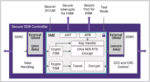
News of hackers breaking into systems is becoming common place these days. While many of the breaches reported to date may have been due to security flaws in software, vulnerabilities exist in hardware too. As a result, the topic of security is getting increased attention within the semiconductor industry around system-on-chip… Read More
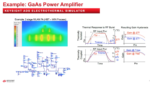
Heat and semiconductor reliability exist in an inversely proportional relationship. Before the breaking point at the thermal junction temperature rating, every 10°C rise in steady-state temperature cuts predicted MOSFET life in half. Yet, heat densities rise as devices plunge into harsher environments like smartphones,… Read More
This is an interesting idea, using hardware-supported speculative parallelism to accelerate simulation, with a twist requiring custom hardware. Paul Cunningham (Senior VP/GM, Verification at Cadence), Raúl Camposano (Silicon Catalyst, entrepreneur, former Synopsys CTO and now Silvaco CTO) and I continue our series on… Read More
My IC design career started out with DRAM design back in 1978, so I’ve kept an eye on the developments in this area of memory design to note the design challenges, process updates and innovations along the way. Synopsys hosted a memory technology symposium in November 2022, and I had a chance to watch a presentation from SK hynix… Read More
Dirk Didascalou, Siemens CTO, gave a keynote at DVCon, raising our perspective on why we do what we do. Yes, our work in semiconductor design enables the cloud and 5G and smart everything, but these technologies push progress for a select few. What about the big global concerns that affect us all: carbon, climate, COVID and conflict?… Read More
Russell Mohnis the Co-Founder and Director of RF/AMS Design at InPlay Inc. and his team has been using WiCkeD from MunEDA for several years. We thought the rest of the world would like to learn about his experiences.
How did you get started in semiconductors and what brought you to InPlay?
I was initially drawn to analog and mixed-signal… Read More












The silent killer of analog reliability: Why SPICE misses floating net