You are currently viewing SemiWiki as a guest which gives you limited access to the site. To view blog comments and experience other SemiWiki features you must be a registered member. Registration is fast, simple, and absolutely free so please,
join our community today!
WP_Term Object
(
    [term_id] => 157
    [name] => EDA
    [slug] => eda
    [term_group] => 0
    [term_taxonomy_id] => 157
    [taxonomy] => category
    [description] => Electronic Design Automation
    [parent] => 0
    [count] => 4610
    [filter] => raw
    [cat_ID] => 157
    [category_count] => 4610
    [category_description] => Electronic Design Automation
    [cat_name] => EDA
    [category_nicename] => eda
    [category_parent] => 0
    [is_post] =>
)
Analog IC designers can spend way too much time and effort re-using old, familiar, manual iteration methods for circuit design, just because that’s the way it’s always been done. Circuit optimization is an EDA approach that can automatically size all the transistors in a cell, by running SPICE simulations across… Read More
Synopsys has posted on the SolvNet site a fascinating talk given by Dr. Theo Drane of Intel Graphics. The topic is datapath equivalency checking. Might sound like just another Synopsys VC Formal DPV endorsement but you should watch it anyway. This is a mind-expanding discussion on the uses of and considerations in formal which … Read More
Traditional methods of chip design and packaging are running out of steam to fulfill growing demands for lower power, faster data rates, and higher integration density. Designers across many industries – like 5G, AI/ML, autonomous vehicles, and high-performance computing – are striving to adopt 3D semiconductor… Read More
Zakir Hussain is a co-founder of Infinisim and brings over 25 years of experience in the Electronic Design Automation industry. He was at Simplex Solutions, Inc. (acquired by Cadence) at its inception in 1995 through the end of 2000. He has published numerous papers on verification and simulation and has presented at many industry… Read More
In today’s rapidly evolving semiconductor industry, the demand for high-quality and reliable semiconductors at a reasonable cost is increasing. This is why world-class yield management has become more and more important for fabless semiconductor companies and IDMs.
In a must-attend event, yieldHUB will be hosting… Read More
I have a new-found respect for Lu Dai. He is a senior director of engineering at Qualcomm, with valuable insight into the ground realities of verification in a big semiconductor company. He is on the board of directors at RISC-V International and is chairman of the board of directors at Accellera, both giving him a top-down view of… Read More
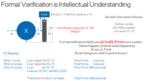
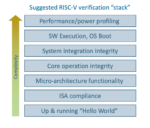
The RISC-V open ISA premise was clearly a good bet. It’s taking off everywhere, however verification is still a challenge. As an alternative to Arm, the architecture and functionality from multiple IP providers looks very competitive, but how do RISC-V providers and users ensure the same level of confidence we have in Arm? Arm … Read More
Anyone interested in learning about general trade compliance concepts or how export control and sanction regulations affect the electronic systems design ecosystem will want to attend the upcoming ESD Alliance export seminar. It will be hosted by Ada Loo, chair of the ESD Alliance Export Committee and Cadence’s Group Director… Read More
These days, the term chiplets is referenced everywhere you look, in anything you read and in whatever you hear. Rightly so because the chiplets or die integration wave is taking off. Generally speaking, the tipping point that kicked off the move happened around the 16nm process technology when large monolithic SoCs started facing… Read More
The Siemens Calibre group was very busy last week at SPIE. Calling Calibre industry leading really is an understatement. Calibre is one of the reasons Moore’s Law has continued to this day. This tool is legendary. You can get more information on the Calibre landing page including product information, resource guide, blogs
…
Read More














The silent killer of analog reliability: Why SPICE misses floating net