You are currently viewing SemiWiki as a guest which gives you limited access to the site. To view blog comments and experience other SemiWiki features you must be a registered member. Registration is fast, simple, and absolutely free so please,
join our community today!
WP_Term Object
(
    [term_id] => 157
    [name] => EDA
    [slug] => eda
    [term_group] => 0
    [term_taxonomy_id] => 157
    [taxonomy] => category
    [description] => Electronic Design Automation
    [parent] => 0
    [count] => 4610
    [filter] => raw
    [cat_ID] => 157
    [category_count] => 4610
    [category_description] => Electronic Design Automation
    [cat_name] => EDA
    [category_nicename] => eda
    [category_parent] => 0
    [is_post] =>
)
We have been working with Defacto since 2016 and it has been quite a journey. Putting an entire system on a chip is a driving force in the semiconductor industry. With the complexity of designing a modern SoC constantly increasing, new tools and methodologies are required and it all starts with RTL.
Defacto Technologies is an innovative… Read More
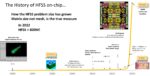
As engineers continue to design more complex systems with increasing frequency, the need for speed and capacity to solve these structures also increases. Over the years, HFSS has come a very long way and can now solve exponentially large structures with millions of unknowns. Ansys HFSS never stopped advancing, continuing … Read More
The explosion in volume and consumption of data, fueled by industry trends in virtualization, networking, and computing among others, continues to push photonic solutions forward into leading positions. On Feb 2nd, I attended a panel by Ansys at DesignCon that brought together industry experts from Intel, GlobalFoundries,… Read More
During the day I do M&A work inside the semiconductor ecosystem and I have been part of more than a dozen acquisitions during my career so I know a good one when I see it and I see a great one with Keysight and Cliosoft, absolutely.
Cliosoft came to SemiWiki 12 years ago when we first went online so I know them quite well. With more than… Read More
Exponential Innovation: HFSSby Matt Commens on 02-21-2023 at 10:00 amCategories: Ansys, Inc., EDA, Events
The old adage: “If it ain’t broke, don’t fix it,” is as offensive to innovators as it is to grammarians. Just because something works well, doesn’t mean it cannot work better. As times change and technology advances, you either move forward or get left behind.
If you haven’t upgraded to the latest Ansys HFSS electromagnetic simulation… Read More
The first chiplets focused summit took place last month. So many accomplished speakers gave keynote talks on what direction should and would the Chiplets ecosystem evolution take. Corigine presented the keynote on what direction hardware emulation should and would evolve for speeding up chiplet- based designs. During a pre-conference… Read More
We looked at another paper on ML-based coverage acceleration back in April 2022. Here is a different angle from IBM. Paul Cunningham (Senior VP/GM, Verification at Cadence), Raúl Camposano (Silicon Catalyst, entrepreneur, former Synopsys CTO and now Silvaco CTO) and I continue our series on research ideas. As always, feedback… Read More
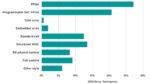
Earlier I blogged about IC and ASIC functional verification, so today it’s time to round that out with the state of FPGA functional verification. The Wilson Research Group has been compiling an FPGA report every two years since 2018, so this marks the third time they’ve focused on this design segment. At $5.8 billion… Read More
A quick Google search for “2.5D 3D IC” returns 669,000 results, so it’s a popular topic for the semiconductor industry, and there are plenty of decisions to make, like whether to use an organic substrate or silicon interposer for interconnect of heterogenous semiconductor die. Design teams using 2.5D and … Read More
As the premier high-speed communications and system design conference, DesignCon 2023 offered deep insights from various experts on a number of technical topics. In the area of high-speed communications, PCIe has a played a crucial role over the years in supporting increasingly higher communications speed with every new revision.… Read More











The silent killer of analog reliability: Why SPICE misses floating net