You are currently viewing SemiWiki as a guest which gives you limited access to the site. To view blog comments and experience other SemiWiki features you must be a registered member. Registration is fast, simple, and absolutely free so please,
join our community today!
WP_Term Object
(
    [term_id] => 157
    [name] => EDA
    [slug] => eda
    [term_group] => 0
    [term_taxonomy_id] => 157
    [taxonomy] => category
    [description] => Electronic Design Automation
    [parent] => 0
    [count] => 4535
    [filter] => raw
    [cat_ID] => 157
    [category_count] => 4535
    [category_description] => Electronic Design Automation
    [cat_name] => EDA
    [category_nicename] => eda
    [category_parent] => 0
    [is_post] =>
)
Paul Cunningham from Cadence presented at the #60DAC Pavilion and gave one of the most optimistic visions of AI applied to EDA that I’ve witnessed, so hopefully I can convey some of his enthusiasm and outright excitement in my blog report. Mr. Cunningham reviewed the various ages of EDA design with each era providing about… Read More
I had grown comfortable thinking about RISC-V as a cost-saving and more flexible alternative to Intel/AMD or Arm in embedded applications. Where clearly it is already doing very well. But following a discussion with Dave Kelf and Adnan Hamid of Breker, RISC-V goals have become much more ambitious, chasing the same big system applications… Read More
A little thinking outside the box this time. Microsoft is adding automation to their (and LinkedIn) code reviews; maybe we should consider this option also? Paul Cunningham (Senior VP/GM, Verification at Cadence), Raúl Camposano (Silicon Catalyst, entrepreneur, former Synopsys CTO and now Silvaco CTO) and I continue our series… Read More
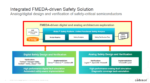
While fully autonomous driving may now be a distant dream, ADAS continues to be a very active industry driver as much for its safety advantages as for other features. Today in the hierarchy of SAE levels, SAE 2+ may represent the most active area of development rather than levels 3 through 5. This range of options still requires a human… Read More
Maheen Hamid, a member of the ESD Alliance (a SEMI Technology Community) Governing Council and a member of SEMI’s North America Advisory Board, is an astute business executive. Together with her husband Adnan Hamid, they founded Breker Verification Systems, a company developing test synthesis solutions. She serves today … Read More
We all know chip design is changing in substantial ways and at a fast pace. The demands being placed on semiconductor systems are growing dramatically, and the innovation being delivered to address those demands is just as dramatic. Everyone seems to have an opinion on these trends, and a set of predications to make sense out of it… Read More
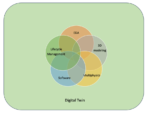
Cadence hosted a panel at DAC on how EDA, MCAD and industrial software have come together, a topic I always find interesting. Many years ago, I worked on a NAVAIR contract bid team, an eye-opener for a young engineer who thought that innovation started and ended with electronic design. I remember CATIA (3D modeling) being a component… Read More
The opening day at DAC was Monday and I had an appointment with Simon Rance (Cliosoft) and Stephen Slater, Product Manager of Keysight EDA in their suite. Back in February Daniel Nenni wrote about Keysight EDA acquiring Cliosoft, adding design data and IP management to their software offerings. I really wanted to hear how that … Read More
In the world of electronic systems design, complexity has always been a major challenge. As technology advances and demands for more efficient and powerful electronic devices grow, engineers face increasingly intricate design requirements. These complexities often lead to longer design cycles, increased costs, … Read More
The ever-increasing demands placed on Intellectual Property (IP) and System-on-Chip (SoC) development teams have resulted in an ever-increasing need for automation solutions that can boost productivity without contributing to further risk. Certainly, demands for automation have long been the drivers behind the growth… Read More











The silent killer of analog reliability: Why SPICE misses floating net