You are currently viewing SemiWiki as a guest which gives you limited access to the site. To view blog comments and experience other SemiWiki features you must be a registered member. Registration is fast, simple, and absolutely free so please,
join our community today!
WP_Term Object
(
    [term_id] => 157
    [name] => EDA
    [slug] => eda
    [term_group] => 0
    [term_taxonomy_id] => 157
    [taxonomy] => category
    [description] => Electronic Design Automation
    [parent] => 0
    [count] => 4612
    [filter] => raw
    [cat_ID] => 157
    [category_count] => 4612
    [category_description] => Electronic Design Automation
    [cat_name] => EDA
    [category_nicename] => eda
    [category_parent] => 0
    [is_post] =>
)
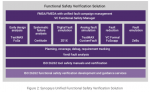
Verifying a design for functional safety requirements for an IP or SoC per ISO 26262 is a complex process that can’t be encapsulated in one tool. Process complexities depend on whether the Tier1 or OEM is targeting safety-levels ASIL-A , B, C or D, where ASIL-D applies to anything truly safety-critical such as airbag controls or … Read More
In September, ClioSoft gave a SemiWiki webinar titled, Reusing Your IPs & PDKs Successfully With Cadence® Virtuoso®. I was happy to be the moderator of this webinar, having had the chance to work with ClioSoft’s team over many years. The webinar was informative while also being very time efficient. I think it is important for… Read More
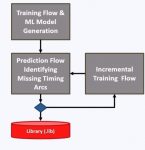
There are some metaphorical similarities between reaching timing signoff and driving a car to your destination. Most of us get in the car, turn the key and push the gas pedal to make it go. While we might have a cursory understanding of what makes it go, there are actually a lot of “moving part” under the hood in each instance. For most… Read More
Siemens Mentor recently announced PAVE360™, a very cool comprehensive pre silicon simulation environment. Autonomous cars are very popular here in Silicon Valley and quite safe on the highways since the average speed is 25mph (horrible traffic). In the city you need autonomous parking unless you want to waste precious time … Read More
One of my great pleasures in the semiconductor industry is meeting the people who have brought us to where we are today, at the forefront of modern life. One of those people is Babak Taheri, now CEO of Silvaco who I spent time with yesterday. Babak started in semiconductors around the same time I did 30+ years ago. He has a PhD in EECS and… Read More
Mentor have pushed the advantages of virtualized verification in a number of domains, initially in verifying advanced networking devices supporting multiple protocols and software-defined networking (SDN), and more recently for SSD controllers, particularly in large storage systems for data centers. There are two important… Read More
For all the time we spend thinking and talking about silicon design, it’s easy to forget just how important package design is. Semiconductor packages have evolved over the years from very basic containers for ICs into very specialized and highly engineered elements of finished electronic systems. They play an important role … Read More
NVIDIA designs some of the most complex chips for GPU and AI applications these days, with SoCs exceeding 21 billion transistors. They certainly know how to push the limits of all EDA tools, and they have a strong motivation to automate more manual tasks in order to quicken their time to market. I missed their Designer/IP Track Poster… Read More
On Wednesday, October 9, 2019, I had the pleasure of spending the day at ARM Techcon at the San Jose Convention Center. In the morning, in addition to getting some sneak peeks into the exhibitor area, I attended some of the morning keynote presentations, which focused on artificial intelligence (AI) and machine learning (ML) topics.… Read More
Building on an old chestnut, if sufficiently advanced technology looks like magic, there are a number of technology users who are increasingly looking like magicians. Of course when it comes to formal, neither is magical, just very clever. The technology continues to advance and so do the users in their application of those methods.… Read More









The silent killer of analog reliability: Why SPICE misses floating net