You are currently viewing SemiWiki as a guest which gives you limited access to the site. To view blog comments and experience other SemiWiki features you must be a registered member. Registration is fast, simple, and absolutely free so please,
join our community today!
WP_Term Object
(
    [term_id] => 157
    [name] => EDA
    [slug] => eda
    [term_group] => 0
    [term_taxonomy_id] => 157
    [taxonomy] => category
    [description] => Electronic Design Automation
    [parent] => 0
    [count] => 4610
    [filter] => raw
    [cat_ID] => 157
    [category_count] => 4610
    [category_description] => Electronic Design Automation
    [cat_name] => EDA
    [category_nicename] => eda
    [category_parent] => 0
    [is_post] =>
)
My third event at DAC on Monday was all about using EDA tools in the Cloud, and so I listened to Craig Johnson, VP EDA Cloud Solutions, Siemens EDA. Early in the day I heard from Joe Sawicki, Siemens EDA, on the topic of Digitalization.
Why even use the Cloud for EDA? That’s a fair question to ask, and Craig had several high-level… Read More
Paul, Raúl and I are having fun with our Innovation in Verification series, and you seem to be also, judging by the hit rates we’re getting. We track these carefully to judge what you find most interesting and what seems to fall more under the category of “Meh”. Paul and others also get informal feedback in client meetings but it would… Read More
Now that the 58th Design Automation Conference held this year in San Francisco has concluded, we take a minute to look back at the results and ascertain what it meant for our company.
Unfortunately, many popular tradeshows held in the time of Covid have suffered a drop in attendance, and DAC was no exception. Despite this however,… Read More
Dan is joined by Dave Kelf, who was recently appointed CEO of Breker Verification Systems. Dave discusses Breker’s unique approach to verification of complex systems, what its future impact will be and what Breker will be doing at DAC.
The views, thoughts, and opinions expressed in these podcasts belong solely to the
…
Read More
The Electronic Design Automation (EDA) industry used to be a bustling bazaar of scrappy startups, along with medium sized companies that dominated a technology space, and big main-line vendors. The annual Design Automation Conference was noisy, hectic, and sprawled over multiple large convention halls. This diversity meant… Read More
Top 10 Takeaways from DAC 2021by Tom Dillinger on 12-15-2021 at 2:00 pmCategories: Accellera, EDA, Events
The “in-person” portion of the Design Automation Conference (DAC) was recently held in San Francisco. (As several presenters were unable to attend, a “virtual” program is also available.) The presentations spanned a wide gamut – e.g., technical advanced in design automation algorithms; new features in commercial EDA tools; … Read More
Monday at DAC this year started off on a very optimistic note as Joe Sawicki from Siemens EDA presented in the Pavilion on the topic of Digitalization, a frequent theme in the popular press because of the whole Work From Home transition that we’ve gone through during the pandemic. Several industries are benefiting from the… Read More
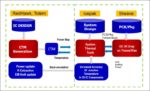
Thermal modeling has become a hot topic for designers of today’s high-speed circuits and complex packages. This has led to the adoption of better and more sophisticated thermal modeling tools and flows as exemplified in this presentation by Micron at the IDEAS Digital Forum. The presentation is titled “Thermal Aware Memory Controller… Read More
System on chip (SoC) based design has long been recognized as a powerful method to offer product differentiation through higher performance and expanded functionality. Yet, it comes with a number of limitations, such as high cost of development. Also, SoCs are monolithic, which can inhibit rapid adaptation in the face of changing… Read More
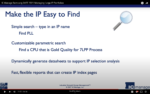
In today’s world, no IC design is completed without instantiating a few or many pre-verified or already proven intellectual property (IP) blocks. With break-neck pace at which chip designs are advancing, many IP blocks may even be entire chip designs from earlier product releases. Third-party IP market has been growing at a healthy… Read More











Hyper-NA EUV: The Next Frontier in Chipmaking Could Arrive in 2036