




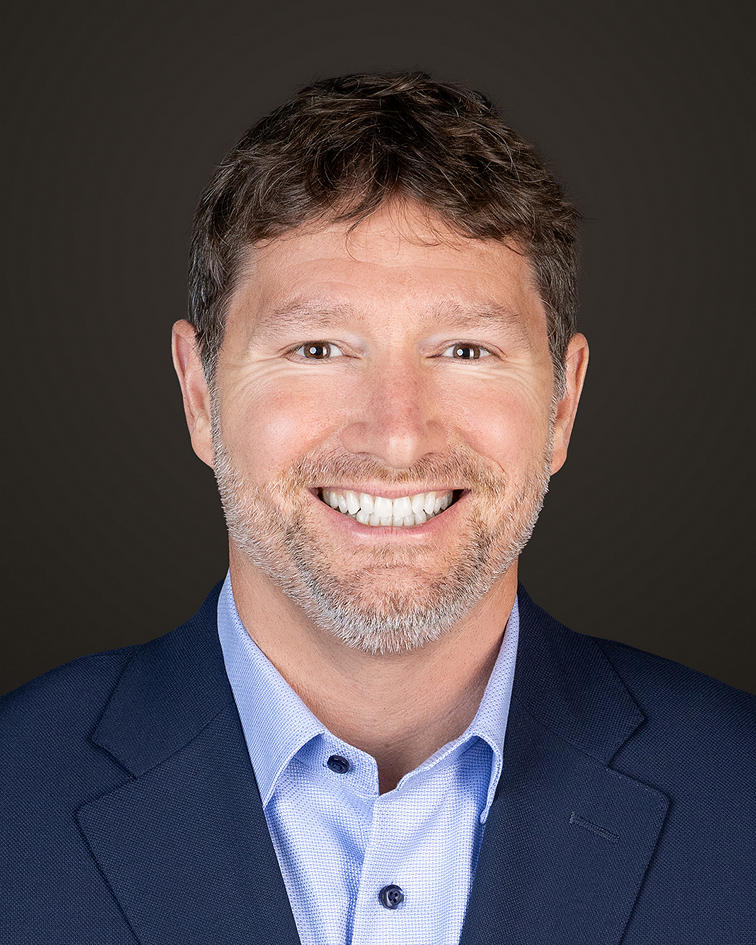



David Reeder became president and CEO of Entegris in 2025, with more than 20 years of semiconductor expertise across IDMs, fabless, foundry, systems, and component companies. Most recently, Dave served as Chief Financial Officer at Chewy where he successfully oversaw all financial functions. Prior to that, Dave was Chief Financial Officer of GlobalFoundries Inc. (GFS) where he spearheaded the company’s initial public offering, the largest ever in the semiconductor industry at the time. At GFS, Dave oversaw critical functions including operations, supply chain, procurement, and IT.
Dave has held leadership roles at the Tower Hill Insurance Group, Lexmark International, Inc., Electronics and Imaging, Inc., and was an executive at Cisco Systems, Inc., Broadcom Inc., and Texas Instruments Incorporated. As a globally focused leader, he spent over a decade abroad working in Asia and Europe, driving semiconductor innovation and growth.
Dave has served as a director on the board of directors of Entegris, Inc. since March 2024 and on the board of directors of Celestica Inc. since May 2026. He was formerly a director of Alphawave Semi from September 2023 until December 2025.
Tell us about your company?
Entegris is a leading supplier of advanced materials and process solutions for the semiconductor industry. We help customers improve productivity, performance, and technology by enabling some of the world’s most advanced manufacturing environments.
At our core, Entegris is about materials science, purity, and precision. Our products and expertise help customers move from roadmap to high-volume manufacturing by improving yield, reliability, and performance at increasingly complex technology nodes. As the industry accelerates around AI, advanced logic, and high-performance memory, our role is becoming even more mission critical.
We also bring a global operating footprint that allows us to work close to customers through manufacturing, R&D, and customer support. That proximity matters. It helps us understand specific technical and supply-chain challenges and respond with the speed, discipline, and partnership customers need.
What problems are you solving?
The more advanced chips become, the less room there is for variability. A small contamination event, a materials inconsistency, or a disruption in process control can impact yield, slow ramps, and add cost. We help customers manage those risks.
Our portfolio supports critical points across the fab, including purification, filtration, specialty chemistries, high-purity fluid and gas handling, wafer handling, and process materials. The outcomes we focus on are straightforward: reducing defects, improving process stability, accelerating time to yield, and lowering total cost of ownership.
What application areas are your strongest?
Our strongest application areas are tied to where the industry is moving fastest: advanced logic, high-performance memory, EUV, advanced packaging, and other high-performance applications enabled by AI.
AI training, inference, and edge applications are driving more complex architectures and tighter performance requirements. That increases materials intensity and raises the bar for purity, process control, and reliability. Entegris is well positioned because these are precisely the challenges our portfolio is designed to address.
Broader trends—including IoT, robotics, industrial automation, LEO, and electrification—continue to support long-term semiconductor demand growth. The near-term momentum is clearly strongest in advanced technologies, but the broader direction is consistent: more complexity, more critical materials, and a greater need for trusted technical partners.
What keeps your customers up at night?
Customer conversations tend to center on three priorities: ramp speed, yield, and resiliency.
Customers are under pressure to qualify new materials and process modules faster while reducing defects and protecting continuity of supply. They are also expanding manufacturing across regions, which creates a need for suppliers that can provide global consistency with strong local support.
At Entegris, we focus on being close to customers—technically and geographically—so we can respond quickly, support localization where it matters, and help them execute their roadmaps with confidence. Increasingly, our customers are also focused on improving resource efficiency and minimizing waste across the manufacturing process, and we see that as an important part of the value we bring.
What does the competitive landscape look like, and how do you differentiate?
The semiconductor materials space is highly competitive, differentiated, and increasingly consilidated, but success is ultimately earned in the fab. Customers evaluate materials based on reliability, yield impact, process stability, and total cost of ownership, not simply purchase price.
Entegris differentiates through the depth of our materials science, application knowledge, breadth of portfolio, customer intimacy, and execution. We have built our business around solving the most demanding process challenges, where purity, precision, and reliability matter most.
We have also invested around the world to provide resiliency, speed, and flexibility as the industry scales. In Taiwan and other critical semiconductor regions, our strategy is to strengthen local capabilities and supplier ecosystems so customers can count on continuity of supply and technical support where they need it most.
What new features/technology are you working on?
We are focused on the materials and process solutions required for the next generation of chip architectures: higher purity, lower contamination, and tighter integration between materials and process performance.
EUV is a good example. As EUV scales into higher-volume production, materials performance and consistency become even more important. Our recent agreement with JSR Corporation and Inpria Corporation to cross-license metal oxide resist patents and explore collaborative opportunities for future photoresist materials reflects the kind of work required to support customers at the leading edge.
We are also investing in capabilities that bring us closer to customers and their roadmaps. Our Manufacturing Center of Excellence in Colorado Springs strengthens U.S. semiconductor infrastructure and expands domestic production for critical products. Our Korea Technology Center in Ansan is designed to simulate customer fab environments and support flexible cleanroom testing.
How do customers normally engage with your company?
Customers often engage with us early—usually years before commercialization—when device and process roadmaps are still being shaped. That gives us the opportunity to collaborate on materials selection, application development, qualification, and scale-up before a process reaches high-volume manufacturing.
The best engagements are highly technical and collaborative, involving joint development, root-cause analysis, cleanroom testing, material qualification, or helping move a solution from lab to fab.
A good example is our response to a customer that was concerned about trace metal contamination in IPA chemistries affecting HBM production. Our teams moved quickly to understand the issue and develop the required solution. That is the model customers expect from Entegris: direct engagement, strong technical problem solving, and a bias for action.
Our regional technology centers and localized manufacturing hubs are an important part of that model. They help us collaborate more closely with customers, shorten development cycles, and support smoother product ramps.
Also Read:
CEO Interview with Brendan Emery of iQ Sense
CEO Interview with Joseph Krause of Radical AI
CEO Interview with Chuck McClish of Lattrex Inc.
Share this post via:



The silent killer of analog reliability: Why SPICE misses floating net