You are currently viewing SemiWiki as a guest which gives you limited access to the site. To view blog comments and experience other SemiWiki features you must be a registered member. Registration is fast, simple, and absolutely free so please,
join our community today!
WP_Term Object
(
    [term_id] => 157
    [name] => EDA
    [slug] => eda
    [term_group] => 0
    [term_taxonomy_id] => 157
    [taxonomy] => category
    [description] => Electronic Design Automation
    [parent] => 0
    [count] => 4613
    [filter] => raw
    [cat_ID] => 157
    [category_count] => 4613
    [category_description] => Electronic Design Automation
    [cat_name] => EDA
    [category_nicename] => eda
    [category_parent] => 0
    [is_post] =>
)
As 2018 wraps up this month it’s time to start thinking and planning for 2019, and if you work in the Silicon Valley then you’ll want to consider adding the 31st annual DVCon event planned for February 25-28 in San Jose. Surveys have shown for some time now that verification tasks actually take up more time on a SoC project… Read More
I met Imperas at TechCon this year because I wanted to become a bit more knowledgeable about virtual modeling. That led me to become more interested in RISC-V and a talk given by Krste Asanovic of UCB and SiFive. My takeaway surprised me. I had thought this was an open-source David versus proprietary Goliaths (Intel and ARM) battle… Read More
Cadence held a well-attended Automotive Summit where Cadence presented an overview of their solution and system enablement along with industry experts and established or startup companies sharing their perspective and product features from autonomous driving, LiDAR, Radar, thermal imaging, sensor imaging, and AI.… Read More
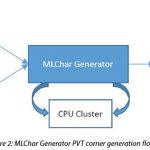
For SOC designers that are waiting for library models the saying “give me liberty or give me death” is especially apropos. Without libraries to support the timing flow, SOC design progress can grind to a halt. As is often the case, more than just a few PVT corners are needed. Years ago, corners were what the term sounded like – the 4 corners… Read More
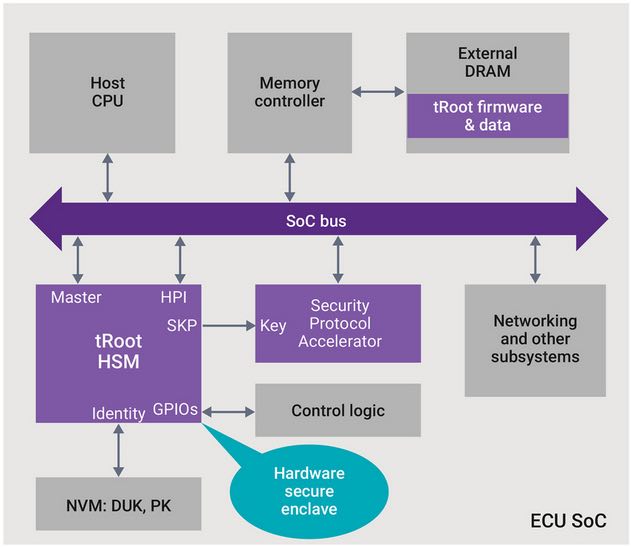
It used to be that automotive theft and crime was perpetrated with a crowbar. Now with increased electronics content, car designer and owners need to worry about electronic threats. Anywhere there is a communication link or a processor, there are potential threats to the security of the car. The range of these threats covers everything… Read More
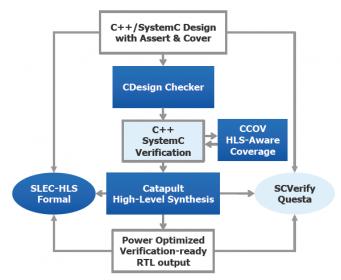
In a recent whitepaper Gagandeep Singh, Director of Engineering at Mentor, a Siemens Business outlines a flow using Catapult Design Checker that helps in early detection of coding errors as many companies are turning to High-Level Synthesis (HLS) methodology. This requires that high -level C++ models are correct, that ambiguities… Read More
This is it! This is the single page of code that Ákos Hadnagy wrote this summer to formally verify WARP-V, an open-source RISC-V CPU core.… Read More
Back in 1986, Synopsys started out with a synthesis product by name of SOCRATES, which stands for Synthesis andOptimization ofCombinatorial logic usingRule-basedAndTechnology independentExpertSystem. It is fair to say that not many designers know that was the birth name of what eventually turns out to be a very successful… Read More
A fusion of digital and analog IC circuits, mixed signal ICs are key components to many applications including IoTs, automotive, communications and consumer electronics –acting as enabler to bidirectional conversion of signals between analog domain derived from various audio, temperature and visual sensors to digital… Read More
The automotive segment is being well served by semiconductor suppliers of all sizes because of the unit volumes, and the constant push to automate more of the driving decisions to silicon and software can raise lots of questions about safety, reliability and trust. Fortunately the ISO standards body has already put in place a functional… Read More










The silent killer of analog reliability: Why SPICE misses floating net