You are currently viewing SemiWiki as a guest which gives you limited access to the site. To view blog comments and experience other SemiWiki features you must be a registered member. Registration is fast, simple, and absolutely free so please,
join our community today!
WP_Term Object
(
    [term_id] => 157
    [name] => EDA
    [slug] => eda
    [term_group] => 0
    [term_taxonomy_id] => 157
    [taxonomy] => category
    [description] => Electronic Design Automation
    [parent] => 0
    [count] => 4613
    [filter] => raw
    [cat_ID] => 157
    [category_count] => 4613
    [category_description] => Electronic Design Automation
    [cat_name] => EDA
    [category_nicename] => eda
    [category_parent] => 0
    [is_post] =>
)
Machine learning (ML) is already making its way into EDA tools and flows, but the majority of announcements have been around implementation, especially in guiding toward improved timing and area. This is a pretty obvious place to start; ML is in one sense an optimization technique, trained on prior examples, which should be able… Read More
As a testament to the technology advances developed and implemented into Empyrean ALPS™ by the engineering team, the product has seen a steady growth in the adoption by users. In addition, hearing directly from the users at DAC 2018 turned out to be an all-around success for the product as well as the product team to see ALPS beating… Read More
I first started using a SPICE circuit simulator in 1978 while at Intel and have followed that market ever since then. Back at DAC in 2012 I first heard of a Chinese EDA company called IC Scape with a SPICE circuit simulator called Aeolus, so I blogged about it. Fast forward to 2019 and I heard from Ravi Ravikumar, a former co-worker from… Read More
The entire history of EDA software tools has enabled engineers to design ICs and SoCs using virtual prototyping, so most of us in the industry are familiar with the idea of modeling and simulating something as complex as an IC before actually starting the manufacturing process. In a complex system like an automobile there are a lot… Read More
Mentor continues to invest in conferences such as DAC, no matter the location, for which I am very grateful. They have a long list of activities this year but I wanted to point out my top three:
Wally Rhines has a talk in the DAC Pavilion which is first on the list. Wally’s expert industry perspective is the result of tireless research… Read More
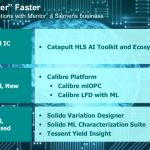
Mentor are stepping up their game in AI/ML. They already had a well-established start through the Solido acquisition in Variation Designer and the ML Characterization Suite, and through Tessent Yield Insight. They have also made progress in prior releases towards supporting design for ML accelerators using Catapult HLS. Now… Read More
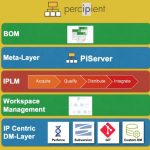
Earlier this month I attended a webinar organized by Methodics on the topic of IP life cycle management and traceability, with three presenters and a Q&A session at the end. I’ve worked with Michael Munsey before and he was the first presenter. Semiconductor IP creation and re-use is the foundation of all modern IC designs,… Read More
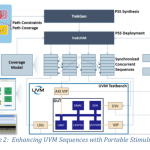
When PSS comes up, a lot of mainstream verification engineers are apt to get nervous. They worry that just as they’re starting to get the hang of UVM, the ivory tower types are changing the rules of dynamic verification again and that they’ll have to reboot all that hard-won UVM learning to a new language. The PSS community and tool … Read More
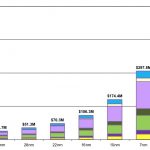
It is said that it will cost as much as $600M to develop a 5nm chip. At that price, only a few companies can afford to play, and with that amount of cash in, innovation is severely limited.
At the same time, there is a stampede in the artificial intelligence (AI) market where around 60 startups have appeared, many of which have already … Read More
One of my favorite EDA disruptions is the Siemens acquisition of Mentor, pure genius. Joe Sawicki now runs the Mentor IC EDA business for Siemens so we will be seeing him at more conferences and events than ever before. Joe did a very nice keynote at the recent U2U conference that I would like to talk about before we head to the 56thDAC… Read More








The silent killer of analog reliability: Why SPICE misses floating net