You are currently viewing SemiWiki as a guest which gives you limited access to the site. To view blog comments and experience other SemiWiki features you must be a registered member. Registration is fast, simple, and absolutely free so please,
join our community today!
WP_Term Object
(
    [term_id] => 157
    [name] => EDA
    [slug] => eda
    [term_group] => 0
    [term_taxonomy_id] => 157
    [taxonomy] => category
    [description] => Electronic Design Automation
    [parent] => 0
    [count] => 4610
    [filter] => raw
    [cat_ID] => 157
    [category_count] => 4610
    [category_description] => Electronic Design Automation
    [cat_name] => EDA
    [category_nicename] => eda
    [category_parent] => 0
    [is_post] =>
)
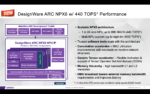
AI-based applications are fast advancing with evolving neural network (NN) models, pushing aggressive performance envelopes. Just a few years ago, performance requirements of NN driven applications were at 1 TOPS and less. Current and future applications in the areas of augmented reality (AR), surveillance, high-end smartphones,… Read More
According to the experts, the semiconductor industry is poised for a decade of growth and is projected to become a trillion dollar industry by 2030. In 2021 the semiconductor industry finally hit $600B so $1T by 2030 seems like a big ask, but not really if you look at the indicators inside the semiconductor ecosystem. Foundries, … Read More
Freemium is the two words “free” and “premium” combined together, and many of us have enjoyed using freemium apps on our phones, tablets and desktop devices over the years. The concept is quite simple, you find an app that is useful, and download the free version, mostly to see if it operates as advertised,… Read More
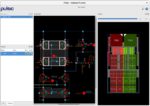
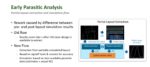
You may have noticed that I have been writing a lot more about analog design lately. This is no accident. Analog and custom blocks are increasingly important because of the critical role they play in enabling many classes of systems, such as automotive, networking, wireless, mobile, cloud, etc. Many of the SoCs needed for these… Read More
We’re always looking for ways to leverage machine-learning (ML) in coverage refinement. Here is an intriguing approach proposed by Google Research. Paul Cunningham (GM, Verification at Cadence), Raúl Camposano (Silicon Catalyst, entrepreneur, former Synopsys CTO and now Silvaco CTO) and I continue our series on research… Read More
Success with Open-Source Formal Verification
The dream of 100% confidence is compelling for silicon engineers. We all want that big red button to push that magically finds all of our bugs for us. Verification, after all, accounts for roughly two-thirds of logic design effort. Without that button, we have to create reference models,… Read More
S2C EDA recently released a whitepaper written by a good friend of mine Steve Walters. Steve and I have worked together many times throughout our careers and I consider him to be one of my trusted few, especially in regards to prototyping and emulation. Steve is also my co author on the book “Prototypical II The Practice of FPGA-Based… Read More
Voltage converters and regulators are a vital part of pretty much every semiconductor-based product. They play an outsized role in mobile devices such as cell phones where there are many subsystems operating at different voltages with different power needs. Many portable devices rely on Lithium Ion batteries whose output voltage… Read More
It was nice to be at a live conference again. DesignCon was held at the Santa Clara Convention Center, my favorite location, which to me there was a back to normal crowd. The sessions I attended were full and the show floor was busy. Masks and vaccinations were not required, maybe that was it. Or there was a pent-up demand to get back engaged… Read More
Establishing traceability is critical for many organizations — and a must for those who need to prove compliance. Too often, the compliance process is manual, leading to errors and even delays. A simple clerical mistake can invalidate results and lead to larger issues throughout the product’s lifecycle. Developing a unified,… Read More










Hyper-NA EUV: The Next Frontier in Chipmaking Could Arrive in 2036