You are currently viewing SemiWiki as a guest which gives you limited access to the site. To view blog comments and experience other SemiWiki features you must be a registered member. Registration is fast, simple, and absolutely free so please,
join our community today!
At the TERAFAB launch event in Austin on March 21, Elon Musk made a prediction that would have sounded like science fiction a decade ago—and may still: roughly 80 percent of AI compute will eventually move off-planet.
The argument is straightforward once you accept his premises. Earth-based data centers face three hard constraints—land,… Read More
Intel has posted three consecutive years of falling revenue and an $18.76 billion loss in 2024 alone—and the U.S. government has handed it tens of billions of dollars to fix the problem. The government money isn’t fixing the real issue, which isn’t technical. It’s cultural. Intel got slow, political, and risk-averse—the… Read More
At a workshop in Boston on February 27, something subtle but important happened. Developers sat down in front of a RISC-V laptop, installed Fedora, and ran a local large language model. No simulation. No dev board tethered to a monitor. A laptop.
For more than a decade, RISC-V advocates have promised that the open instruction set… Read More
RVA23 marks a turning point in how mainstream CPUs are expected to scale performance. By making the RISC-V Vector Extension (RVV) mandatory, it elevates structured, explicit parallelism to the same architectural status as scalar execution. Vectors are no longer optional accelerators bolted onto speculation-heavy cores.… Read More
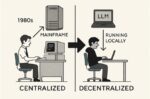
At the 2025 RISC-V Summit, amid debates over cloud scaling and AI cost, DeepComputing CEO Yuning Liang offered a radical view: the future of intelligence isn’t in the cloud at all — it’s already in your pocket. His lunchtime conversation began with iPhones and ended with the death of the operating system. In between, he sketched … Read More
Up to now the RISC-V community has been developing open-source processor implementations to a stage where they can appeal to system designers looking for alternatives to proprietary Arm and x86 cores. Toward this end, two projects have emerged as particularly significant examples of where RISC-V is heading. One is Ara, a vector… Read More
When Morris Chang left Texas Instruments in 1983 to found TSMC, he was not merely starting a new company—he was proposing a new industrial logic. Chang recognized that semiconductor manufacturing had become so capital-intensive that it could no longer survive as just one function inside a vertically integrated company.… Read More
India rarely makes the front page of the Western technology press — and when it does, the story is growth. What is happening right now doesn’t fit that story. Since late February, the U.S.-Iran conflict has effectively closed the Strait of Hormuz — the waterway through which roughly half of India’s crude oil and 60% of its natural … Read More
The PC industry is entering its most significant transformation since the debut of the IBM PC in 1981. That original beige box ushered in a new era of productivity, reshaping how corporations and individuals worked, communicated, and created. More than four decades later, the AI PC is emerging as a new category — one that promises… Read More
GlobalFoundries’ (GF) acquisition of MIPS in 2025 wasn’t a nostalgic move to revive a legacy CPU brand. It was a calculated step into one of the most lucrative frontiers in semiconductors: AI, high-performance computing (HPC), and datacenters. As Nvidia, AMD, Intel, and hyperscalers embrace chiplet architectures, GF is betting… Read More
















ChipAgent Raises $134Million and Why it Matters