






At Embedded World 2025 in Nuremberg, Germany, on March 11, 2025, Yuning Liang, DeepComputing Founder and CEO walked onto the stage with a mischievous smile and a challenge. “What’s the hardest product to make?” he asked rhetorically. “A laptop. It’s bloody hard… but we did it. You can swap the motherboard, you can upgrade, you can’t… Read More

Author: Jonah McLeod
Yuning Liang’s Painstaking Push to Make the RISC-V PC a Reality

Rapidus, IBM, and the Billion-Dollar Silicon Sovereignty Bet

Can cash and IBM collaboration put Japan into premier-league chipmaking? Rapidus is betting billions it can.
When Japan announced the creation of Rapidus in 2022, the news was met with a mix of enthusiasm and skepticism. The company would enter the market at a time of escalating demand for semiconductor fabrication capacity to… Read More
Basilisk at Hot Chips 2025 Presented Ominous Challenge to IP/EDA Status Quo

At Hot Chips 2025, Philippe Sauter of ETH Zürich presented Basilisk, a project that may redefine what’s possible with open-source hardware. Basilisk is a 34 mm² RISC-V SoC fabricated at IHP Microelectronics on its open-source 130nm BiCMOS process in Germany. Basilisk, named after the Greco-Roman mythical creature known… Read More
Can RISC-V Help Recast the DPU Race?

ARM’s Quiet Coup in DPUs
The datacenter is usually framed as a contest between CPUs (x86, ARM, RISC-V) and GPUs (NVIDIA, AMD, custom ASICs). But beneath those high-profile battles, another silent revolution has played out: ARM quietly displaced Intel and AMD in the Data Processing Unit (DPU) market.
DPUs — also called SmartNICs… Read More
What XiangShan Got Right—And What It Didn’t Dare Try
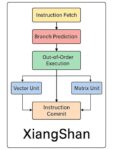
An Open ISA, a Closed Mindset — Predictive Execution Charts a New Path
The RISC-V revolution was never just about open instruction sets. It was a rare opportunity to break free from the legacy assumptions embedded in every generation of CPU design. For decades, architectural decisions have been constrained by proprietary patents,… Read More
Flynn Was Right: How a 2003 Warning Foretold Today’s Architectural Pivot

In 2003, legendary computer architect Michael J. Flynn issued a warning that most of the industry wasn’t ready to hear. The relentless march toward more complex CPUs—with speculative execution, deep pipelines, and bloated instruction handling—was becoming unsustainable. In a paper titled “Computer Architecture … Read More
Voice as a Feature: A Silent Revolution in AI-Enabled SoCs
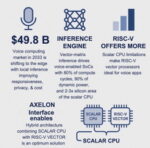
When Apple introduced Siri in 2011, it was the first serious attempt to make voice interaction a mainstream user interface. Embedded into the iPhone 4S, Siri brought voice into consumers’ lives not as a standalone product, but as a built-in feature—a hands-free way to interact with an existing device. Siri set the expectation… Read More
Feeding the Beast: The Real Cost of Speculative Execution in AI Data Centers

For decades, speculative execution was a brilliant solution to a fundamental bottleneck: CPUs were fast, but memory access was slow. Rather than wait idly, processors guessed the next instruction or data fetch and executed it ‘just in case.’ Speculative execution traces its lineage back to Robert Tomasulo’s work… Read More
Predictive Load Handling: Solving a Quiet Bottleneck in Modern DSPs
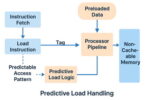
When people talk about bottlenecks in digital signal processors (DSPs), they usually focus on compute throughput: how many MACs per second, how wide the vector unit is, how fast the clock runs. But ask any embedded AI engineer working on always-on voice, radar, or low-power vision—and they’ll tell you the truth: memory stalls … Read More
Even HBM Isn’t Fast Enough All the Time

Why Latency-Tolerant Architectures Matter in the Age of AI Supercomputing
High Bandwidth Memory (HBM) has become the defining enabler of modern AI accelerators. From NVIDIA’s GB200 Ultra to AMD’s MI400, every new AI chip boasts faster and larger stacks of HBM, pushing memory bandwidth into the terabytes-per-second range. … Read More






ChipAgent Raises $134Million and Why it Matters