You are currently viewing SemiWiki as a guest which gives you limited access to the site. To view blog comments and experience other SemiWiki features you must be a registered member. Registration is fast, simple, and absolutely free so please,
join our community today!
What does the IoT mean for the next wave of Silicon Valley innovators? Looking at the previous waves of semiconductor economic development and the doctrine of “creative destruction” holds clues as to how this one develops and who emerges as the new leaders.
Given seven decades of progress, it may seem semiconductor firms on top … Read More
There are too many IoT protocols. Way too many. Anyone who says one single protocol will be the winner from end-to-end in all IoT applications and markets is smoking something. Software defined, multi-protocol gateways are the only hope on the IoT – and DSP cores enable this strategy.… Read More
The maiden voyage of NASA’s Orion spacecraft brought a raft of articles about how the flight computer inside is “no smarter than your phone,” running on wheezing IBM PowerPC 750FX processors. NASA’s deputy manager for Orion avionics, Matt Lemke, admits the configuration is already obsolete – at least in commercial terms. … Read More
Coverage is an important yet elusive metric for design verification. It often seems 90% of coverage comes with 10% of the effort, and getting the final 10% covered takes the remaining 90% of a project. Usually, it takes another tool or methodology to get at the 10% the first tool missed. With 100% closure difficult, most teams inspect… Read More
4K UHD TVs were all dressed up at CES 2014 with no content to show. The good news for the 2014 holiday season is the industry has converged on one set of standards for display, interfacing, and encoding, so consumers should not be left marooned in an instant replay of the 3DTV hype-crash cycle. It may be a bit longer before everyone can… Read More
Since pennants, drums, smoke, and horses fell out of favor to more advanced communication technology, network operators have struggled to find balance. Too few subscribers interested, and infrastructure investments completely fail. Just the right number of paying users, revenue streams provide profit and ability to invest… Read More
Debugging an ASIC design in an FPGA-based prototyping system can be a lot like disciplining a puppy. If you happen to be there at the exact moment the transgression occurs and understand what led up to that moment, administering an effective correction might be possible.
Catching RTL in the act requires the right tools. Faults in… Read More
When Arteris sold key network-on-chip intellectual property and most of its human assets to Qualcomm earlier this year, it was big news. We suggested the bigger news after a restaffing effort would be a next-generation NoC release, and a new round of design wins.
Some developments were already in the pipeline. … Read More
Octa-core sells smartphones and tablets. 64-bit ARM Cortex-A53 implementations are available from Huawei, MediaTek, Qualcomm, Samsung, and now Marvell, with Rockchip and others on the way. Suddenly, almost everyone planning to run Linux is being asked for octa-core designs.
If it were easy, anyone could do it. Increasing … Read More
An ongoing IoT debate centers on the notion that just because we can do something does not mean we should. From discussions at the recent MEMS Executive Congress, looking at what TSMC and some others see as the endgame for a trillion sensors signals possible trouble ahead.… Read More










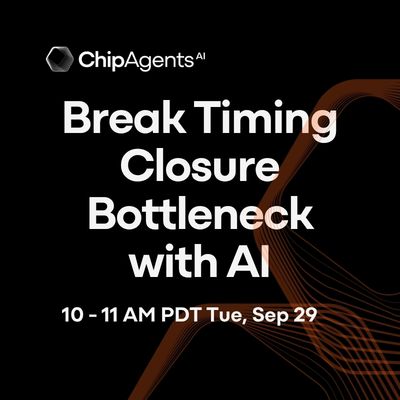





The Invisible Bottleneck Is Costing You Time You Can’t Get Back