You are currently viewing SemiWiki as a guest which gives you limited access to the site. To view blog comments and experience other SemiWiki features you must be a registered member. Registration is fast, simple, and absolutely free so please,
join our community today!
EDA verification tools generally do a great job of analyzing the written rules in digital design. Clock domain crossings (CDCs) are more like those unwritten rules in baseball; whether or not you have a problem remains indefinite until later, when retaliation can come swiftly out of nowhere.
Rarely as overt or dramatic as a bench-clearing… Read More
Advanced skill in auto repair, carpentry, plumbing, and similar trades often correlates to one factor. Knowing what you want to do is one thing – having the proper tool is another, and can make the difference. Many a job has extended from minutes to hours over the lack of the right tool at the right moment. Experienced mechanics and… Read More
Xilinx has delivered not only “the biggest FPGA on the planet”, but what it claims is currently the world’s largest integrated circuit: the Virtex UltraScale VU440, with 19 billion transistors fabbed in TSMC 20nm. The list of first customers to receive parts says a lot about the state of SoC design today, and the vital role FPGA-based… Read More
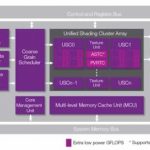
We have been hearing for some time about the Synopsys HAPS-70 and how they have co-created the hardware and software architecture for FPGA-based prototyping with their customers. Now, we see details published by Synopsys on how they collaborated with Imagination on the design of the PowerVR Series6XT GPU.
The first thing to come… Read More
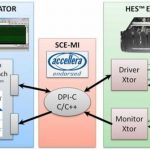
Debate rages about which approach is better for SoC design: simulation, or emulation. Simulation proponents point to software saving the need for expensive hardware platforms. Emulation supporters stake their claims on accuracy and the incorporation of real-time I/O. A few years back, some creative types coined the term SEmulation,… Read More
Multiple processor cores are now a given in SoCs. Grabbing IP blocks and laying them in a multicore design may be the easy part. While verification is extremely important, it is only the start – obtaining real-world performance depends on the combination of multicore hardware and actual application software. What should engineers… Read More
One of the great devices in maker lore is the Polaroid 6500 Series Sonar Ranging Module. It was originally part of the autofocus system for their SX-70 cameras circa 1978, long before through-the-lens optical autofocus sensors were perfected. Back then, people couldn’t focus. Dr. Land thought he was teaching people to compose… Read More
The news Qualcomm has shipped over a billion Snapdragon chips in Android smartphones broke last September. After reiterating that and a sustained outlook for smartphones over the next five years, the Qualcomm CES 2015 presser seemed to leave most media outlets a bit disappointed. Naturally, that prompts us to ask what is going… Read More
Like most technology firms, Apple has been home to many successes, and some spectacular defeats. One failure was Project Aquarius. At the dawn of the RISC era, before ARM architecture was “discovered” in Cupertino, engineers were hunkered over a Cray X-MP/48. The objective was to design Apple’s own quad core RISC processor to … Read More
With advances in available IP, mixed signal design has become much easier. Mixed signal verification on the other hand is becoming more complicated. More complexity means more simulation, and in the analog domain, SPICE-based techniques grinding away on transistor models take a lot of precious time. Event-driven methods like… Read More














The Invisible Bottleneck Is Costing You Time You Can’t Get Back