



The semiconductor industry is in the midst of a structural supply challenge that’s tightly coupled to exploding demand for advanced chips, especially those used in AI, HPC, and next-generation mobile and consumer devices. At the center of this vortex is the 2nm class of manufacturing technology, representing one of the most … Read More
Jensen Huang and the Cost of Unchecked InfluenceAs a semiconductor professional with 45 years in…Read More
CTO Interview with Juan Rey, senior VP and general manager of Calibre and CTO of Siemens EDAJuan Rey is Head of Technology and Innovation…Read More
CTO Interview Kevin Robinson, VP of Operations, yieldHUBKevin Robinson is VP of Operations at yieldHUB,…Read More
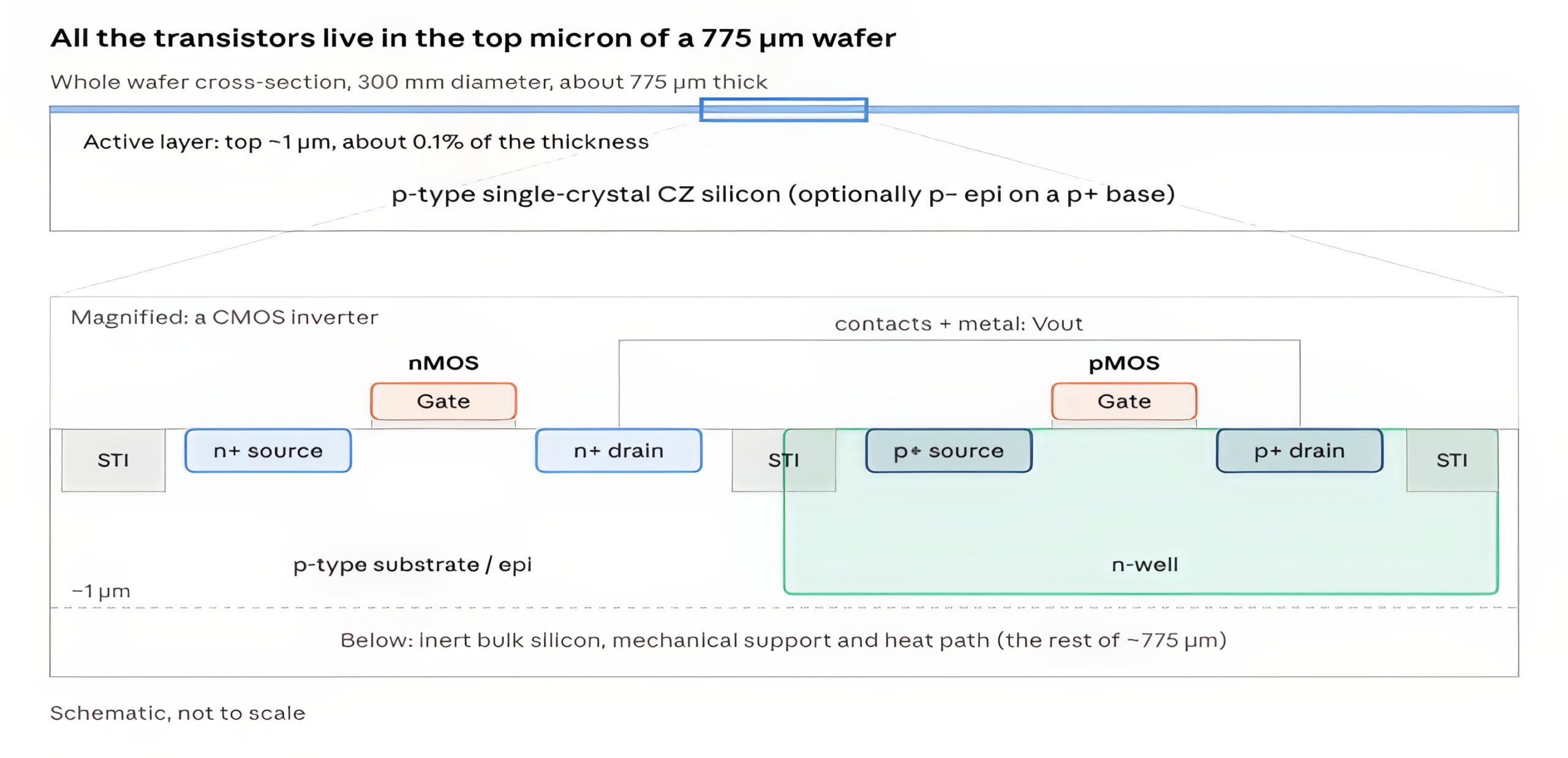
Semiconductors and SOI: From Bulk Wafers to Engineered Substrates1. Why the substrate matters Every transistor sits…Read MoreFrom Satellites to 5G: Ceva’s PentaG-NTN™ Lowers Barriers for Terminal Innovators
Ceva, Inc., a leading provider of silicon and software IP for the Smart Edge, has unveiled PentaG-NTN™, its groundbreaking 5G Advanced modem IP subsystem tailored for satellite user terminals in Low Earth Orbit (LEO) and Medium Earth Orbit (MEO) constellations. Announced at Mobile World Congress 2026 in Barcelona on March 3,… Read More
Siemens Reveals Agentic Questa
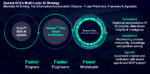
There’s no denying that verification now leads the field in agentic AI announcements, accelerating the trend around this significant contribution to design automation. Siemens have just announced their Questa One Agentic Toolkit, their response to this trend, building on the core Questa One platform. Questa One provides … Read More
Functional Safety Analysis of Electronic Systems
Safety engineers, hardware designers and reliability specialists in safety-critical industries like automotive, aerospace, medical device and industrial automation use FMEDA (Failure Modes, Effects and Diagnostic Analysis). ISO 26262 compliance for ADAS, braking systems and ECUs require FMEDA in the automotive sector.… Read More
RVA23 Ends Speculation’s Monopoly in RISC-V CPUs
RVA23 marks a turning point in how mainstream CPUs are expected to scale performance. By making the RISC-V Vector Extension (RVV) mandatory, it elevates structured, explicit parallelism to the same architectural status as scalar execution. Vectors are no longer optional accelerators bolted onto speculation-heavy cores.… Read More
Perforce and Siemens Collaborate on 3DIC Design at the Chiplet Summit
The recent Chiplet Summit at the Santa Clara Convention Center was buzzing with many enabling technologies for chiplet-based design. Collaboration was also on display during many parts of the show. A presentation in the Siemens booth was a perfect example of both of those trends. In the Siemens booth, Perforce presented an excellent… Read More
CHERI: Hardware-Enforced Capability Architecture for Systematic Memory Safety
The rapid escalation of cyberattacks over the past two decades has exposed a fundamental weakness at the core of modern computing systems: the lack of memory safety. Industry data consistently shows that the majority of critical software vulnerabilities stem from memory corruption issues such as buffer overflows, use-after-free… Read More
WEBINAR: Two-Part Series on RF Power Amplifier Design
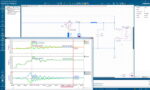
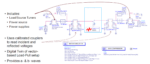
At lower frequencies with simpler modulation, RF power amplifier (PA) designers could safely concentrate on a few primary metrics – like gain and bandwidth – and rely on relaxed margins to ensure proper operation in a range of conditions. Today’s advanced RF PA design is a different story. mmWave and sub-THz frequencies introduce… Read More
Securing RISC-V Third-Party IP: Enabling Comprehensive CWE-Based Assurance Across the Design Supply Chain
by Jagadish Nayak
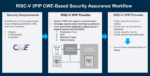
RISC-V adoption continues to accelerate across commercial and government microelectronics programs. Whether open-source or commercially licensed, most RISC-V processor cores are integrated as third-party IP (3PIP), potentially introducing supply chain security challenges that demand structured,… Read More
Apple’s iPhone 17 Series 5G mmWave Antenna Module Revealed to be Powered by Soitec FD-SOI Substrates
Recent independent teardown and technical analyses have confirmed that the 5G mmWave antenna module powering Apple’s latest iPhone 17 lineup relies on advanced SOITEC based Fully Depleted Silicon-On-Insulator (FD-SOI) substrate technology. The discovery highlights a significant architectural shift in high-frequency… Read More


Jensen Huang and the Cost of Unchecked Influence