You are currently viewing SemiWiki as a guest which gives you limited access to the site. To view blog comments and experience other SemiWiki features you must be a registered member. Registration is fast, simple, and absolutely free so please,
join our community today!
By Dr. Moh Kolbehdari
Putting roughly 25 million pixels into a wearable device weighing about six ounces sounds, at first, like a display problem.
It is not.
The displays must fit behind an optical system capable of turning those pixels into a usable visual field. Compute must generate and move the required data. Power must support… Read More
TSMC’s 2026 Open Innovation Platform Forum presented artificial intelligence as the force reshaping semiconductor design. Its central argument is that faster chips will require progress across the whole system: logic, memory, packaging, interconnects, power delivery and design methods. TSMC places its partner ecosystem… Read More
It’s an honor to attend events like this as a guest, and even more so as a speaker. On Friday at 3:30 p.m., I’ll be moderating a panel with the CEOs of three of the hottest AI startups. I definitely have a few questions ready for them! My beautiful wife and I will also be at the banquet. I hope to see you there!
The CASPA CEO Summit arrives … Read More
Lieuwke de Jong is a globally experienced executive and entrepreneur who operates at the intersection of industry, government and innovation. His career spans defense-aligned sectors, aerospace, energy, life sciences and advanced materials and he is known for connecting stakeholders across government, research and industry… Read More
Intel Foundry published a two article series on chip power delivery that are worth reading. Here is a quick summary:
Artificial intelligence is changing the requirements for semiconductor innovation. Faster transistors and denser packaging remain essential, but their benefits increasingly depend on another engineering… Read More
The rapid growth of AI at the edge is forcing SoC architects to rethink traditional processor designs. Dedicated NPUs deliver impressive performance for today’s models, but evolving AI workloads, increasing system complexity and growing pressure on power and silicon budgets are exposing the limitations of fixed-function… Read More
By Bhanu Pandey
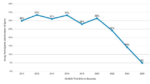
The semiconductor industry is currently facing a significant challenge in functional verification. According to the most recent Wilson Research Group / Siemens EDA Functional Verification Study, first-silicon success rates have hit a historic low, with nearly 68% of designs requiring two or more spins. While… Read More
Semiconductor designers today face a critical hurdle: how to smoothly transition from an open-source hardware blueprint to a commercially hardened, production-ready silicon implementation. As semiconductors play an increasingly essential role in powering the AI era, safeguarding these hardware foundations has become… Read More
Access to advanced semiconductor technology involves much more than choosing a process node. Design teams also need computing capacity, compatible tools, secure technology access, and experienced support. IC-Link by imec’s expanded collaboration with TSMC addresses that combination, potentially making sophisticated… Read More
Siemens has again sponsored a Wilson-led survey on the state of (functional) verification in the industry, and this time Harry Foster (Chief Scientist, Verification at Siemens) has condensed his major takeaways from the report. These are intriguing – particularly an apparent revolutionary change in first-silicon trends.… Read More












Rethinking Phase Jitter: An Algorithmic Approach to Signal Integrity