


Good news is good to hear, particularly these days! The behavior of the Design IP market in 2019 is extremely positive, when the semiconductor market has seen a decline worst than in 2009 (economy crisis) or 2001 (internet bubble collapse). Analysis this 5.2% growth in detail will help to understand the future of the IP market, as… Read More
MZ Technologies Launches Advanced Packaging Design Video SeriesIn a significant move aimed at empowering semiconductor…Read More
Superhuman AI for Design Verification, Delivered at ScaleThere is a new breed of EDA emerging.…Read More
The Quantum Threat: Why Industrial Control Systems Must Be Ready and How PQShield Is Leading the DefenseIndustrial control systems (ICS) underpin the world’s most…Read More
Radio Frequency Integrated Circuits (RFICs) Generated by AI Based Design AutomationBy Jason Liu, RFIC-GPT Inc. Radio frequency integrated…Read MoreShort vs Long Term Covid19 Impact
-Short term Covid19 impact is primarily logistics related
-Longer term impact is more systemic/demand driven
-Impact will wind through supply chain over several qtrs
-Other issues, such as trade, remain an overhang
Short term versus long term in the semiconductor industry
The stocks declines over the last months seem to indicate… Read More
Wave Computing and MIPS Wave Goodbye
Word on the virtual street is that Wave Computing is closing down. The company has reportedly let all employees go and will file for Chapter 11. As one of the many promising new companies in the field of AI, Wave Computing was founded in 2008 with the mission “to revolutionize deep learning with real-time AI solutions that scale from… Read More
TSMC COVID-19 and Double Digit Growth in 2020
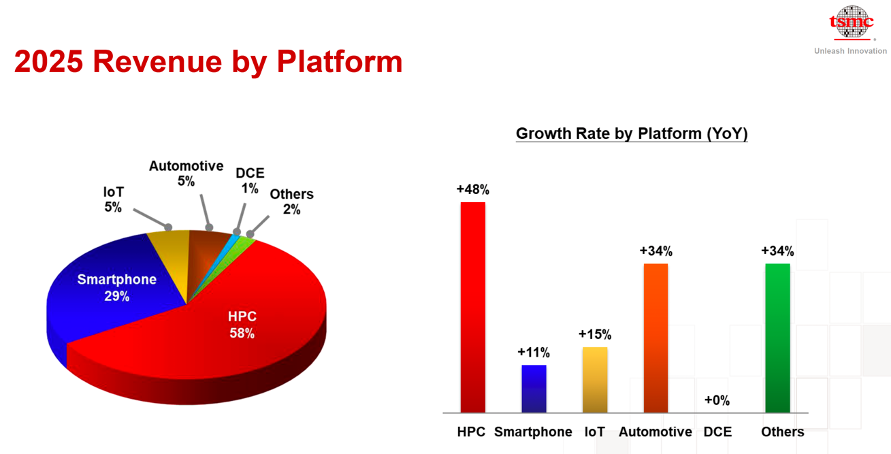
TSMC has had an incredible run since its founding in 1987 which spans most of my 36 year semiconductor career. Even in these troubled times TSMC is a shining bellwether with double digit growth expectations while the semiconductor industry will be flat or slightly down. Let’s take a close look at the TSMC Q1 2020 conference call and… Read More
Lithography Resolution Limits – Arrayed Features
State-of-the-art chips will always include some portions which are memory arrays, which also happen to be the densest portions of the chip. Arrayed features are the main targets for lithography evaluation, as the feature pitch is well-defined, and is directly linked to the cost scaling (more features per wafer) from generation… Read More
Cadence – Defining a Roadmap to the Future
Cadence recently published a position paper that details a set of enabling technologies that will be needed for product design going forward. Entitled Intelligent System Design, the piece describes the changing landscape of system design and the requirements for success. Cadence has built a branded approach to address these… Read More
Breker Tips a Hat to Formal Graphs in PSS Security Verification
It might seem paradoxical that simulation (or equivalent dynamic methods) might be one of the best ways to run security checks. Checking security is a problem where you need to find rare corners that a hacker might exploit. In dynamic verification, no matter how much we test we know we’re not going to cover all corners, so how can it… Read More
The Story of Ultra-WideBand – Part 5: Low power is gold
How can ultra-wideband done right do more with less energy
In the previous part, we discussed how the time-frequency duality can be used to reduce the latency. When you compress in time a wireless transmission, you reduce the time it takes to hop from a transmitter to a receiver. Another very interesting capability enabled by the… Read More
Artificial Intelligence in Micro-Watts: How to Make TinyML a Reality
TinyML is kind of a whimsical term. It turns out to be a label for a very serious and large segment of AI and machine learning – the deployment of machine learning on actual end user devices (the extreme edge) at very low power. There’s even an industry group focused on the topic. I had the opportunity to preview a compelling webinar about… Read More
Project-Centric Design Process, or IP-centric
How do most IC design teams organize their work during the design process?
Most design teams would say that they organize their work into a project-centric view, and that at the beginning of the process use a tool for requirements management, maybe a bug tracker, or some design management tool. On the four IC designs that I worked … Read More


Quantum Computing Technologies and Challenges