You are currently viewing SemiWiki as a guest which gives you limited access to the site. To view blog comments and experience other SemiWiki features you must be a registered member. Registration is fast, simple, and absolutely free so please,
join our community today!
            WP_Term Object
(
    [term_id] => 14
    [name] => Synopsys
    [slug] => synopsys
    [term_group] => 0
    [term_taxonomy_id] => 14
    [taxonomy] => category
    [description] =>
    [parent] => 157
    [count] => 818
    [filter] => raw
    [cat_ID] => 14
    [category_count] => 818
    [category_description] =>
    [cat_name] => Synopsys
    [category_nicename] => synopsys
    [category_parent] => 157
    [is_post] =>
)

WP_Term Object
(
    [term_id] => 14
    [name] => Synopsys
    [slug] => synopsys
    [term_group] => 0
    [term_taxonomy_id] => 14
    [taxonomy] => category
    [description] =>
    [parent] => 157
    [count] => 818
    [filter] => raw
    [cat_ID] => 14
    [category_count] => 818
    [category_description] =>
    [cat_name] => Synopsys
    [category_nicename] => synopsys
    [category_parent] => 157
    [is_post] =>
)
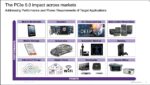
Synopsys recently held a webinar session on this topic and Gustavo Pimentel, Principal Product Marketing Manager at the company led the webinar session. Going into the webinar session, I found myself wondering: why focus on PCIe 5.0, eight years after its release? With the industry buzzing about Edge AI, cloud computing, and … Read More
In a rapidly evolving semiconductor landscape, where AI demands unprecedented computational power and efficiency, Synopsys has deepened its partnership with TSMC to pioneer advancements in AI-driven designs and multi-die systems. Announced during the TSMC OIP Ecosystem Summit last week, this collaboration leverages … Read More
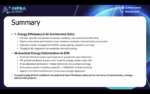
At the AI Infra Summit 2025, Synopsys showed how artificial intelligence has become inseparable from the process of creating advanced silicon. The company’s message was clear: AI is an end-to-end engine that drives every phase of chip development. Three Synopsys leaders illustrated this from distinct vantage points. Godwin… Read More
Synopsys has deepened its collaboration with TSMC certifying the Ansys portfolio of simulation and analysis tools for TSMC’s cutting-edge manufacturing processes including N3C, N3P, N2P, and A16. This partnership empowers chip designers to perform precise final checks on designs, targeting applications in AI acceleration,… Read More
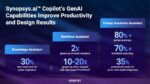
In the fast-paced semiconductor industry Synopsys has redefined EDA with its Synopsys.ai Copilot, a generative AI tool. Since its launch in November 2023, and yes I was at the launch and very skeptical, Copilot has evolved to address the industry’s growing design complexity and projected 15-30% workforce gap by 2030. Let’s… Read More
Introduction: The Historical Roots of Hardware-Assisted Verification
The relentless pace of semiconductor innovation continues to follow an unstoppable trend: the exponential growth of transistor density within a given silicon area. This abundance of available semiconductor fabric has fueled the creativity of design… Read More
The rapid evolution of artificial intelligence (AI) is transforming industries, from autonomous vehicles to data centers, demanding unprecedented computational power and efficiency. As highlighted in Synopsys’ guide, the global AI chip market is projected to reach $383 billion by 2032, growing at a 38% CAGR. This … Read More
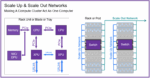
The evolution of hyperscale data center infrastructure to support the processing of trillions of parameters for large language models has created some rather substantial design challenges. These massive processing facilities must scale to hundreds of thousands of accelerators with highly efficient and fast connections.… Read More
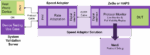
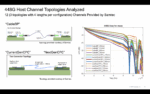
The march toward higher-speed networking continues to be guided by the same core objectives as has always been : increase data rates, lower latency, improve reliability, reduce power consumption, and maintain or extend reach while controlling cost. For the next generation of high-speed interconnects, these requirements … Read More
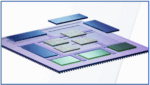
As we all know, the age of multi-die design has arrived. And along with it many new design challenges. There is a lot of material discussing the obstacles to achieve more mainstream access to this design architecture, and some good strategies to conquer those obstacles. Synopsys recently published a webinar that took this discussion… Read More