You are currently viewing SemiWiki as a guest which gives you limited access to the site. To view blog comments and experience other SemiWiki features you must be a registered member. Registration is fast, simple, and absolutely free so please,
join our community today!
            WP_Term Object
(
    [term_id] => 14
    [name] => Synopsys
    [slug] => synopsys
    [term_group] => 0
    [term_taxonomy_id] => 14
    [taxonomy] => category
    [description] =>
    [parent] => 157
    [count] => 817
    [filter] => raw
    [cat_ID] => 14
    [category_count] => 817
    [category_description] =>
    [cat_name] => Synopsys
    [category_nicename] => synopsys
    [category_parent] => 157
    [is_post] =>
)

WP_Term Object
(
    [term_id] => 14
    [name] => Synopsys
    [slug] => synopsys
    [term_group] => 0
    [term_taxonomy_id] => 14
    [taxonomy] => category
    [description] =>
    [parent] => 157
    [count] => 817
    [filter] => raw
    [cat_ID] => 14
    [category_count] => 817
    [category_description] =>
    [cat_name] => Synopsys
    [category_nicename] => synopsys
    [category_parent] => 157
    [is_post] =>
)
Artificial intelligence is moving beyond the screen. The attached presentation describes a shift from systems that generate text, images, and code to systems that can perceive their surroundings and take action. These systems could guide robots, vehicles, factory equipment, medical devices, and critical infrastructure.… Read More
Wow, OpenAI and Synopsys just announced a multiyear partnership to develop GPT-Synopsys, a specialized artificial intelligence model for semiconductor design. The agreement combines OpenAI’s frontier models with Synopsys’ electronic design automation software and engineering expertise. Its ambition is to help engineers… Read More
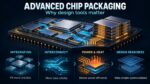
As chipmakers put more computing power into a single system, the challenge extends beyond making individual chips faster. They must connect multiple chips, memory stacks, power supplies, and sometimes optical components in a compact package. In the2026 TSMC OIP Forum talk “Addressing Inter-Die Complexity for 3D Multi-Die… Read More
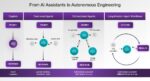
Synopsys today announced its AgentEngineerTM solutions portfolio and AutopilotTM Platform, advancing a fundamental paradigm shift in electronic design automation (EDA): moving beyond AI copilots toward autonomous engineering agents. Following a recent technical briefing with Thomas Andersen, Vice President of AI and… Read More
On Tuesday at #DAC2026 I attended the exhibitor presentation, Synopsys: How Silicon Startups are Addressing the AI Memory Gap. Vikram Bhatia from Synopsys introduced the two presentations from Wenbo Yin, SVP of IC Design at TetraMem and R. Scott Hills, VP of Business Development at ANAFLASH. Datacenters consume large amounts… Read More
Daniel is joined by Dr. Germain Fenger, Senior Director of Product Management at Synopsys where he leads advanced mask solutions and computational lithography technologies. With a background spanning semiconductor manufacturing, lithography research, engineering, and product leadership, Germain has held roles at imec,… Read More
The $9.5 Billion Design IP Market: Shifting Boundaries, Arm’s Monopoly, and the RISC-V Responseby Kalar Rajendiran on 09-04-2026 at 6:00 amCategories: AI, Arm, IP, IPnest, RISC-V, Semiconductor, Semiconductor Intelligence, Semiconductor Services, SiFive, Synopsys
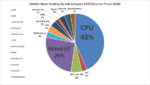
While semiconductor design intellectual property (IP) is a $9.45 billion market, it acts as the absolute architectural bottleneck for the entire global semiconductor value chain. The choices made at the IP layer today dictate the cost, power, and security of a downstream technology economy rapidly marching toward a trillion… Read More
Preamble
Hardware-assisted verification (HAV) platforms, including hardware emulators and FPGA-based prototyping systems, are the two dominant methodologies for validating long workloads on complex System-on-Chip (SoC) designs before tape-out. HAV sits within a broader continuum of verification engines: simulation… Read More
The reported move of Amit Gupta, Jeff Dyck, and Ryan Silk from Siemens EDA to Synopsys matters because this is more than a routine transfer of experienced executives and engineers. Together, the three represent a concentrated body of expertise in applying artificial intelligence to semiconductor design—one of the most strategically… Read More
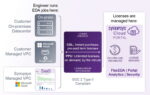
Cloud-based EDA has been around for awhile now, so at #DAC2026 I met with Vikram Bhatia, Executive Director of Synopsys Cloud to see what’s new with their offering. His background includes stints at Sun, IBM, Microsoft, HP, Oracle and NetApp. The Synopsys Cloud FlexEDA lets designs teams run their EDA solutions inside of a web browser,… Read More