You are currently viewing SemiWiki as a guest which gives you limited access to the site. To view blog comments and experience other SemiWiki features you must be a registered member. Registration is fast, simple, and absolutely free so please,
join our community today!
WP_Term Object
(
    [term_id] => 157
    [name] => EDA
    [slug] => eda
    [term_group] => 0
    [term_taxonomy_id] => 157
    [taxonomy] => category
    [description] => Electronic Design Automation
    [parent] => 0
    [count] => 4613
    [filter] => raw
    [cat_ID] => 157
    [category_count] => 4613
    [category_description] => Electronic Design Automation
    [cat_name] => EDA
    [category_nicename] => eda
    [category_parent] => 0
    [is_post] =>
)
Digital IC design has been largely automated with high-level languages, RTL coding, logic synthesis, and automated place and route tools. What about analog IC layout automation, is it possible? A few EDA companies think that it is possible and even practical. In recent memory there were two companies really focused on analog … Read More
Timing closure is a “tortoise” for some system-on-chip (SoC) designers just the way many digital guys call RF design a “black art”. Chip designers often tell horror stories of doing up to 20 back-end physical synthesis place & route (SP&R) iterations with each iteration taking a week or more. “Timing closure”, a largely… Read More
One of the trickiest tasks in designing a modern SoC is getting the clock tree(s) right. The two big reasons for this:
- the clocks can consume 30% or more of the power of the whole chip, so minimizing the number of buffers inserted is critical to keeping power under control
- the clock insertion delay and clock skew have a major impact on
…
Read More
For any semiconductor technology node to be adopted in actual semiconductor designs, the very first step is to have a Process Design Kit (PDK) developed for that particular technology node and qualified through several design tools used in the design flow. The development of PDK has not been easy; it’s a tedious, time consuming,… Read More
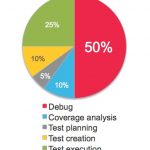
Sure, design engineers can get more attention than verification engineers, but the greater number of verification engineers on SoC projects means that the verification task is a bigger bottleneck in a schedule than pure design work. A recent survey conducted at Cadence shows how verification effort can be divided into several,… Read More
What an exciting year for DAC with record submissions in nearly every category. Most impressive is the increase in Designer and IP Track submissions, content that is helping to continue to evolve and improve the show. If you haven’t already registered, why not do so now?
A brief bit of background about the conference: DAC’s roots… Read More
In 2014, a Goldman Sachs’ report took many people by surprise when it picked Atmel Corp. as the company best positioned to take advantage of the rising Internet of Things (IoT) tsunami. At the same time, the report omitted tech industry giants like Apple and Google from the list of companies that could make a significant impact… Read More
FPGA prototyping is beginning its move to the forefront of design and verification. More and more companies are turning to this technology not only for in-circuit testing and earlier software development but also for refining, validating, and implementing chip architecture. The increases in design size and complexity as well… Read More
In last 30+ years, the electronic design industry has seen rapid changes more than any other industry. The change has taken place in the whole electronic ecosystem including semiconductor technology, transistor design, IC / SoC design, PCB, and system design. Today, a PCB can be very complex connecting several heterogeneous… Read More
The semiconductor industry is expected to grow at a reasonable pace in 2015 and beyond, with the biggest market being compute applications followed by wireless and consumer applications. The highest growth, however, is expected to be in application-specific products for devices such as smartphones, wearables, memories, … Read More









The silent killer of analog reliability: Why SPICE misses floating net