You are currently viewing SemiWiki as a guest which gives you limited access to the site. To view blog comments and experience other SemiWiki features you must be a registered member. Registration is fast, simple, and absolutely free so please,
join our community today!
WP_Term Object
(
    [term_id] => 157
    [name] => EDA
    [slug] => eda
    [term_group] => 0
    [term_taxonomy_id] => 157
    [taxonomy] => category
    [description] => Electronic Design Automation
    [parent] => 0
    [count] => 4538
    [filter] => raw
    [cat_ID] => 157
    [category_count] => 4538
    [category_description] => Electronic Design Automation
    [cat_name] => EDA
    [category_nicename] => eda
    [category_parent] => 0
    [is_post] =>
)
It’s really challenging to reach design closure of an SoC by meeting timing constraints, staying within the power budget, tracking progress, communicating within the team, minimizing the floorplan, maximizing manufacturability and eliminating hotspots. Most SoC design teams have EDA tools from multiple vendors,… Read More
2016 EDA Dead Poolby Daniel Nenni on 11-30-2015 at 7:00 amCategories: EDA
The most commonly asked question during conference calls with Wall Street of late is in regards to the massive consolidation the semiconductor industry is experiencing. How will the consolidation affect the Foundries? How will the consolidation affect EDA and IP? How will the consolidation affect the semiconductor industry… Read More
Portable Stimulus has become such a popular standards topic of late that I thought it would be good to take a break this month from my low power series to bring you, my valued readers, more information about it from one of my colleagues, Dennis Brophy, who is working to help drive development of this standard within Accellera. I’ll … Read More
In a world of smart devices, high performance is required in order to address several specific needs such as intelligent and immediate data processing for IoT applications, instant response from mobile devices, highly interactive user interfaces, and so on. Most of these devices are battery operated and hence require lower … Read More
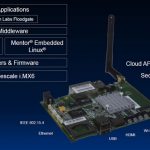
Walking into the Mentor Graphics booth at ARM TechCon, I was greeted by my friends Warren Kurisu and Shay Benchorin. It was good to see them both again. They were poised in front of a table with a Samsung tablet and a small Wi-Fi-ish box, next to a large Samsung printer. The demonstration was similar to a lobby check-in process, where… Read More
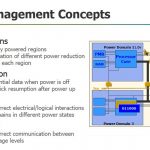
Power management is a perennial topic these days, and it came up in several presentations at the recent ARM Techcon in Santa Clara in mid November. The techniques covered in these talks address dynamic and static power consumption. The IEEE 1801 standard deals with specifying power design intent in Universal Power Format (UPF)… Read More
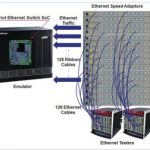
To fans of Godel, Escher and Bach (the Eternal Golden Braid), there is an appealing self-referential elegance to the idea of verifying a network switch in a cloud-like resource somewhere on the corporate network. That elegance quickly evaporates however when you consider the practical realities of verifying such device in ICE… Read More
The way SoC size and complexity are increasing; new ways of development and verification are also evolving with innovative automated tools and environment for SoC development and optimization. IP based SoC development methodology has proved to be the most efficient for large SoCs. This needs collaboration among multiple players… Read More
In the 1990’s, designing for performance was the main challenge and the marketing message for Intel processors was limited to the core frequency. Then designers had to optimize power consumption to target mobile phones/smartphone and build power efficient SoC, low power but high performance devices. Now in 2015 the semi industry… Read More
I really enjoy ARM Techcon when it rolls around every year because it has such a wide range of topics and exhibits. You can find maker gadgets, IoT information, small boards for industrial control, software development kits, semiconductor IP vendors as well as the big EDA players and foundries. This year after perusing the exhibit… Read More








The silent killer of analog reliability: Why SPICE misses floating net